
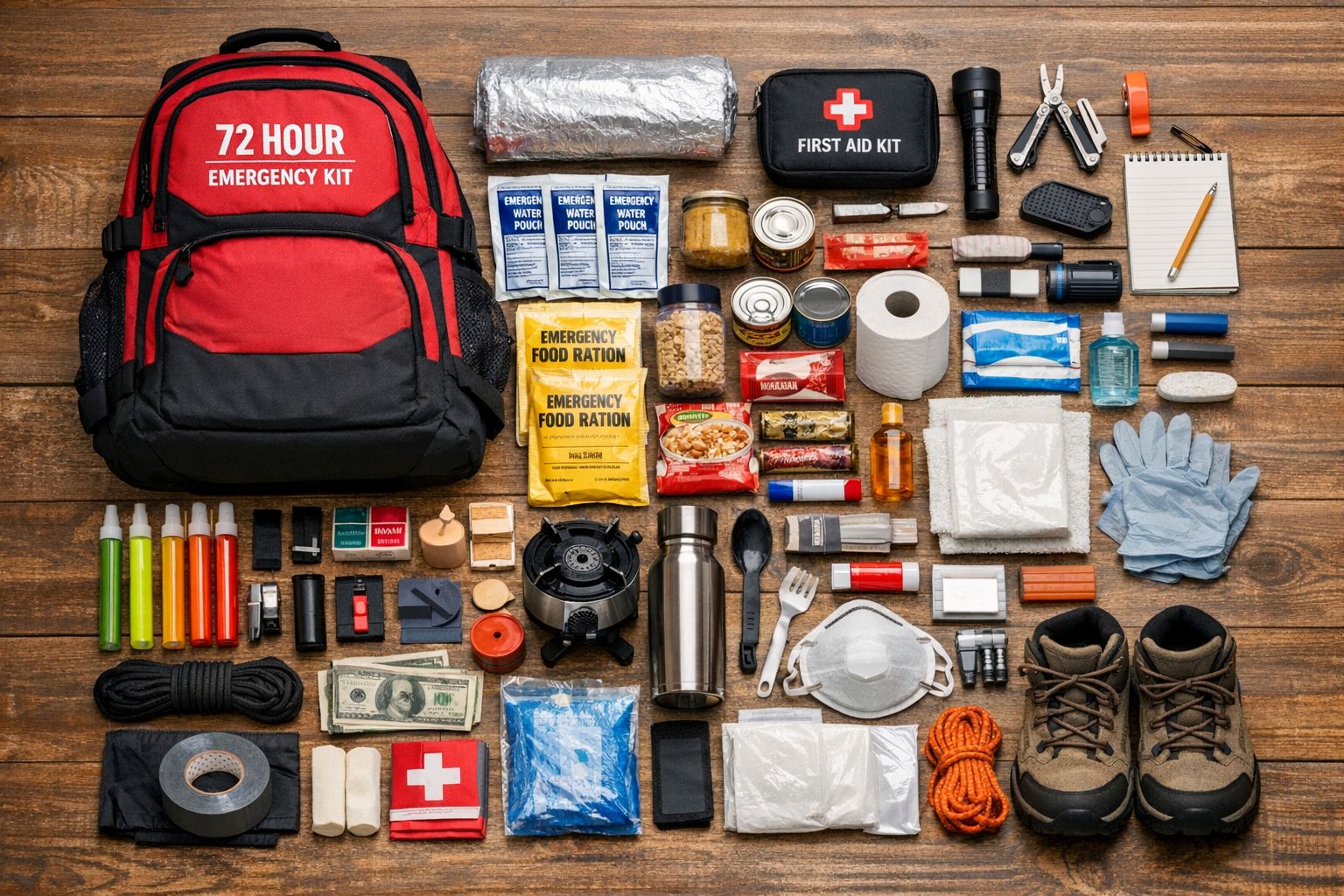
Seventy-two hours is the classic starting point, and it is a good one — our 72-hour kit guide is where most readers should begin. But some disruptions last longer than three days: a severe storm that closes roads for a week, a supply chain hiccup, a household illness that keeps you home. Two weeks ready is the next step up, and it is less dramatic than it sounds. It is mostly your normal household, bought a little ahead, with a few gaps filled.
Start from what you already use
Do not build a separate two-week stockpile of food you never eat. Instead, deepen the pantry you already have until it holds about fourteen days of normal meals. That means counting, honestly, how many breakfasts, lunches, and dinners your household eats in two weeks, and making sure the shelf holds that much of ingredients you actually cook with. Our food-per-person guide gives you the quantities; our pantry rotation system keeps that deeper stock fresh. If the pantry only ever holds a week, add one extra item per shopping trip until it holds two. Slow beats heroic, and it beats expensive.
The two-week checklist, room by room
- Food: fourteen days of meals, including a few no-cook days, plus cooking oil, seasonings, and a manual can opener. Count pet food too if animals are in the house.
- Water: drinking water plus cooking water, with a filter or purification method as backup. See our water storage guide and water filter comparison.
- Power and light: flashlights, headlamps, batteries, a power bank, and a radio, with fuel or charging for at least a week — our backup power guide covers the options.
- Heat and cold: blankets, warm layers, and a plan for heating without power in winter or cooling and shade in summer. See our emergency heat guide.
- Health: two weeks of any daily medication, a stocked first aid kit, and basic hygiene supplies — soap, toilet paper, toothpaste, and any personal care items you would miss by day three.
- Cash and documents: a small cash reserve, copies of IDs and insurance details, and a written contact list. Our emergency cash guide explains how much is sensible.
- Home: cleaning supplies, bin bags, and basic tools for small repairs, plus a plan for waste if collection is interrupted.
Three mistakes that undo a two-week plan
First, storing food nobody in the house will eat. Two weeks of a diet your family hates is two weeks of arguments and skipped meals. Second, forgetting water for cooking, washing, and flushing — drinking water alone is not the whole number. Third, building the stockpile and then never touching it, so half of it expires quietly. The fix for all three is the same: live off the pantry for a weekend, twice a year. Cook only from stored food, use only stored water for one day, and note every gap. That weekend is the cheapest emergency drill you will ever run, and it usually turns up three or four fixes worth more than a whole extra shopping trip.
Two weeks ready is not about expecting disaster. It is about a household that can ride out a rough fortnight without panic, without a desperate shop run, and without depending on systems that may be busy helping someone else. Build it one extra item at a time, and it will be there before you notice.
Shop the checklist
- A portable water filter — backup purification when stored water runs low.
- An emergency food supply kit — a fast way to add shelf-stable meals to the pantry.
- LED headlamps — hands-free light for a household running on backup power.
As an Amazon Associate, Alien Bunker earns from qualifying purchases. This page contains affiliate links, which support the site at no extra cost to you.