
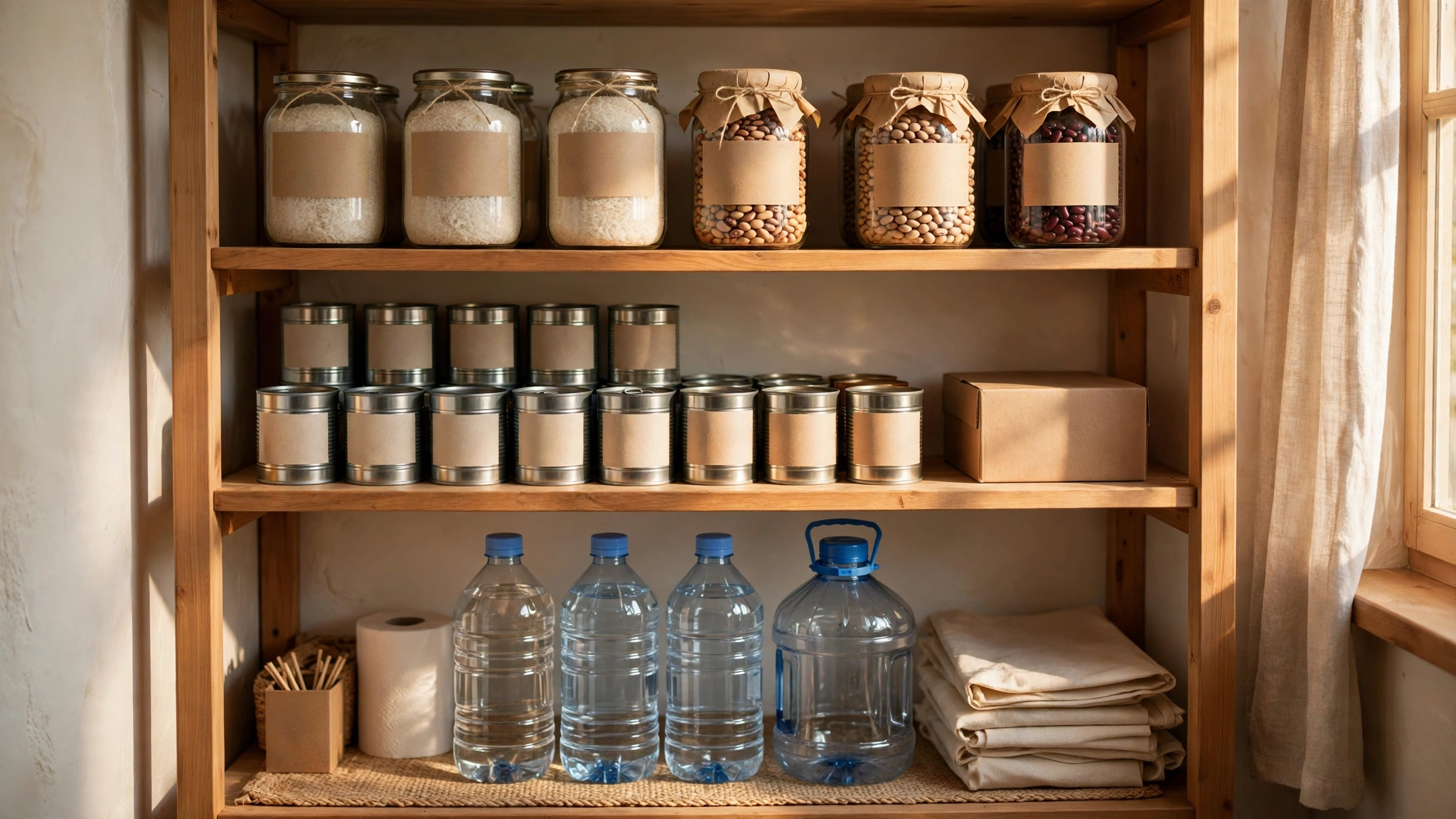
Most prepper pantries fail the same way: not from a lack of food, but from a lack of rotation. Cans drift to the back of the shelf, rice sits for years, and when you finally need the stash, half of it is past its best or you cannot remember what is even in there. A rotation system fixes that, and it does not need a spreadsheet or a dedicated room. It needs one rule, one shelf habit, and a check you will actually do.
The one rule: first in, first out
First in, first out (FIFO) means the oldest item of each type gets eaten first, and every new purchase goes behind it. That is the whole system. Everything else on this page is just a way to make FIFO easy to keep. If you remember nothing else, remember this: new food goes to the back, old food comes to the front.
Start with the food you already eat. Emergency food you will not touch in normal life is food you will forget about, so build the pantry around meals your household actually likes: rice, pasta, canned tomatoes, beans, tuna, oats, peanut butter, cooking oil, and whatever sauces and seasonings make those ingredients into dinners. Our emergency food storage guide for beginners covers quantities; this page covers keeping that stock fresh.
Set up the shelves so rotation happens by itself
Put the pantry in one place if you can, even if that place is a single cupboard shelf and a box under the bed. Group by type, not by purchase date: all canned tomatoes together, all rice together, all beans together. Within each group, arrange oldest at the front. When you bring shopping home, take thirty seconds to put the new cans behind the old ones. That thirty seconds is the system working.
A marker pen is your best tool here. Write the month and year you bought each item on the top of the can or the bag in big numbers. Printed best-before dates are small, fade, and sit in different places on every brand. Your own date is always in the same spot and always readable at a glance. For bulk dry goods like rice and flour, decant them into sealed containers or sturdy zip bags, label the container with the purchase date, and keep them cool and dry — heat and moisture age dry food faster than time alone does.
What to check, and how often
Twice a year is enough for most households: once in spring, once in autumn, tied to something you already do, like changing smoke alarm batteries or checking your first aid kit. On each check, pull anything past its best-before date or showing damage — swollen cans, rust, torn packaging, or off smells all mean throw it out, no tasting to decide. Move anything expiring within the next few months to the front and plan a meal around it. Then write a short shopping list of what the pantry is actually short of, instead of guessing at the store.
One caution: best-before dates are about quality, not a sudden safety cliff, but they are still the simplest signal you have. When in doubt, throw it out — a can of beans is cheap, a bad stomach during an emergency is not. And keep a simple written inventory on the inside of the cupboard door or in a notebook: item, quantity, oldest date. Update it when you do the twice-yearly check, not every time you cook, or you will abandon it within a month.
Make the pantry earn its keep every week
The pantries that stay fresh are the ones that get cooked from. Pick one pantry meal a week — a bean stew, a pasta sauce from canned tomatoes, rice and tuna — and cook it from the oldest stock. This does three things at once: it rotates the food, it proves your recipes work with stored ingredients, and it keeps the pantry from turning into a museum. If a recipe does not work with what you store, change the recipe or change what you store. Finding that out on a normal Tuesday is free; finding it out during a blackout is not.
Finally, keep water in the same rotation habit. Stored water in sealed containers should be rotated on a similar twice-yearly schedule, and our water storage and purification guide covers containers and treatment. Food, water, and a working rotation habit together are worth more than a bigger pile of supplies you never touch.
Shop the system
- Airtight food storage containers — keep bulk rice, flour, and oats dry and pest-free.
- A pantry can organizer rack — makes first-in, first-out nearly automatic.
- Permanent markers — for dating every can and container at a glance.
As an Amazon Associate, Alien Bunker earns from qualifying purchases. This page contains affiliate links, which support the site at no extra cost to you.