
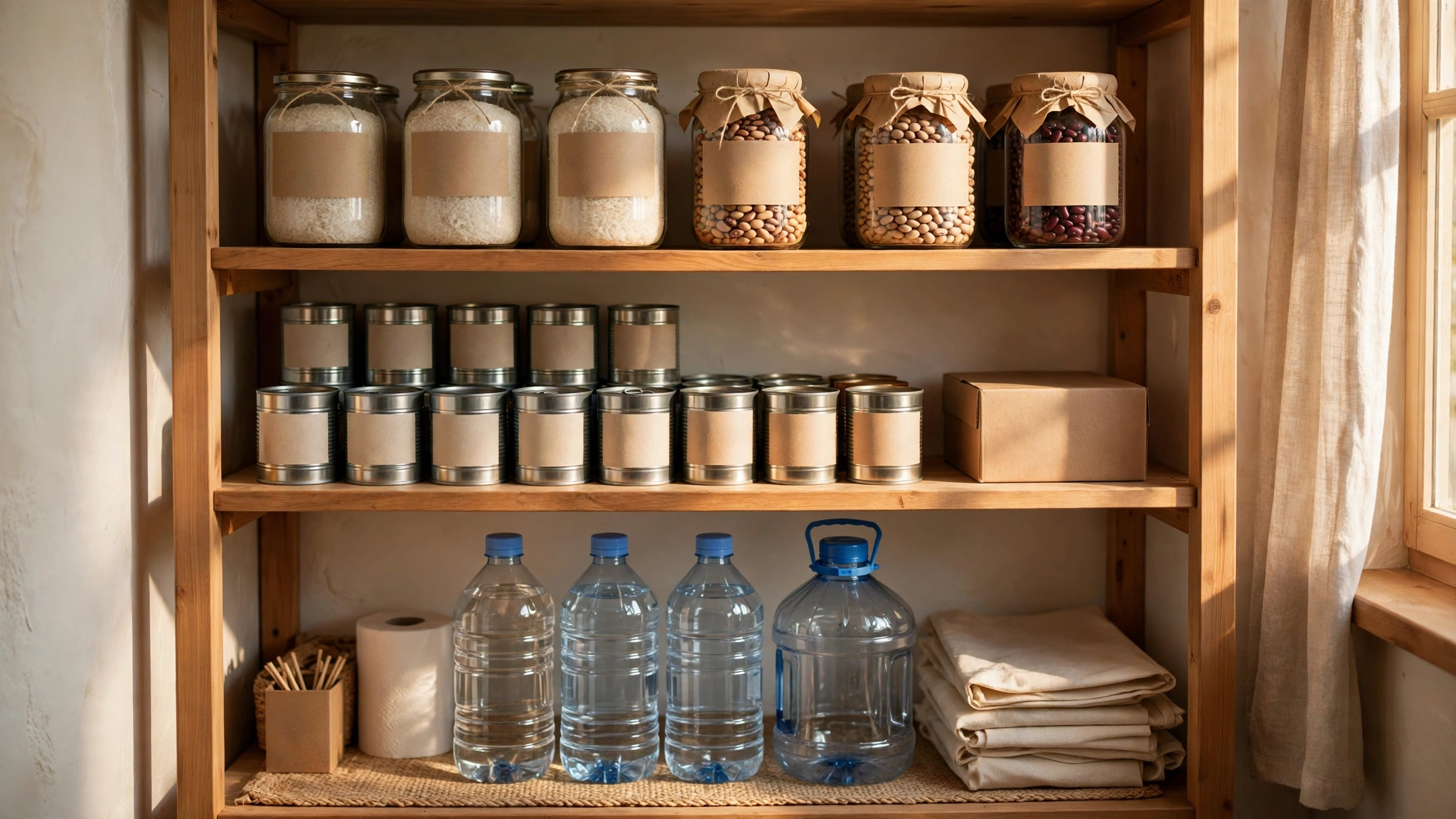
You can last weeks without food. Without water, you have about three days – and in a real emergency, the taps are usually the first thing to fail. Frozen pipes, a broken water main, a boil-water notice, a hurricane: every one of them turns “I’ll just fill a glass” into a genuine problem within hours. The good news is that water is the easiest prep of all. Here is how to store it, and how to make questionable water safe, sized for real homes and apartments.
How much water do you actually need?
The standard rule of thumb from emergency agencies is one gallon per person per day – roughly half for drinking, half for cooking and basic hygiene. A three-day supply is the bare minimum. Two weeks is the target worth aiming for, because most real disruptions (storms, grid failures, municipal repairs) resolve or get relief within that window.
For a family of four, two weeks means 56 gallons. That sounds like a lot until you break it down: it is eight standard 7-gallon storage containers, which fit along one wall of a closet or garage. Start with three days (12 gallons for four people) this week, and build from there.
What to store water in
Use food-grade containers made for water storage – they are thicker than milk jugs (which degrade and leak) and have proper seals and spigots. Good options for most households:
- 7-gallon rigid water containers with spigots – the workhorse. Stackable, portable enough to carry to a sink or car.
- Collapsible 5-gallon containers – the apartment answer. They fold flat until the day you need them.
- Bathtub water bladders – fill from the tub tap when a storm is forecast and you suddenly have 100 extra gallons, safely stored.
Fill containers with regular tap water (municipal water is already treated), store them somewhere cool and dark, off concrete if you can, and rotate – empty, rinse, refill – every six to twelve months. Stored water does not “go bad,” but it can taste flat and containers deserve a check. Write the fill date on the container with a marker; your future self will thank you.
Making water safe: purification methods ranked
Storage runs out. Purification is how you turn a creek, a rain barrel, or a suspect tap supply into drinking water. Layer at least two methods:
- Boiling – a rolling boil for one minute (three minutes at high altitude) kills bacteria, viruses, and parasites. Free, foolproof, but needs fuel and time.
- Gravity filters – a gravity-fed water filter sits on the counter and purifies gallons per day with no power and no pumping. This is the best set-and-forget option for a household.
- Filter straws – a personal water filter straw handles bacteria and parasites and weighs almost nothing. Every bug-out bag and 72-hour kit should carry one per person. Note: most straws do not remove viruses or chemicals.
- Purification tablets – water purification tablets are the backup to your backup: tiny, cheap, shelf-stable for years, and they handle viruses that filters miss.
- Plain unscented bleach (last resort) – per CDC guidance, 8 drops of regular unscented household bleach (6% sodium hypochlorite) per gallon of clear water, stir, and wait 30 minutes. It should smell faintly of chlorine; if it does not, repeat the dose and wait 15 more minutes.
The water sources already in your home
Before you buy a single container, know what you already have. A standard water heater holds 40-50 gallons of drinkable water (there is a drain valve at the bottom – learn where it is now, not during an outage). Toilet tanks (the tank, never the bowl) hold a few gallons of clean water per bathroom. Pipes themselves hold several gallons if you open the lowest faucet after shutting off the main. Between stored containers and these reserves, most households are closer to prepared than they think.
Put it together
Water first, then food. Once your water storage covers two weeks, head to our guide on emergency food storage for beginners and build the matching 30-day food supply. Water, food, power, shelter – in that order, one paycheck at a time. That is the whole system, and you are already halfway down the list.
As an Amazon Associate, Alien Bunker earns from qualifying purchases. This page contains affiliate links, which support the site at no extra cost to you.