
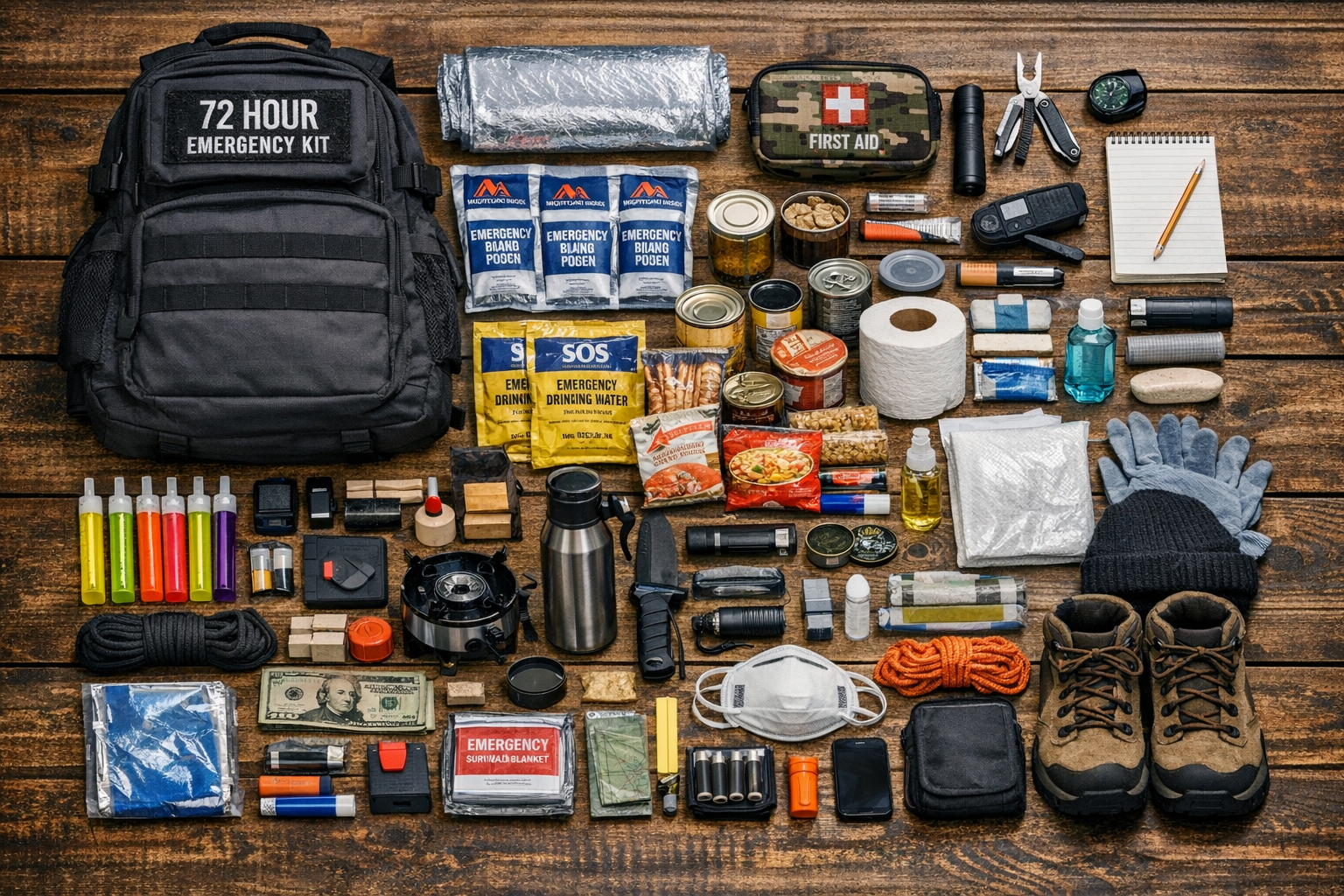
A bug-out bag is not about running to the woods. It is about walking out of your home with everything you need for 72 hours if you cannot stay – a fire in the building, a flood warning, a gas leak, an evacuation order at 3 a.m. The goal is boring competence: one bag, by the door, that you can grab half-asleep. Here is what earns a place in it, and what to leave behind.
First, the rules
- 72 hours, not forever. You are bridging to help, family, or a hotel – not founding a new civilization.
- Keep it under 10-12 kg. If you cannot carry it 5 km without misery, it is furniture, not a bug-out bag. Weigh it. Everyone’s first bag is too heavy.
- Every person gets a bag. Kids carry a small version with their own comfort items.
Water (the heavy, non-negotiable part)
- 2 liters of water in durable bottles
- A squeeze personal water filter or small pump filter
- Purification tablets as the backup to your backup
- A collapsible 2-3 liter container, empty, for refills
Food (simple, no cooking required)
- 6-9 meal bars / energy bars (check dates twice a year)
- Trail mix, nuts, dried fruit
- 2 ready-to-eat meals or retort pouches you have actually tasted
- Electrolyte packets, a few sweets for morale and quick energy
Shelter and warmth
- Change of clothes in a dry bag, with real socks – two pairs
- Emergency bivvy or blanket (the shiny kind actually works)
- Rain poncho – shelter, rain gear and groundsheet in one
- Warm hat and gloves in winter climates
Fire and light
- Headlamp with fresh batteries (hands-free beats flashlight)
- Two lighters plus waterproof matches or a ferro rod you have practiced with
- A few fire starters (cotton balls with petroleum jelly in a small tin)
First aid and health
- Compact first aid kit: plasters, gauze, antiseptic, blister care, tweezers
- Personal medications for 3+ days – this is the item people forget and regret
- Painkillers, antihistamines, any daily essentials
- Sunscreen and insect repellent, season permitting
Tools and the unglamorous essentials
- Multitool or solid folding knife
- Phone charger cable plus a charged power bank
- Cash in small notes – card machines die early in a crisis
- Copies of ID, insurance and key contacts in a sealed pouch (and photos of them in your phone)
- Work gloves, duct tape wrapped flat, zip ties, paracord (5-10 m)
- Whistle, small notebook, pencil
What to leave out
The 20-piece survival gadget kit, the giant Rambo knife, the tent you have never pitched, five liters of water “just in case”, and anything you have not personally used. A bug-out bag is a system you have tested, not a shopping haul. Do a practice walk around the block with it once. Adjust. Then leave it by the door and forget about it – that is the point.
Maintain it in 10 minutes, twice a year
When the clocks change, open the bag: swap the food nearing its date, check batteries and medications, refresh the clothes for the season, top up the water. Ten minutes, twice a year, and the bag is always real.
Staying instead of leaving? Most emergencies are shelter-in-place events. Pair this bag with our 72-hour home emergency kit and a 30-day food supply, and you have covered both doors: the one you leave by, and the one you lock.
As an Amazon Associate, Alien Bunker earns from qualifying purchases. This post contains affiliate links – if you buy through them, we may earn a small commission at no extra cost to you.
Shop the bug-out checklist
Every item on the checklist above, in one place. Start with the bag, water, and shelter – the rest can follow paycheck by paycheck.