
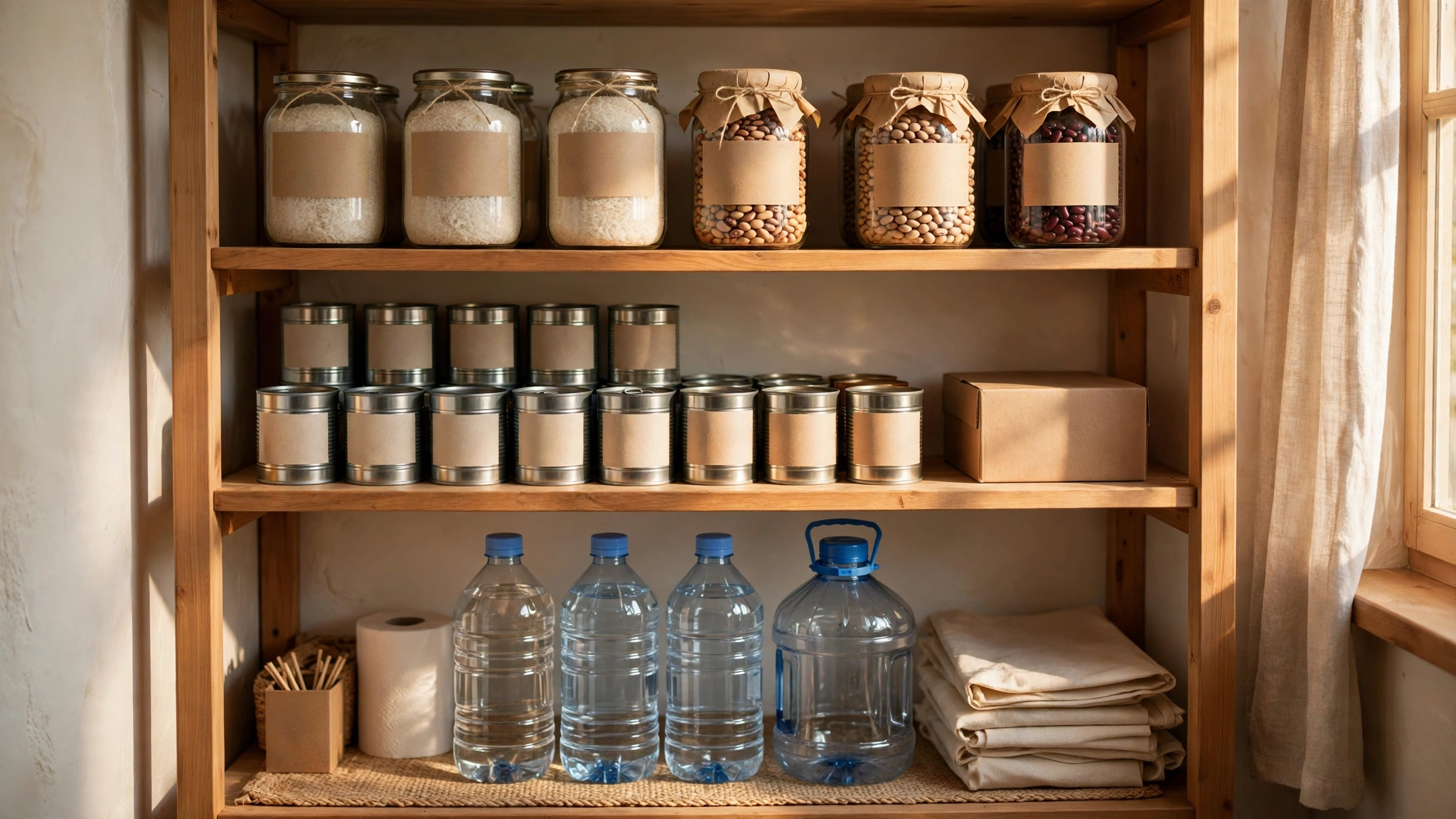
Rice and beans are the backbone of almost every emergency pantry, and for good reason. They are cheap, they are filling, they store for a long time, and together they make a complete, satisfying meal. But “a long time” is not the same as “forever,” and a sack of rice left open in a humid cupboard will not last like a sealed bucket in a cool room. How you store them matters as much as what you buy, especially in a small apartment where heat, humidity, and pests are all working against you.
White rice, brown rice, and beans are not the same
White rice stores the longest of the common grains because the oily outer layers have been removed. Kept dry, sealed, and cool, it stays good for years. Brown rice still carries those oils, which go rancid over time, so it keeps for months rather than years — buy it in smaller quantities and use it first. Beans are the opposite problem: dried beans technically stay safe to eat for a very long time, but as they age they get harder, take longer to cook, and may never soften properly no matter how long you boil them. A bean that has sat in a warm cupboard for five years is not dangerous, but it can be a disappointing dinner. The practical rule is simple: store white rice deep, rotate brown rice and beans regularly, and cook from your stock so nothing sits untouched for years.
The enemies: moisture, heat, oxygen, and bugs
Four things ruin stored grains and legumes. Moisture causes mould and clumping. Heat speeds up every kind of spoilage, which is why a cupboard above the stove or next to a radiator is the worst spot in the flat. Oxygen lets oils go stale and lets insects thrive. And pantry moths and weevils, which can arrive inside a brand-new bag from the shop, will happily spread to everything else on the shelf. None of this needs expensive equipment to beat. Freezing a new bag of rice or beans for a few days kills any insect eggs already in it, and moving the food into a sealed, airtight container afterwards keeps new pests out and moisture away. A cool, dark cupboard, away from heat sources, does the rest.
A small-apartment storage setup that works
You do not need a garage full of buckets to store rice and beans well. A workable apartment setup has three layers. First, the bulk layer: large, airtight containers or food-grade buckets with tight lids for your main supply of white rice and dried beans, labelled with the purchase date. Second, the working layer: a smaller jar or container in the kitchen that you refill from the bulk supply, so the big container is not opened every day and exposed to humid air. Third, the rotation layer: a simple rule that new purchases go behind older stock, and a date written on every container. That rotation habit is the whole system, and it is the same habit behind our pantry rotation guide. If you follow it, your emergency rice is the rice you cooked last week, just in a larger quantity.
How much to store, and how to cook it
Start from meals, not kilograms. A household that eats rice and beans twice a week already knows roughly how much it uses in a month; storing a few months of that normal usage is a sensible emergency supply, and our food-per-person guide will help you scale it to your household size. Remember that rice and beans both need water and fuel to cook — dried beans especially, since older beans need a long soak and a long simmer. Store extra water for cooking on top of drinking water, following our water storage guide, and keep a camp stove and fuel in the house if you expect to cook during a power cut, as covered in our cooking without power guide. A stockpile you cannot cook is just decoration.
Common mistakes to avoid
- Storing in the original paper or plastic bag: bags tear, let in moisture, and do nothing against insects. Decant into sealed containers.
- Buying brown rice in bulk for long storage: it will go rancid before you use it. Buy small, use fast.
- Forgetting the date: an undated container is a guessing game. Label everything the day you store it.
- Never cooking from the stock: if you never cook beans from storage, you will not notice when they have aged past good cooking quality.
- Storing near heat: the top of the fridge, above the oven, and sunny windowsills all shorten storage life.
Rice and beans reward boring, consistent habits: seal them, date them, keep them cool, and rotate them. Do that, and the cheapest food in your pantry becomes the most reliable food in an emergency.
Shop the storage setup
- Large airtight food storage containers — sealed storage that keeps moisture and pests out.
- Food-grade storage buckets with lids — bulk storage for rice and beans.
- Vacuum sealer bags — for sealing smaller portions for long storage.
As an Amazon Associate, Alien Bunker earns from qualifying purchases. This page contains affiliate links, which support the site at no extra cost to you.