
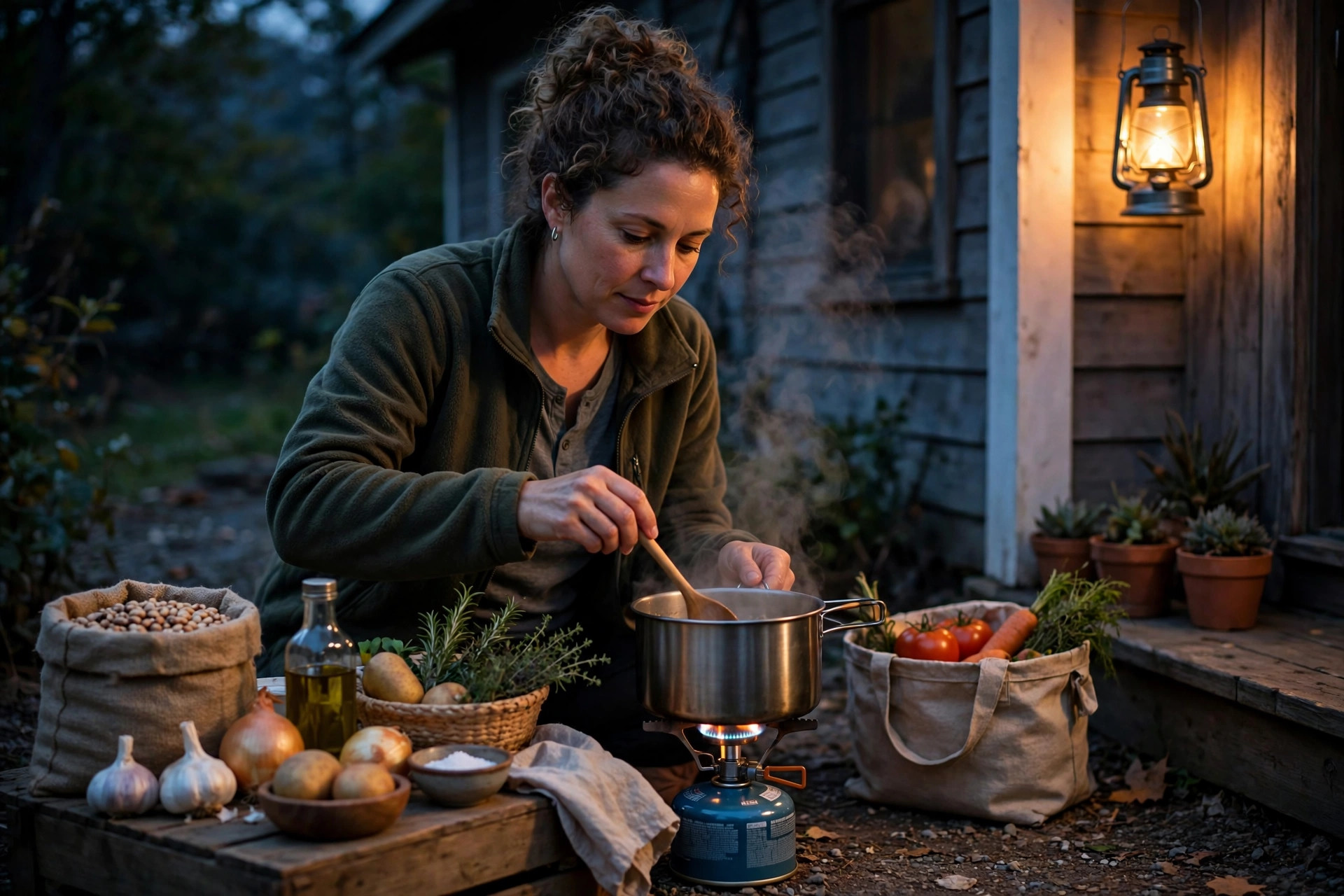
A pantry full of food is only half a plan. If the power goes out for days, you still need a way to turn that food into hot meals — and hot food matters more than comfort. It makes stored ingredients edible and safe, it lifts morale, and in cold weather it helps keep everyone warm from the inside. The good news is that you do not need one perfect cooking method. You need two or three simple ones, plus the fuel to run them.
Method 1: A camp stove
A single-burner camp stove is the easiest place to start. It boils water fast, simmers a pot of rice or soup, and runs on small fuel canisters you can store in a box. Keep the stove, a lighter, and a few spare canisters together so you are not hunting for parts in the dark. Cook near a window or outside on a balcony if your stove instructions say so, and never use a camp stove as a room heater — the fire risk and carbon monoxide risk are real, and a stove is for cooking, full stop. Pair this with the food quantities in our guide to how much emergency food you need per person so you know how many meals your fuel actually covers.
Method 2: A grill or fire pit
If you have a garden, balcony, or safe outdoor space, a charcoal or gas grill is a strong backup that many households already own. A grill handles large pots, canned food, and anything you need to rescue from the freezer before it thaws — which is exactly what our guide to keeping your fridge cold in a power outage recommends cooking first. The downside is weather and smoke, so a grill is a fair-weather backup, not your only plan. Keep charcoal or a spare gas bottle dry and accessible, and practice lighting it before you need it.
Method 3: No-cook meals
Some of the best emergency meals need no heat at all, and every plan should include them for the first day, when you are busy with other problems. Peanut butter on crackers, canned tuna with beans, oats soaked overnight in water or milk, dried fruit and nuts, and canned fruit all count. Stock at least a day or two of no-cook food per person, and keep a manual can opener with it — an electric opener is useless without power, and this is the detail people most often forget.
Method 4: Keeping it warm without power
Two low-tech tricks stretch your fuel a long way. First, a haybox or insulated cooker: bring a pot to a rolling boil, then bury it in blankets or a cooler full of towels and let retained heat finish the cooking over an hour or two. Rice, stews, and beans all work this way, and it uses a fraction of the fuel of continuous simmering. Second, cook once and eat twice: make a big pot in the evening and keep it safely covered for the next meal, reheating thoroughly. In cool weather, a pot kept above a safe temperature and reheated to boiling is practical; in hot weather, be stricter and eat cooked food promptly.
Fuel, water, and safety in one checklist
- Fuel: enough for at least a week of one hot meal a day, stored away from living spaces and never near an open flame.
- Water: cooking takes water too — rice, pasta, and dried beans all drink it. Count cooking water on top of drinking water in your water storage plan.
- Ventilation: never burn fuel indoors unless the appliance is designed for it, and keep a battery carbon monoxide alarm near any indoor cooking area.
- Practice: cook one full meal on your backup method before an emergency. You will discover missing lighters, wobbly pots, and recipes that do not work — all fixable now.
Start simple: one camp stove, one no-cook day of food, and one practice dinner. That is a cooking plan, and it is enough to build on.
Shop the setup
- A single-burner camp stove — the simplest backup cooking method to start with.
- A heavy-duty manual can opener — the small tool no-cook meals depend on.
- A battery carbon monoxide alarm — essential if you cook with fuel anywhere near indoors.
As an Amazon Associate, Alien Bunker earns from qualifying purchases. This page contains affiliate links, which support the site at no extra cost to you.