
A portable generator sounds like the perfect answer to a blackout: a small engine that makes electricity, keeps the fridge cold, charges the phones, and runs a heater. For a house with a garden, it can be. For an apartment, it is usually the wrong answer — and a dangerous one if it is used badly. Generators burn fuel, and burning fuel makes carbon monoxide, an invisible, odourless gas that kills people in their sleep. Every year, people die from running a generator in the wrong place, and the most common wrong place is indoors or near an open window. This guide explains the risks honestly, when a generator can work for an apartment dweller, and what the safer alternatives are.
The carbon monoxide rule that is not negotiable
A portable generator must never be run inside a home, a garage, a basement, or any enclosed space — and that includes a balcony, a stairwell, or a covered car park. The exhaust must go outside, well away from the building, because carbon monoxide drifts. Public health guidance is to keep a generator at least 20 feet (about 6 metres) from any home, with the exhaust pointing away from the building, and never to run one near an open window, door, or vent. That distance is the problem for most apartment dwellers: there is nowhere 20 feet from the building that is also accessible, secure, and close enough to run a power cable. A balcony is not far enough — the exhaust will drift back in through the windows and doors, and into the neighbours’ flats as well. A shared courtyard may be far enough from your windows but is not your space to use, and a generator left in a public area will be stolen, damaged, or complained about. If you cannot place a generator 20 feet from the building with the exhaust pointing away, do not buy one. This is not a guideline to work around — it is the rule that keeps people alive. Fit a battery-powered carbon monoxide alarm in the flat regardless, and keep it with the emergency kit, as in our blackout safety checklist and our emergency heat guide. If anyone in the household develops a headache, dizziness, or nausea while a fuel-burning device is in use, get outside into fresh air immediately and call for help.
What works instead, and when a generator does make sense
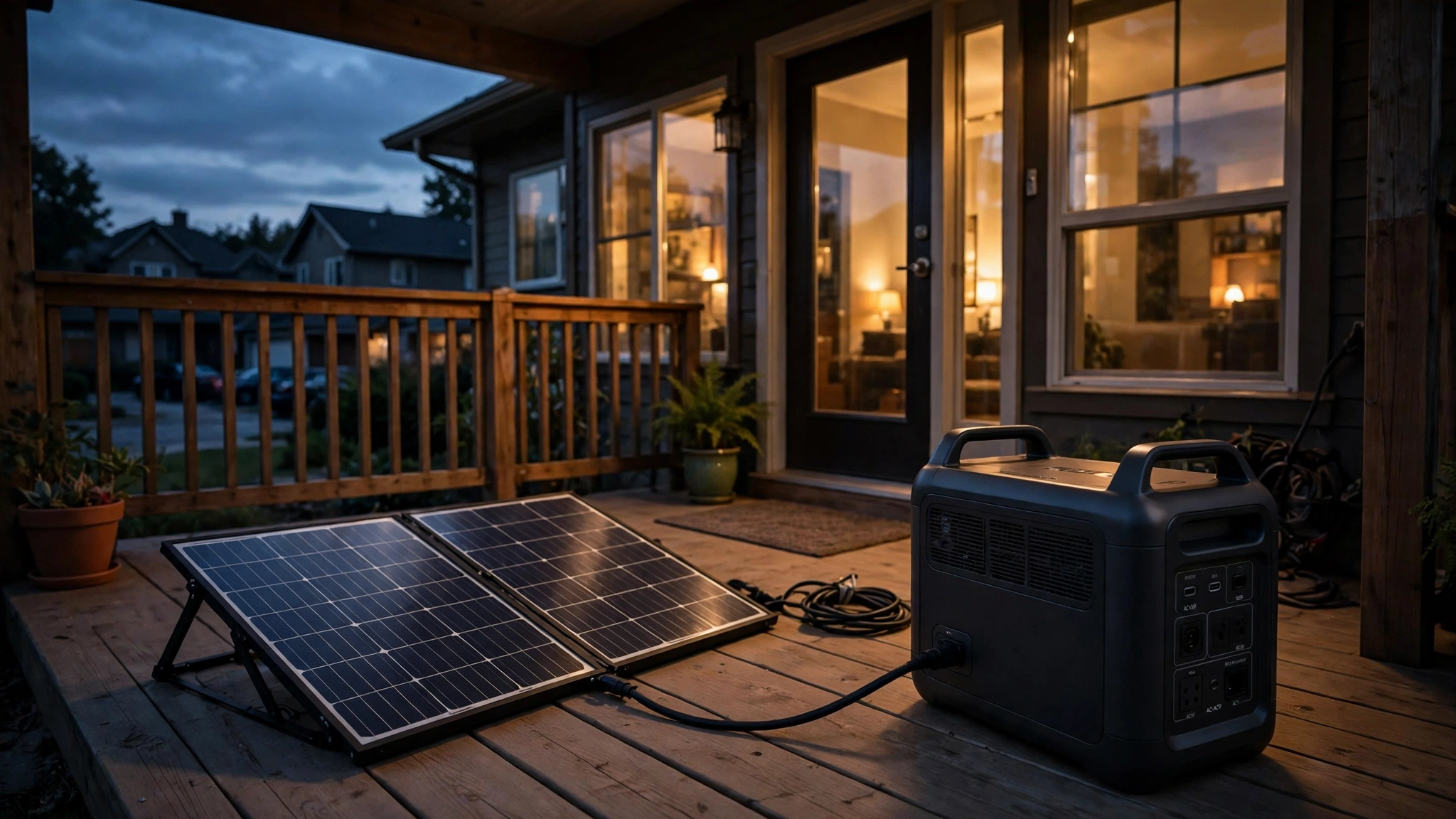
For most apartments, the realistic answer is a portable power station — a large rechargeable battery with mains sockets, USB ports, and sometimes a 12-volt output. It makes no exhaust, it is safe to use indoors, it is silent, and it can be charged from the mains before a storm, from a solar panel during a long outage, or from a car. It will not run a heater or a large fridge for long, but it will charge phones, run lights, power a small fan, and keep a laptop going for hours — which is what most households actually need in a blackout. See our solar charger guide and our solar power bank guide for the small-scale options, and our fridge guide for keeping food cold without power. A generator only makes sense if you have genuine outdoor space of your own — a private garden or yard, at least 20 feet from the building — and even then, check the building rules and the local regulations first, because many apartment blocks ban generators outright. If you do use one, keep the fuel stored safely in an approved container, away from the home, never refuel a hot generator, and never run it in the rain without a proper cover. The honest summary is this: a generator is a powerful tool for a house, and a dangerous liability for a flat. Buy the battery instead, keep it charged, and spend the money you saved on the supplies that will actually get used.
Shop safe backup power basics
- Portable power stations — silent, indoor-safe backup power for phones, lights, and laptops.
- Battery carbon monoxide detectors — an alarm that could save a life if fuel is ever burned nearby.
- Folding portable solar panels — recharge a power station during a long outage.
As an Amazon Associate, Alien Bunker earns from qualifying purchases. This page contains affiliate links, which support the site at no extra cost to you.