
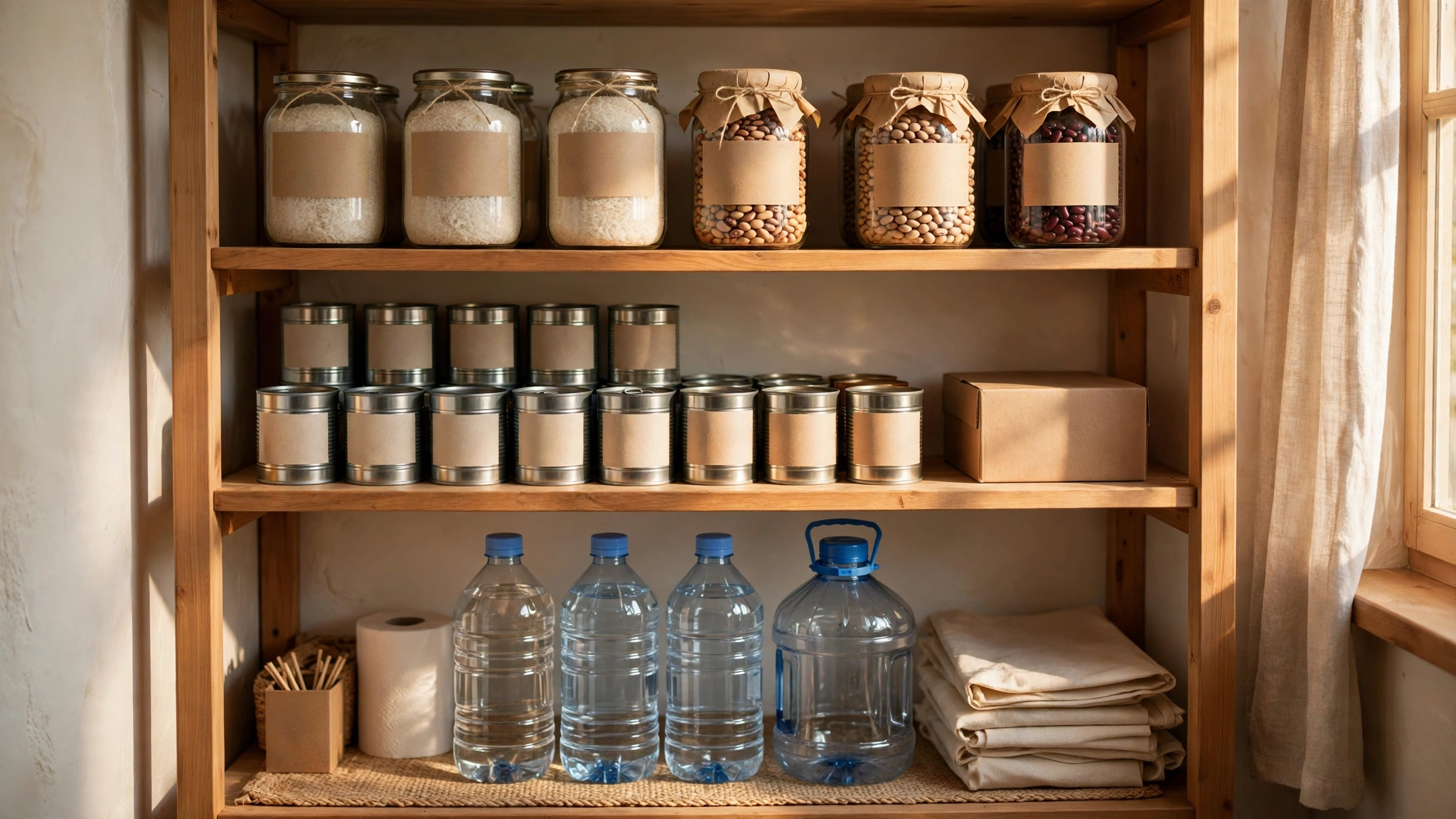
Every beginner prepper makes the same mistakes. It is not because they are careless — it is because food storage looks simple from the outside and turns out to have a dozen small traps that only become obvious after the food has gone bad, the container has leaked, or the emergency has arrived and the stockpile is not what they thought it was. The good news is that all of these mistakes are easy to avoid once you know about them, and most of them cost nothing to fix. This guide covers the most common errors, why they happen, and what to do instead.
The five mistakes that ruin a stockpile
The first mistake is buying food nobody in the household will eat. A shelf full of tinned food that the family hates is not a stockpile — it is a decoration. In an emergency, people under stress eat less, not more, and they are even less willing to eat food they dislike. Buy what your household already eats, in larger quantities, and build the stockpile around real meals: see our family meal planning guide and our pantry rotation system. The second mistake is storing food in the wrong place. Heat is the enemy of stored food — a cupboard above the stove, a garage that bakes in summer, or a shelf next to a radiator will cut the shelf life of your stock in half or worse. Store food in the coolest, darkest place in the flat, away from heat and light. The third mistake is forgetting water. Food storage gets all the attention, but most stored food needs water to prepare — rice, pasta, dried beans, and instant meals are all useless without it, and a household that has a month of food and three days of water is not prepared. See our how much food per person guide and our water storage guide. The fourth mistake is buying in bulk and never opening it. A huge bag of rice is a bargain, but once it is opened it is exposed to air and moisture, and if the household only uses a little at a time, the rest will spoil before it is used. Buy smaller bags, or repackage bulk food into sealed jars as soon as you get it home. The fifth mistake is never rotating. Food that sits on a shelf for three years without being touched is food you have not checked, and the first time you look at it may be the day you need it. Use the oldest stock first, label everything with the purchase date, and check the pantry every few months — the rotation rules in our pantry rotation system make this a habit rather than a chore.
Three more traps, and the habits that prevent them
The sixth mistake is storing everything in one place. If the stockpile is all in one cupboard, one leak, one pest problem, or one flooded corner can take out the whole supply. Spread it out: some food in the kitchen, some in a bedroom cupboard, some in the car, and a small stash in every go-bag, as in our go-bag guide and our car emergency kit checklist. The seventh mistake is ignoring the packaging. Food in thin plastic bags, in dented tins, or in containers that do not seal properly will not last — moisture, air, and insects get in, and the food goes off long before its printed date. Repackage into airtight glass jars or sealed containers, and throw away any tin that is swollen, badly dented, or rusted. The eighth mistake is the most human one: buying for a fantasy. A stockpile built for a year in a bunker is useless if the real emergency is a three-day blackout, and a stockpile built for three days is useless if the real emergency is a week without shops. Build for the emergencies that actually happen where you live — a few days without power, a storm, a week of disruption — and build out from there. Check the expiry dates as you go, following our expiry dates guide, and remember that the best stockpile is not the biggest one. It is the one you actually use, actually rotate, and actually know is there when you open the cupboard.
Shop food storage basics
- Airtight food storage container sets — keep bulk food dry, sealed, and pest-free.
- Oxygen absorber packets — extend the shelf life of rice, beans, and dried goods.
- Food storage labels and markers — date everything, rotate the oldest first.
As an Amazon Associate, Alien Bunker earns from qualifying purchases. This page contains affiliate links, which support the site at no extra cost to you.