
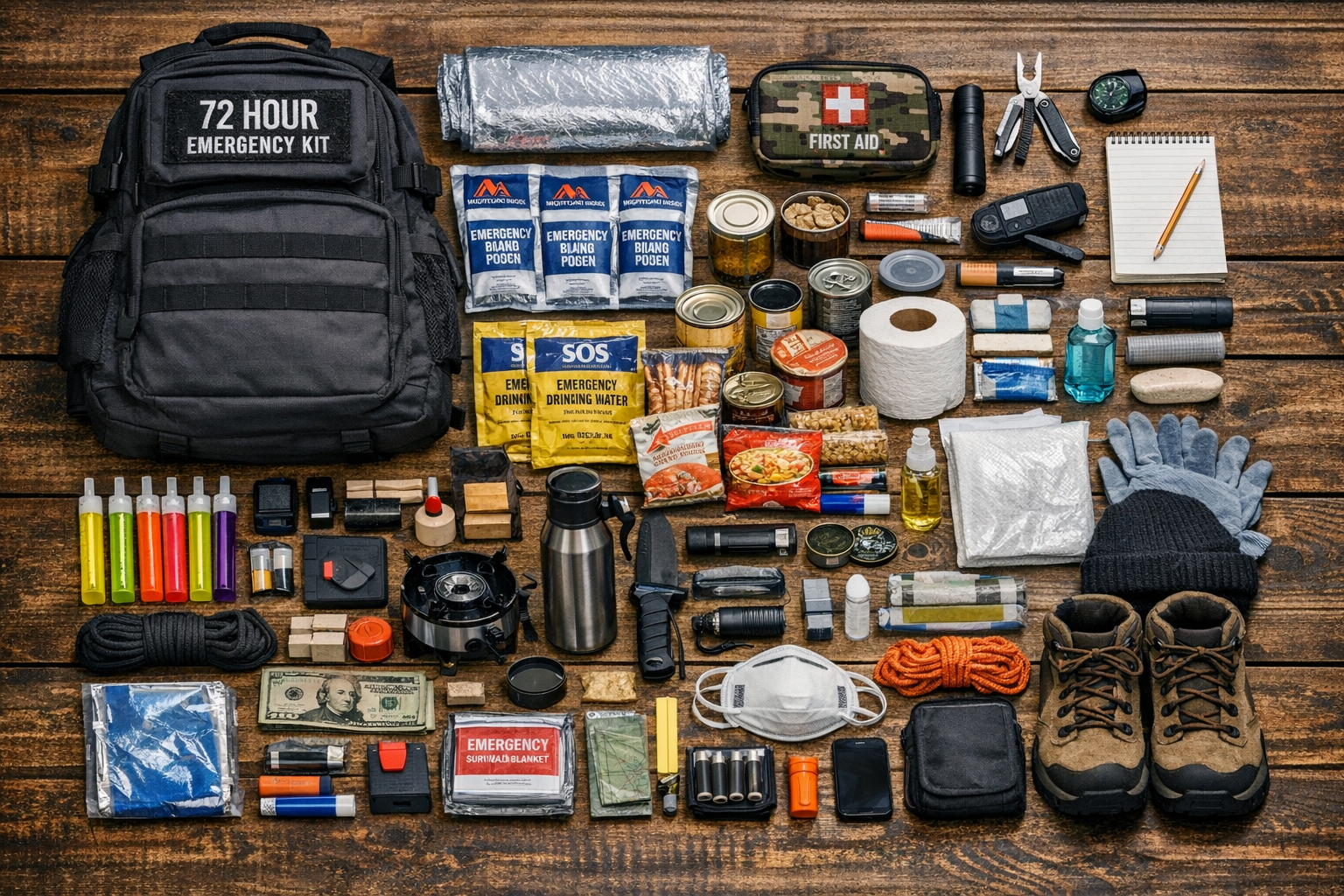
Go-bag, bug-out bag, grab bag, emergency bag — the names get used as if they mean the same thing, and then someone packs one bag for every situation and wonders why it is either too heavy to carry or missing half of what they need. The two bags have different jobs, different time horizons, and different packing lists. Understanding the difference takes five minutes, and it stops you from carrying a 72-hour survival kit to a fire evacuation, or a wallet and a phone charger to a three-day displacement.
The go-bag: hours, not days
A go-bag is for leaving quickly and coming back soon. Think house fire, gas leak, or a short local evacuation: you need documents, money, medicine, a phone charger, water, a snack, a change of clothes, and keys — enough for a few hours to a day, in a bag you can grab in under a minute. It lives by the front door, it is light, and everyone in the household old enough to carry one should have one, including children, following our kids’ backpack guide. The test for a go-bag is simple: can you pick it up, walk out, and be comfortable for a night at a friend’s house or a shelter? If yes, it works. If it weighs 15 kilograms and needs a checklist to pack, it is not a go-bag.
The bug-out bag: 72 hours on your own
A bug-out bag is for a longer, harder displacement: three days without normal services, possibly outdoors or on the move. It carries shelter, sleeping gear, more food and water, a water filter, first aid, tools, and clothing for changing weather — the full list in our bug-out bag guide and the kit behind our 72-hour kit guide. It is heavier, it needs practice to carry, and it is overkill for a short evacuation. Packing a bug-out bag for every alarm means you will hesitate, repack, or leave it behind — exactly the failure the go-bag is designed to prevent.
Comparison at a glance
| Go-bag | Bug-out bag | |
|---|---|---|
| Time horizon | Hours to 1 day | Up to 72 hours |
| Weight | Light, grab-and-go | Heavier, carried with effort |
| Core contents | Documents, cash, medicine, phone, water, snack, clothes | Food, water + filter, shelter, sleep system, first aid, tools |
| Where it lives | By the front door | Accessible, but not blocking the exit |
| Biggest mistake | Packing it like a bug-out bag | Never practising carrying it |
How to run both without doubling the work
One more distinction helps in practice: the go-bag answers “what do I need in the next hour,” while the bug-out bag answers “what do I need for the next three days without help.” If you are unsure which situation you face, grab the go-bag and leave — you can always return for more, but you cannot recover time lost packing. Speed is the go-bag’s whole point, and a household that can leave in two minutes with documents, medicine, and water is far safer than one still debating gear by the front door.
You do not need two completely separate kits. Build the go-bag first — it is the bag you will actually use — and keep the bug-out bag as an extension of it: the same documents, medicine, and contact card, plus the longer-stay gear stored nearby so you can upgrade in a few minutes if the situation clearly calls for days away rather than hours. Keep a copy of your family communication plan in both, and a car kit, following our car kit guide, as a third layer for road evacuations. Review both bags twice a year: swap expired food and medicine, update clothes for the season and for growing children, and walk out of the door with the go-bag once, just to prove it works.
Shop both bags
- A small daypack for a go-bag — light enough to grab without thinking.
- A 40-litre bug-out backpack — room for 72 hours of gear.
- A waterproof document organiser — documents safe in either bag.
As an Amazon Associate, Alien Bunker earns from qualifying purchases. This page contains affiliate links, which support the site at no extra cost to you.