
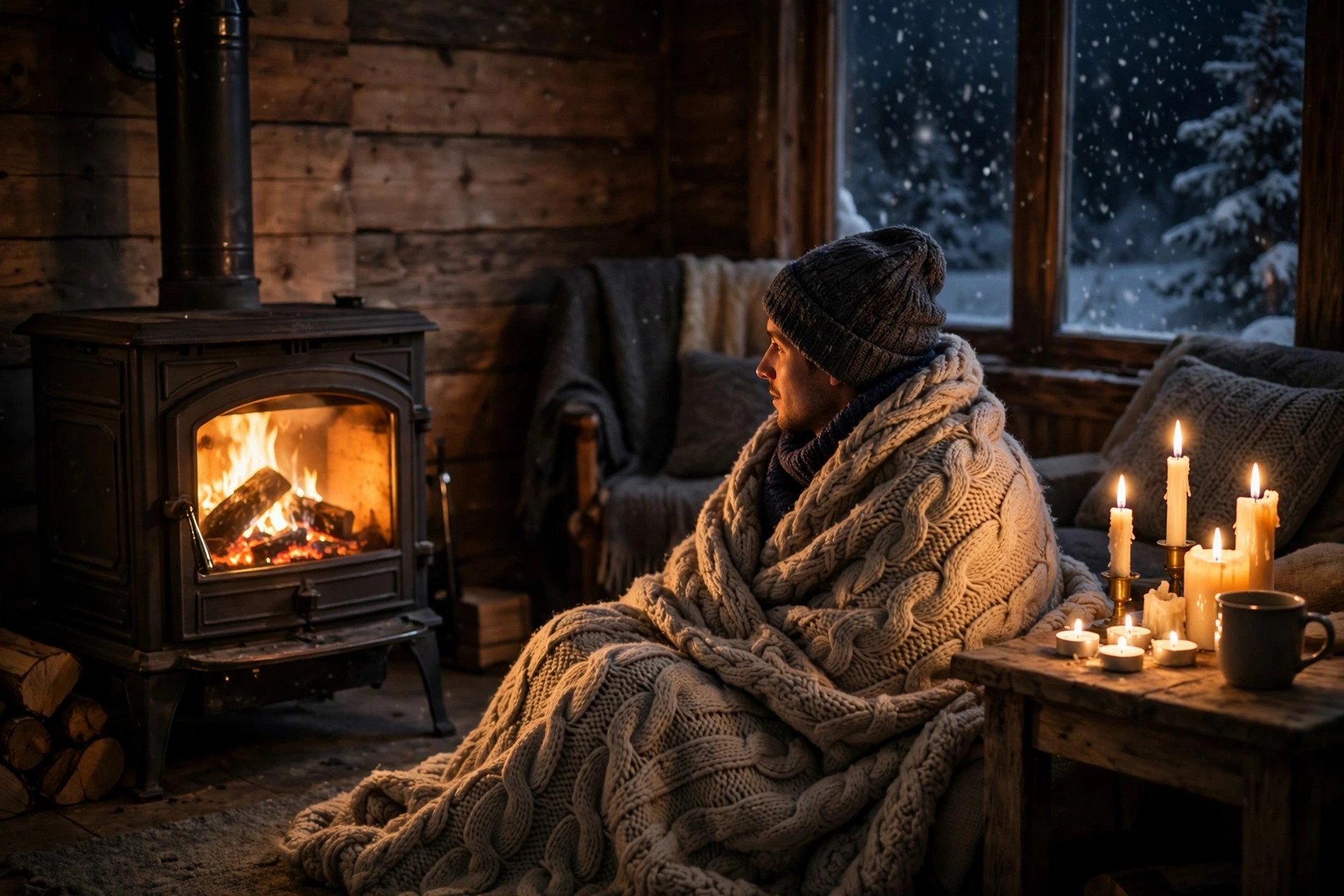
When the heating goes off in winter, a small apartment gets cold fast. The walls are thin, the windows leak heat, and the temperature can drop to uncomfortable — and then to dangerous — within hours, especially overnight. The good news is that a small space is also easier to keep warm than a big one, and the tricks that work are simple, cheap, and mostly things you already own. This guide covers how to hold on to the heat you have, how to make more of it safely, and how to keep the household warm through a cold night without power.
Keep the heat you already have
The first rule of staying warm without heating is to stop losing heat. Close the doors and live in one room — the smallest room with the fewest windows, ideally an interior room or a bedroom. Hang a blanket or a curtain over the door to seal the gap, and block the draughts under the door with a rolled-up towel or a draught excluder. Cover the windows: close the curtains, and if you have them, add a layer — a blanket over the curtain rail, cardboard taped to the frame, or a blackout cover, as in our blackout covers guide and our storm window guide. Stuff newspaper or cloth into any gaps around the window frames. If the flat has a balcony door, seal it too. The aim is to turn one room into a warm box, and every gap you close is heat that stays inside. The second rule is to use your body heat. People are heaters: a household of three or four people in one small room will warm it noticeably, especially if everyone is moving, cooking, or doing something active. Layer your clothing — a base layer, a warm jumper, and a jacket — and wear a hat indoors, because a surprising amount of heat escapes from the head. Put on thick socks or slippers, and sit on a cushion or a blanket rather than a cold chair or floor. Eat hot food and drink hot drinks: a bowl of soup or a cup of tea warms you from the inside, and cooking itself adds heat to the room — see our cooking without power guide and our tea and coffee stocking guide. At night, sleep together in the warm room, pile on blankets and duvets, and use a sleeping bag inside the bed if you have one — see our sleeping bag guide and our emergency blanket comparison.
Safe ways to add heat, and the ones to avoid
There are safe ways to add a little heat, and dangerous ones that must be avoided. A portable gas or kerosene heater can warm a room, but only if it is used exactly as the instructions say: with ventilation, with a carbon monoxide alarm, and never while people are asleep — and many apartment buildings ban them outright, so check the rules first. See our portable heater safety guide before you use one. Candles give a little warmth but are a fire risk, and they are never worth it as a heating method — see our candle safety guide. Never use a barbecue, a camping stove, or a generator indoors to heat a room: they produce carbon monoxide, and people die every year from doing exactly this — see our generator safety guide. The safest extra heat is the simplest: hot water bottles, hand warmers, and extra layers. Fill a hot water bottle before the power goes out if you can, and keep a few chemical hand warmers in the emergency kit — they are cheap, they last for hours, and they can be tucked into a sleeping bag, a pocket, or a pair of gloves. Check on elderly neighbours and relatives, who feel the cold sooner and are at greater risk — see our seniors blackout guide. And watch the pipes: if the temperature drops towards freezing, leave a tap dripping slightly and open the cupboard doors under sinks so warm air can reach the pipes — see our pipe freeze guide. A cold flat is miserable, but it is survivable — as long as you keep the heat in, layer up, and never trade safety for warmth.
Shop cold-weather warmth basics
- Door draught stoppers — block the gap under the door and keep the heat in the room.
- Hot water bottles — cheap, reusable warmth for the bed and the sofa.
- Disposable hand warmers in bulk — hours of warmth in a pocket or a sleeping bag.
As an Amazon Associate, Alien Bunker earns from qualifying purchases. This page contains affiliate links, which support the site at no extra cost to you.