
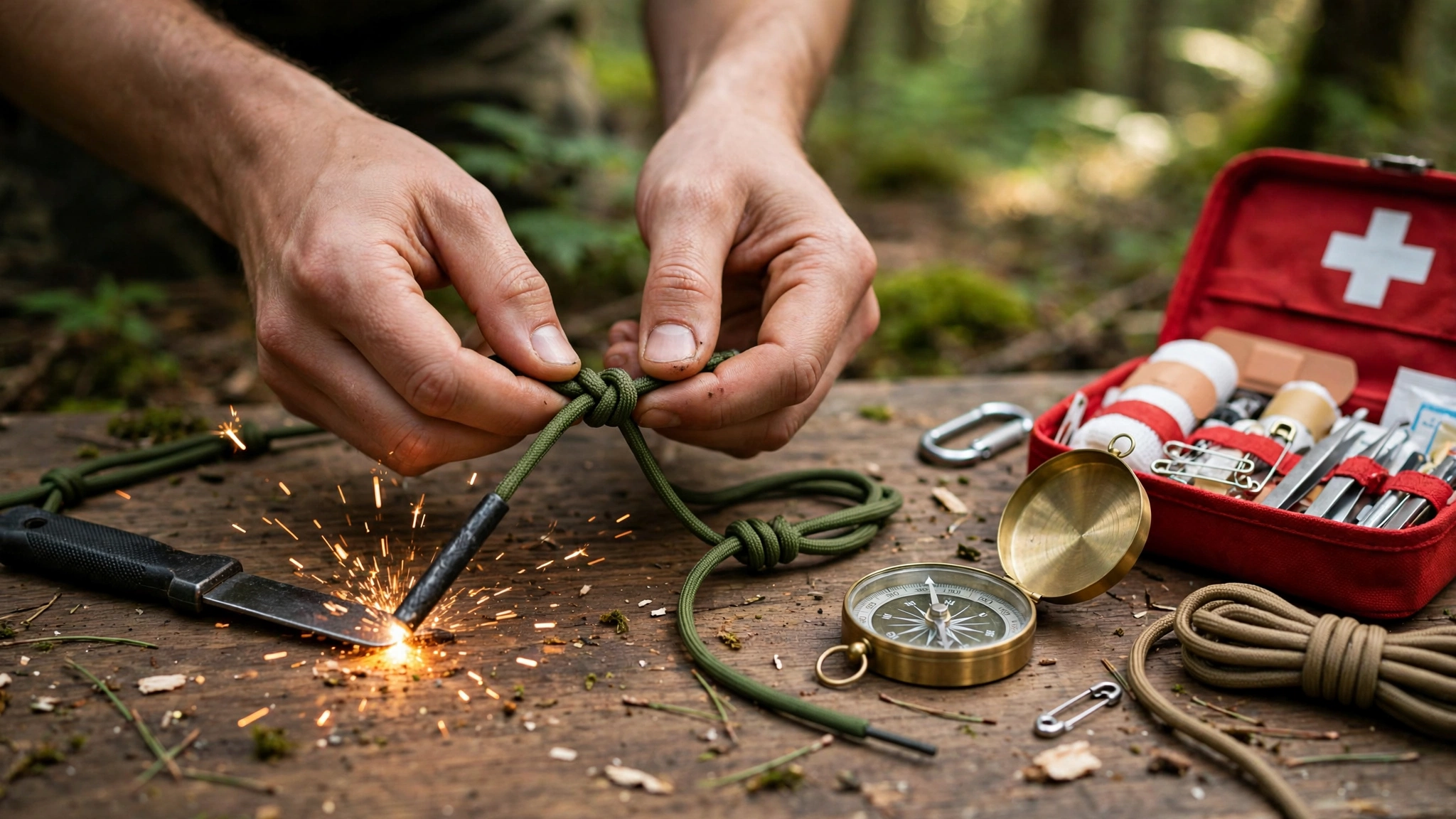
Rope is one of those things that seems obvious until you need it, and then you discover that not all rope is the same. The thin cord that holds up a washing line will not hold a shelter in a storm, the rope that ties down a tarpaulin will stretch and sag when it gets wet, and the pretty braided cord from a craft shop will snap the first time it takes a real load. In an emergency kit, rope does a dozen jobs: it rigs a shelter, ties down supplies, marks a route, hangs food out of reach, and repairs things that break. But only if it is the right rope for the job. This guide covers the types worth stocking, what each one is good for, and how much to keep.
The rope types worth stocking, compared
| Type | Strength | Stretches? | Wet weather | Best emergency use |
|---|---|---|---|---|
| Paracord (550) | Strong for its size | A little | Good — dries fast, does not rot | General-purpose: shelter lines, repairs, lashing |
| Nylon rope | Very strong | Yes — stretches under load | Good, but weaker when wet | Heavy loads and towing, where stretch absorbs shock |
| Polypropylene rope | Medium | Very little | Excellent — floats, does not absorb water | Wet conditions, water rescue lines, outdoor use |
| Natural fibre (jute, hemp) | Medium | A little | Poor — rots when damp | Gardening and light tying, not emergencies |
| Bungee cord | Low, but elastic | That is the point | Good | Holding things down that need give, like a tarp edge |
For a household emergency kit, paracord is the best single choice: it is light, strong, cheap, and it packs small. A 30-metre length of paracord weighs almost nothing and does most jobs. Add a shorter length of thicker nylon rope — about 10 metres — for heavier work, like tying down furniture in a storm or securing a load. And keep a few metres of bungee cord for the jobs where you need tension and give, like holding a tarpaulin tight over a broken window. Store rope dry, coiled loosely, and out of sunlight: sunlight weakens rope over time, and a rope left in a damp cupboard will rot or go mouldy. Learn a few knots before you need them — see our knot tying guide — because rope without knots is just string.
What rope actually does in an emergency, and the mistakes to avoid
Rope earns its place in the kit in ways that are not obvious until you need them. It rigs a shelter from a tarpaulin, following our tarp shelter guide and our shelter building guide. It ties down supplies on a balcony in a storm, so they do not blow away. It marks a route through a dark building or a smoky corridor, so you can find your way back. It hangs a bag of food from a branch, out of reach of animals. It repairs a broken bag strap, a torn tent, or a loose piece of furniture. And in a real emergency, it can be used to help someone out of a difficult spot — but that is advanced, and it needs training, not improvisation. The common mistakes are all avoidable: buying rope that is too thin for the job, because it was cheap; buying one long length and cutting it up, instead of keeping several useful lengths; and storing it in a tangled mess, so it takes ten minutes to untangle when you need it in two. Coil each length separately, tie it with a loose knot, and label it with its length. And never trust a rope you have not inspected: check for fraying, cuts, and sun damage before you rely on it, and replace any rope that looks worn. A few metres of good rope, a few knots you actually know, and a tarpaulin are a shelter, a repair kit, and a lifeline — all in a bag the size of a lunchbox. See also our paracord uses guide.
Shop emergency rope basics
- Paracord in 100-foot lengths — the light, strong, general-purpose rope for any kit.
- Heavy-duty nylon rope — for the bigger jobs where paracord is not enough.
- Assorted bungee cords with hooks — hold tarps and supplies tight in a storm.
As an Amazon Associate, Alien Bunker earns from qualifying purchases. This page contains affiliate links, which support the site at no extra cost to you.