
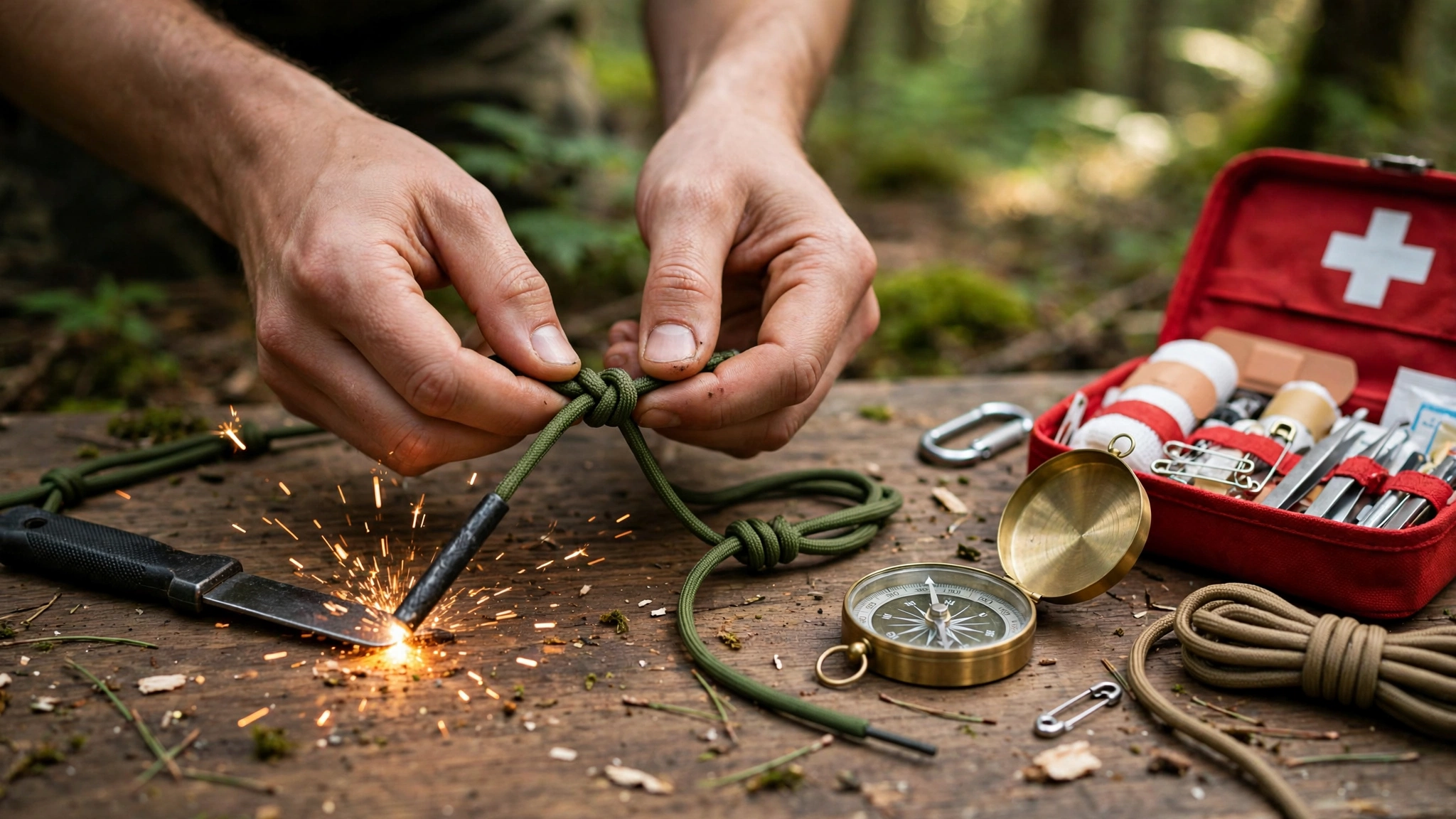
Paracord is the most overrated and underrated item in emergency kits at the same time. Overrated because no cord, however strong, replaces real tools and skills. Underrated because a 15-metre coil weighs almost nothing, costs very little, and solves an astonishing number of small problems that would otherwise stop you cold. The trick is knowing what it is actually good for — and what it is not — before you need it in a hurry.
What paracord really is
Paracord, originally parachute cord, is a lightweight nylon cord with a braided outer sheath and inner strands. The common “550” type is rated to hold around 250 kilograms in a straight pull, though real-world strength drops sharply at knots, so never trust a single strand for anything that could hurt you if it failed — never use it for climbing, abseiling, or holding a person’s weight. What it is excellent for is everything else: lashing, tying, hanging, bundling, repairing, and improvising. It does not rot quickly, it handles wet weather well, and the inner strands can be pulled out and used separately as fishing line, thread, or fine cord. Keep a coil in your go-bag, a shorter length in your car kit, and learn three knots properly — the bowline, the clove hitch, and the taut-line hitch, covered in our knot-tying guide — because cord without knots is just string.
Fifteen real jobs for one coil
- Shelter: ridge line for a tarp shelter, guy lines for a tent, and lashing for a debris shelter frame.
- Repairs: lash a broken tent pole, splint a cracked handle, or bind a split backpack strap until a real repair is possible.
- Carrying: replace a broken bag strap, bundle firewood, or rig a carry handle for an awkward load.
- Clothesline: dry wet clothes and towels after rain or a river crossing — wet clothing is a hypothermia risk, as covered in our rain gear guide.
- Food hanging: hang food out of reach of animals at a campsite, and hang a water container as a gravity feed.
- First aid: secure a splint, improvise a sling, or strap a dressing in place when bandages run out — alongside our first-aid kit guide.
- Fishing and snares: inner strands make usable fishing line, and cord is the traditional material for simple traps where legal.
- Marking and measuring: mark a trail, measure a distance, or tie a bright marker to a location for rescuers.
- Securing loads: tie down a tarp on a vehicle, lash gear to a roof rack, or stop a load shifting in transit.
- Emergency belt or tourniquet aid: cord can improvise a belt or help secure a proper tourniquet, but it is not a tourniquet itself — improvised tourniquets need proper technique.
What paracord cannot do
Do not use paracord for climbing, lifting people, or anything where a failure would cause a fall. Do not use it near fire without expecting it to melt — nylon softens with heat. Do not use it as a tow rope for a vehicle; the shock load will snap it. And do not buy the cheapest unbranded cord without checking its rating, because much of what is sold as paracord is decorative cord with a fraction of the strength. Buy genuine 550 cord from a reputable source, test a length yourself, and replace cord that is frayed, sun-damaged, or stiff with age. Stored dry and out of sunlight, paracord lasts for years in a kit, which makes it one of the cheapest insurance items you can own — a coil, three knots, and a little practice, and a dozen small emergencies get a little easier.
Shop paracord basics
- Genuine 550 paracord — the go-bag standard coil.
- Paracord bracelets — wearable cord you always have on you.
- Lightweight emergency tarps — cord plus tarp equals shelter.
As an Amazon Associate, Alien Bunker earns from qualifying purchases. This page contains affiliate links, which support the site at no extra cost to you.