
If you are lost, trapped, or trying to attract rescuers, your voice is a terrible signalling tool. Shouting exhausts you, carries poorly, and stops working when you are dehydrated, injured, or panicking. A whistle or an air horn does the job better, louder, and for far longer. Both cost very little and weigh almost nothing, so the real question is not whether to carry a signal, but which one belongs in which kit — because a whistle and an air horn solve different problems.
The case for the emergency whistle
A whistle’s strengths are size, reliability, and endurance. A good pea-less whistle — one with no moving pea to jam in cold or wet conditions — works in any weather, needs no power, no fuel, and no maintenance, and can be blown for hours with far less effort than shouting. It is loud enough to be heard hundreds of metres away in open country, and its high, piercing tone cuts through wind and rain better than a voice. It clips to a jacket, a keyring, or a life jacket, and it costs less than a coffee. Its weakness is range and direction: in dense forest, a built-up area, or high wind, a whistle’s sound does not travel far, and it is hard for rescuers to pinpoint exactly where it came from. The universal distress signal is three blasts, repeated — three short blasts, a pause, three more — the same pattern used in our signalling for help guide. Teach children this pattern early: a whistle on a child’s backpack, plus knowing when to use it, is one of the cheapest safety upgrades there is, as covered in our kids’ backpack guide.
The case for the air horn
An air horn is dramatically louder — loud enough to be heard over traffic, machinery, and a crowd, and to carry much further than a whistle in open or noisy environments. That makes it the better choice for a car kit, a boat, a large event, or any situation where you need to be heard over background noise. Its weaknesses are size, weight, and finite supply: a canister holds a limited number of blasts, it is bulky for a pocket kit, it can fail in extreme cold, and it needs replacing once used. It is also antisocial at close range — an air horn indoors or near other people is genuinely painful — so it is a tool for open spaces, not for a crowded shelter. For a car emergency kit, where size barely matters, an air horn is the stronger choice. For a pocket, a go-bag, or a child’s kit, the whistle wins on every practical measure.
What to actually carry
| Situation | Best choice | Why |
|---|---|---|
| Go-bag / bug-out bag | Pea-less whistle | Tiny, weightless, unlimited, works in any weather |
| Car emergency kit | Air horn | Maximum volume over traffic and distance |
| Children’s kits | Whistle on a lanyard | Easy to use, always on them, teaches the three-blast signal |
| Boat / watersports | Whistle attached to life jacket | Works wet, required safety gear in many places |
| Home shelter kit | Both | Whistle for personal use, air horn for attracting attention outside |
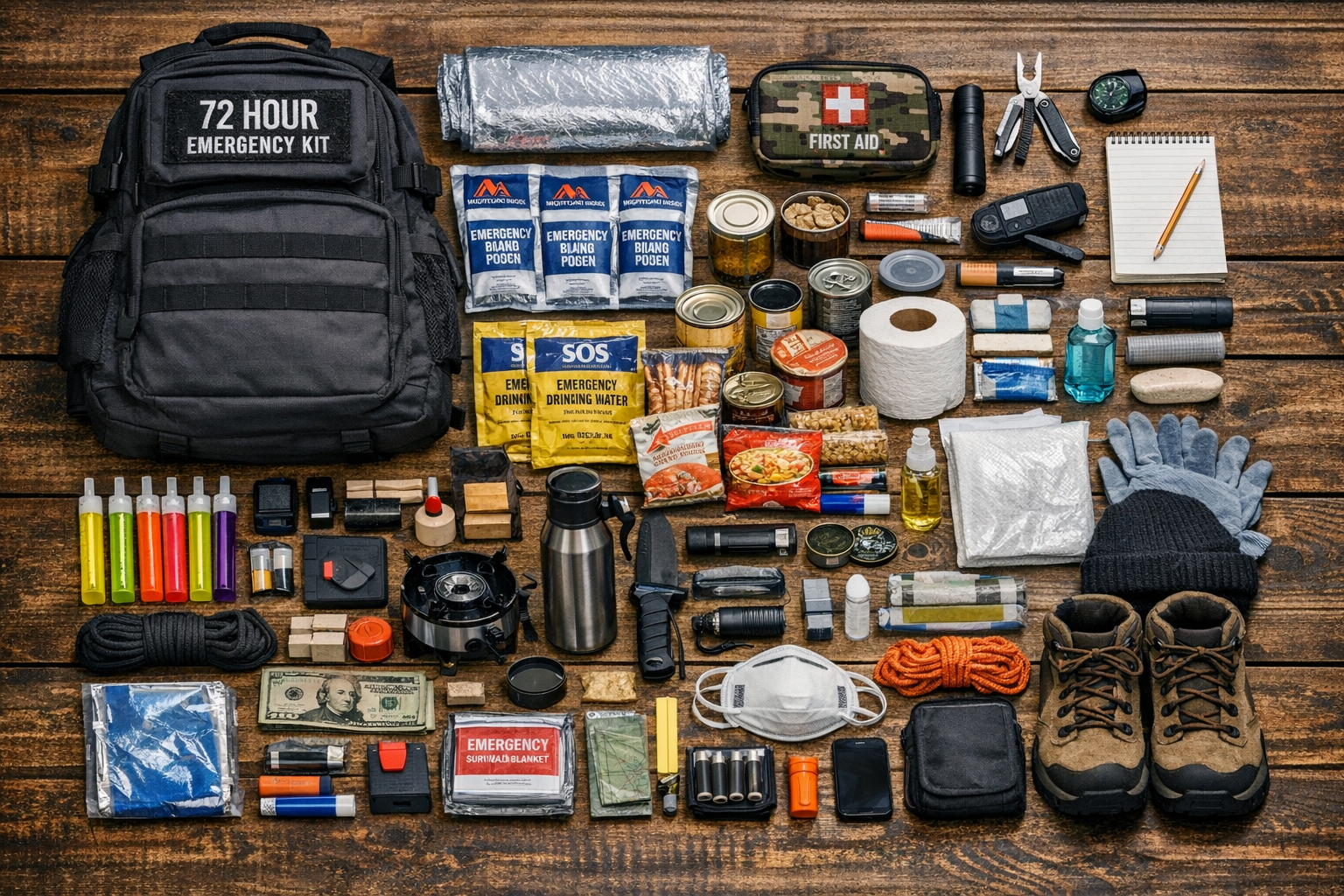
Whichever you choose, test it before you need it, keep it where you can reach it without opening a bag — clipped to a strap or a pocket — and practise the three-blast pattern so it is automatic under stress. A signal device you cannot find, or do not know how to use, is just weight. Pair your signal with the wider kit thinking in our go-bag guide, and a few grams of plastic become the loudest thing you own when it matters.
Shop emergency signals
- Pea-less emergency whistles — the go-bag standard signal.
- Air horn canisters — maximum volume for car and boat kits.
- Whistles with lanyards — clip-on signals for children’s kits.
As an Amazon Associate, Alien Bunker earns from qualifying purchases. This page contains affiliate links, which support the site at no extra cost to you.