
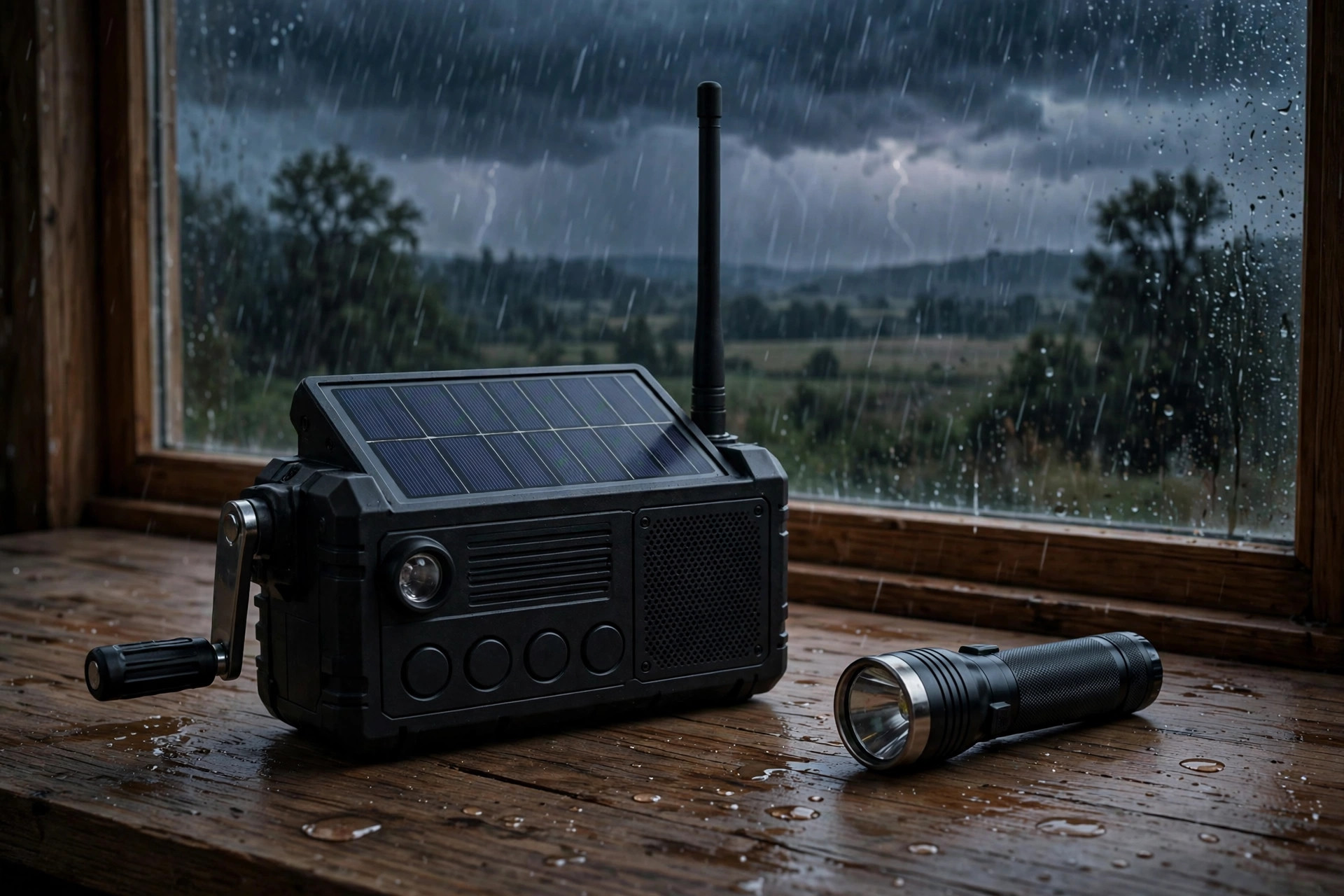
When the power dies and the cell towers go down or overload, one device still works exactly as it did fifty years ago: a radio. Weather alerts, emergency broadcasts, news from the next county over – an emergency radio is how you stop guessing during a disaster. This guide covers the three types worth considering, the features that actually matter, and the gimmicks to ignore.
The three power types, compared honestly
- Hand-crank radios – a minute or two of cranking buys you listening time with no batteries and no sun. They are the reliability kings and belong in every kit, which is why a hand-crank emergency radio anchors our 72-hour kit. Downside: cranking gets old, and internal batteries are usually small.
- Solar radios – a small panel tops the battery up during the day. Great for multi-day outages in decent weather, useless as your only plan in a stormy week. The best units combine solar and crank and replaceable batteries – redundancy is the whole point.
- Battery/USB radios – bigger rechargeable or AA-powered sets give the loudest speakers, best reception, and longest runtime, and pair naturally with the power banks and stations in our backup power guide. Downside: when the battery is dead, so is the radio.
Features that matter (and ones that do not)
NOAA weather band with alert mode is the headline feature: the radio listens silently and wakes you with a tone when the National Weather Service issues a tornado, flood, or storm warning for your area. If you buy one feature, buy this one – look for a NOAA weather radio with alert from a known maker. AM/FM matters too: local news during an emergency lives on AM talk stations that travel far at night.
A built-in flashlight is genuinely useful (one less device to find in the dark), and USB phone charging is a nice emergency trickle – but treat it as a bonus, not a plan: a radio battery might give a struggling phone 20-30%, not a full charge. Skip the novelty extras. SOS sirens, reading lamps with ten modes, and compass charms glued to the case add cost and failure points without adding survival value.
How to choose, in one pass
For a bug-out bag or apartment kit: a compact crank/solar NOAA unit. For a house: the same, plus consider a larger desktop weather radio for the bedroom so alerts wake you at night. Whatever you buy, do the boring part: charge it, tune your local NOAA frequency, write that frequency on tape stuck to the radio, and re-test it every few months when you rotate your other supplies. A radio you have never turned on is a paperweight with an antenna. Pair it with the rest of your bug-out checklist and your information problem is solved for about the price of a pizza night.
As an Amazon Associate, Alien Bunker earns from qualifying purchases. This page contains affiliate links, which support the site at no extra cost to you.