
Dried lentils are the cheapest protein in the emergency pantry, and one of the most useful. A bag of lentils costs very little, keeps for years, needs no fridge, and cooks in fifteen to thirty minutes with no soaking — which makes them far more practical in a blackout than dried beans, which need hours of soaking and a lot of fuel. Lentils are also genuinely nutritious: rich in protein, iron, and fibre, and filling enough to make a small amount of rice into a proper meal. In a week without power, when the fresh food is gone and the tinned food is running low, a bag of lentils and a bag of rice is a dinner that costs almost nothing. This guide covers which lentils to stock, how to store them, and how to cook them when the power is out.
Which lentils to stock, and how much you need
Start with the three types you will actually use. Red lentils are the fastest to cook — they break down into a soft, soupy texture in about fifteen minutes, which makes them perfect for soups, stews, and curries. Brown and green lentils hold their shape better, take about twenty to thirty minutes, and work well in salads, rice dishes, and as a side. Yellow lentils sit between the two. Buy a mix, because variety is what stops the household getting bored of the same meal by day three. As a planning number, about 100 grams of dried lentils per person per meal is a good serving, so a household of three needs roughly two kilos for a week of lentil-based dinners — and most households will want to mix lentils with the rest of their stock, as in our emergency meal planning guide and our rice and beans storage guide. Check the lentils before you buy them: they should be whole, dry, and uniform in colour, with no dust, no broken pieces, and no signs of insects. And keep them in a separate, labelled container if anyone in the household has a legume allergy — see our food allergies guide.
Storage, shelf life, and the weevil problem
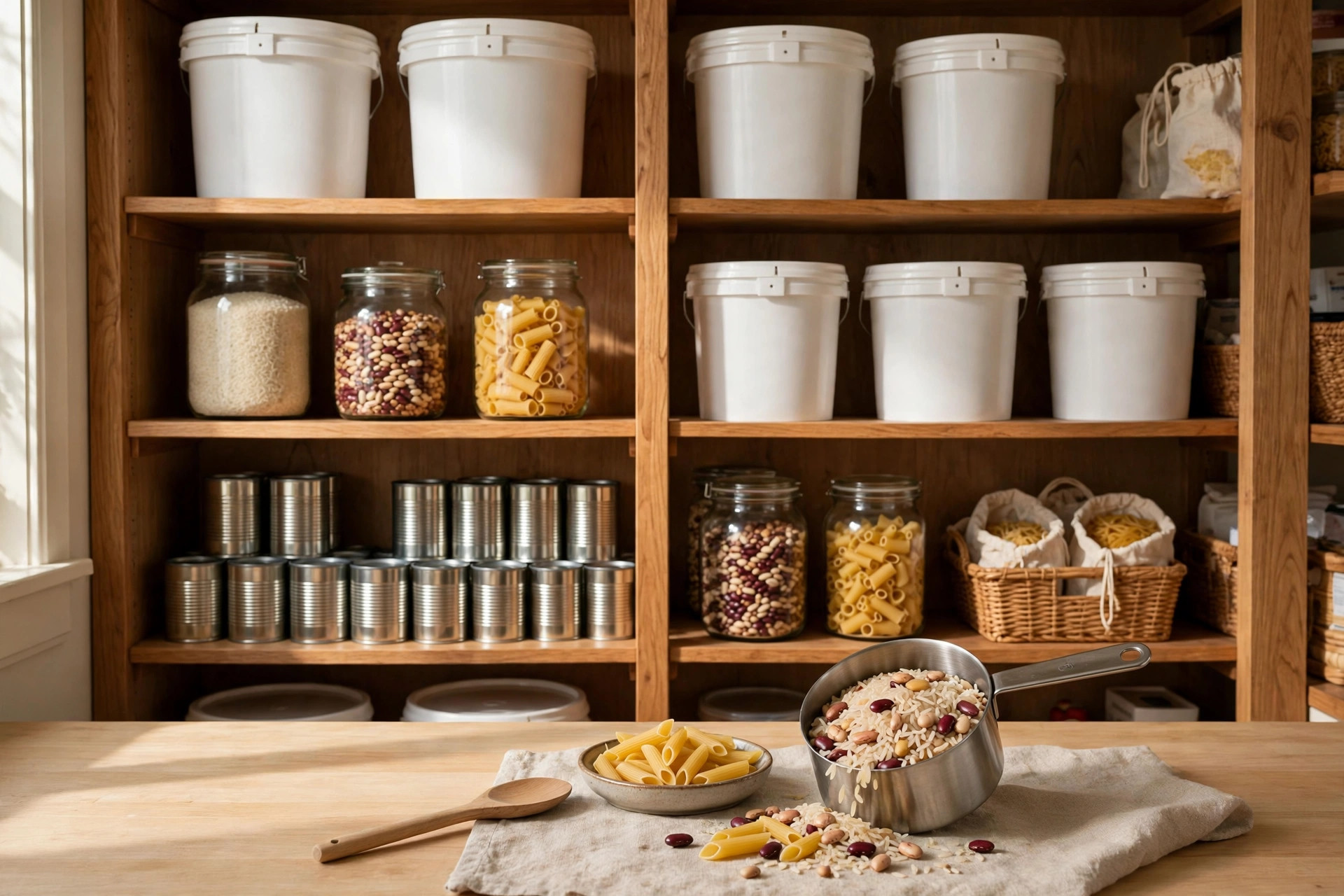
Dried lentils keep for two to three years in a sealed container in a cool, dry place, and longer if you store them properly. The original paper or plastic bag is fine for a few months, but it is not a long-term home: it lets in moisture, and moisture is what ruins lentils. For long-term storage, move them into airtight jars or containers with a tight-fitting lid, and keep them off the floor in a cool, dark cupboard. If you want them to last five years or more, use a mylar bag with an oxygen absorber inside, sealed with a hot iron — the same method used for rice and flour, as in our rice and beans guide and our flour storage guide. The enemy of stored lentils is the weevil: tiny insects that lay eggs in dry food. Check your lentils every few months, and if you see small beetles, webbing, or dust inside the container, throw the whole batch away and clean the cupboard. A simple trick is to freeze a new bag of lentils for three days before storing it — that kills any eggs that came from the shop. Rotate by date, oldest first, using the system in our pantry rotation system, and label each container with the month you bought it.
Cooking lentils in an emergency
Lentils are easy to cook, and that is their biggest advantage in an emergency. Rinse them in a bowl of water, pick out any small stones, and cook them in about twice their volume of water — one cup of lentils to two cups of water — on a portable stove for fifteen to thirty minutes, depending on the type. No soaking is needed, which saves both water and time, and the cooking water can be kept and used as stock. Add salt at the end, not the start, because salt added early makes lentils tough. Season simply: a stock cube, a pinch of curry powder, or a spoonful of soy sauce turns plain lentils into a real meal — see our cooking without power guide and our one-pot meals guide. Serve lentils over rice for a complete protein, or as a thick soup with bread. The common mistakes are easy to avoid: storing lentils in the original bag in a damp cupboard, where they go mouldy; stocking only one type, so the meals get boring; and forgetting that lentils need water and fuel to cook, so they are not a no-cook food — keep some no-cook options in the pantry too. A bag of lentils costs almost nothing, weighs almost nothing, and feeds a household for a week. That is exactly what an emergency pantry is for.
Shop dried lentil storage basics
- Dried lentils in bulk — red, brown, and green, so the meals stay varied.
- Mylar bags with oxygen absorbers — the long-term storage method that keeps lentils fresh for years.
- Airtight food storage containers — keep lentils dry, weevil-free, and easy to see.
As an Amazon Associate, Alien Bunker earns from qualifying purchases. This page contains affiliate links, which support the site at no extra cost to you.