
Dried pasta is the perfect emergency food, and it is strange that more people do not treat it that way. It is cheap, it keeps for years, it needs no fridge, it cooks in minutes, and a hungry household will eat it without complaint. A kilo of dried pasta is eight or nine servings, and it costs less than a single ready meal. But pasta is not indestructible. Left in a damp cupboard it goes soft and stale, left in its cardboard box it attracts pantry moths, and cooked badly it turns into a gluey mess that nobody wants to eat twice. This guide covers which pasta to stock, how to store it so it lasts, and how to cook it when water and fuel are limited — because in an emergency, both usually are.
Which pasta to stock, and how long it keeps
Plain dried pasta — spaghetti, penne, fusilli, macaroni — keeps for one to two years past its printed date if it is stored dry, and often much longer. The shapes matter more than most people think. Short shapes like penne and fusilli are the best emergency choice: they cook evenly, they are easy to eat from a bowl with a spoon, they pack neatly, and they work in one-pot meals where the pasta cooks in the sauce. Long spaghetti is fine too, but it needs a big pot and plenty of water, and it breaks easily in a bag. Tiny shapes like orzo and small macaroni cook fastest and use the least fuel, which matters when you are cooking on a portable stove. Egg pasta is richer and tastier, but it is more fragile and attracts insects faster. For a household stock, buy a mix of two or three short white shapes, in the sizes you already cook with, and keep a couple of packs of instant noodles alongside for the days when there is no fuel at all — see our instant noodle meals guide and our budget emergency food list.
Storage: dry, sealed, and away from the insects
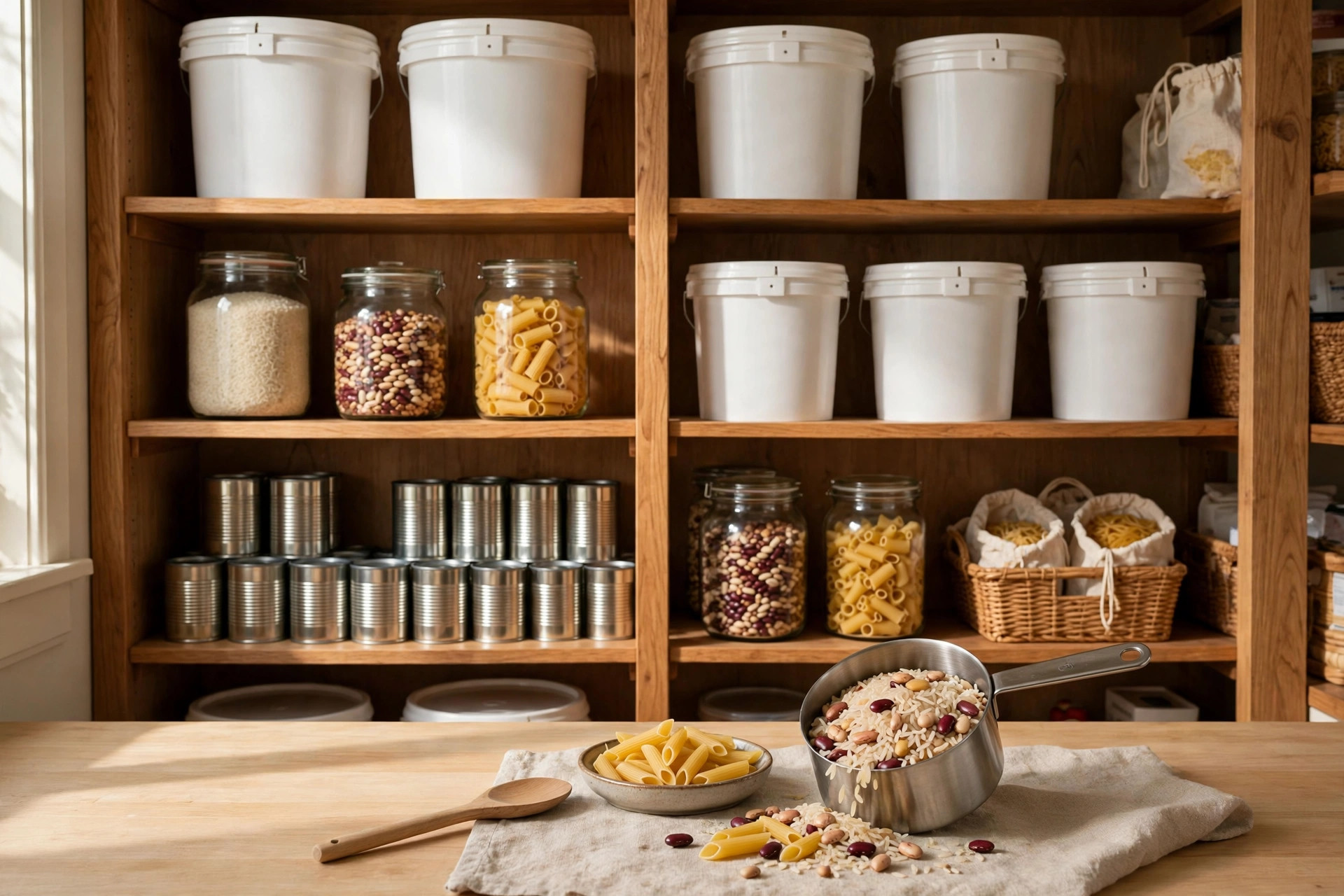
Pasta has three enemies: damp, insects, and crushing. The cardboard box it comes in protects against none of them. Move pasta into airtight containers — large jars, hard plastic tubs with rubber seals, or food-grade buckets — and keep it in a cool, dark, dry place, off the floor. A damp cupboard is the worst place in the flat: pasta absorbs moisture from the air, goes soft, and grows mould. The insect problem is the same as with flour and rice: pantry moths and weevils lay eggs in dry goods, and a single infested box can spread to the whole shelf. Freeze new pasta for 48 hours before you store it, just like flour, and keep pasta away from flour and rice on the shelf so one infested bag does not ruin everything. See our rice and beans storage guide and our food storage mistakes guide for the full dry-goods system. Label every container with the pasta type and the date, and use the oldest first.
Cooking pasta with less water and less fuel
The usual way to cook pasta — a huge pot of boiling water — is wasteful in an emergency. You do not need it. Pasta cooks perfectly well in just enough water to cover it, and it cooks faster if you soak it first. Soak dried pasta in cold water for 30 minutes, and it will cook in two or three minutes of boiling instead of ten. Or cook it risotto-style: put the pasta in a pot with a little water and a tin of tomatoes, and let it absorb the liquid as it cooks, stirring now and then — the result is a one-pot meal with no water to throw away, as in our one-pot meals guide. If you have no fuel at all, pasta will soften in cold water in a couple of hours, and it is edible, though not pleasant — a last resort, not a plan. Keep a lid on the pot while it cooks: it halves the fuel used. And save the pasta water — it is starchy, salty, and useful for thickening a sauce or a soup. The common mistakes are all avoidable: stocking only one shape, so everyone is sick of it by day three; storing pasta in its cardboard box in a damp cupboard; and cooking it in far more water than you need. A few kilos of pasta, a few tins of tomatoes and tuna, and a bottle of oil are a week of dinners for a small household — see our cooking without power guide for more. Cheap, light, and patient: pasta waits on the shelf until you need it.
Shop dried pasta storage basics
- Dried pasta variety packs in bulk — several shapes, so nobody tires of the same one.
- Large airtight food storage containers — keep pasta dry, sealed, and insect-free.
- Lightweight camping cooking pot sets — a small pot with a lid cooks pasta on very little fuel.
As an Amazon Associate, Alien Bunker earns from qualifying purchases. This page contains affiliate links, which support the site at no extra cost to you.