
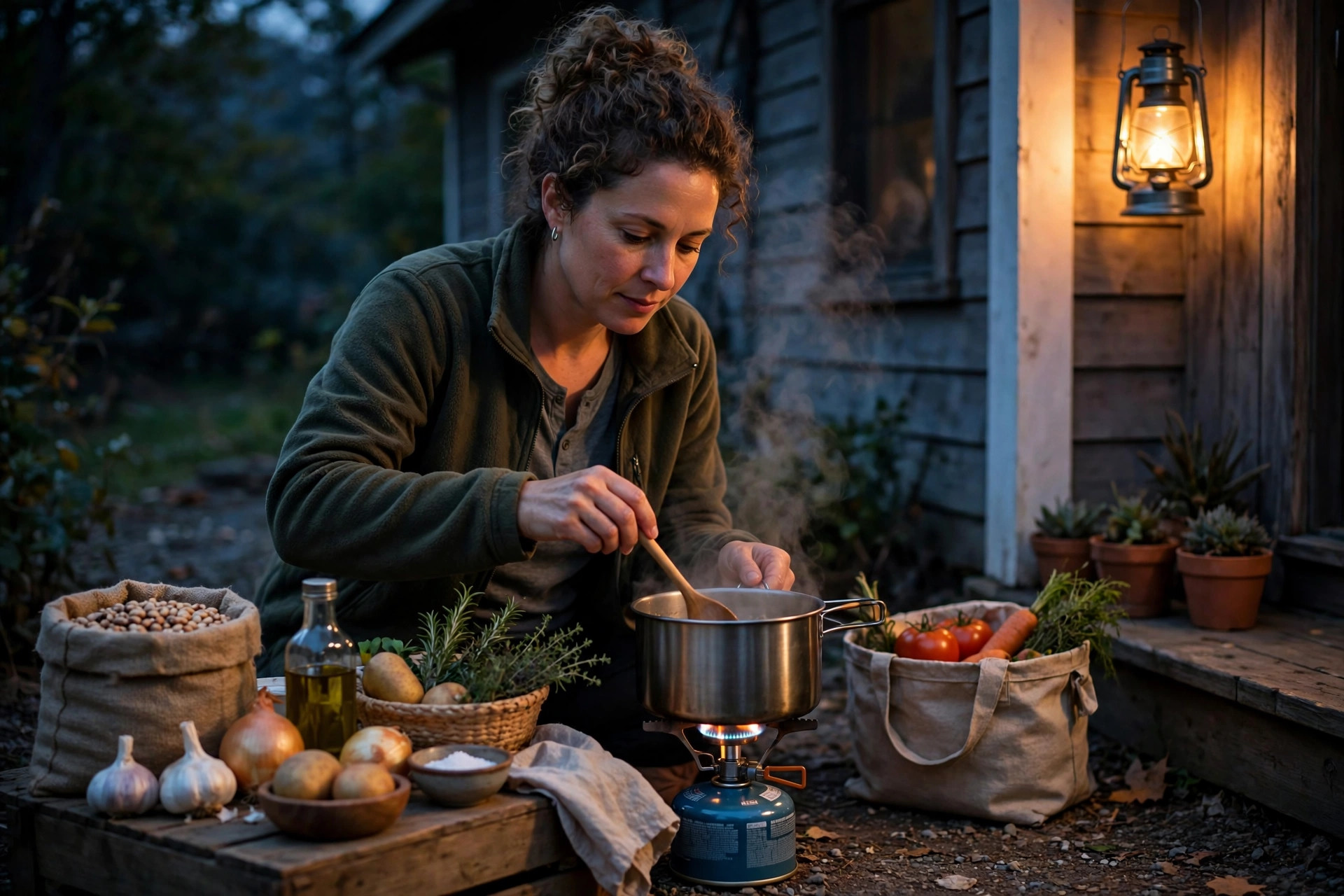
A portable camping stove is the piece of gear that turns an emergency from “cold food and no hot drinks” into “a hot meal and a cup of tea” — and that is a bigger difference than it sounds. Hot food is morale, hot water is hygiene, and a stove is the only way to cook when the gas and the electricity are both out. But a camping stove is also a live flame and a fuel canister, and in a small flat the risks are real: fire, burns, and carbon monoxide. Every year, people are hurt by camping stoves used indoors, in tents, or next to something flammable. This guide covers how to use a portable stove safely, where to use it, and what to keep with it.
The safety rules: non-negotiable, every time
- Never use a fuel stove indoors. Not in the kitchen, not in the bathroom, not in a tent, and not on a balcony with the door closed. Camping stoves burn gas or liquid fuel, and they produce carbon monoxide — an invisible, odourless gas that kills. Use the stove outside, in the open air, or on a balcony with the doors and windows open and the wind at your back. If the weather is too bad to cook outside, eat cold food instead.
- Keep the stove on a flat, stable, non-flammable surface. A wobbly stove tips over, and a tipped stove spills burning fuel. Use a flat stone, a metal tray, or a concrete surface — never a plastic table, a wooden deck, or a bed.
- Keep fuel away from the flame. Store fuel canisters upright, in the shade, away from the stove and away from any heat source. Never change a canister near a lit stove, and never use a damaged or rusted canister.
- Keep children and pets away. A stove is hot long after the flame goes out. Set a rule: nobody touches the stove, and nobody walks past it carrying anything.
- Keep a fire extinguisher or a bucket of water nearby. Not in another room — next to the stove. See our fire extinguisher guide.
- Check the stove before every use. Look for leaks, damaged hoses, and loose connections. If you smell gas, do not light the stove — move the canister outside and let it air out.
Choosing a stove and fuel, and cooking in an emergency
For an apartment, a small single-burner gas stove is the best choice: it is light, it is easy to use, and the fuel canisters are widely available. Butane canisters are common and cheap, but they struggle in very cold weather; propane works better in the cold, but the canisters are bigger and heavier. Choose the fuel you can actually buy where you live, and stock enough for the length of your plan — a single canister lasts roughly an hour or two of cooking, depending on the stove, so a few canisters are a week of hot meals. See our stove fuel types guide for the full comparison. Keep the stove, the fuel, a lighter, and a small pot together in one box, so the cooking kit is one grab, not a hunt through cupboards. And practise using the stove before you need it: light it, boil a litre of water, and time how long it takes, so you know what to expect. Cook simply in an emergency: one-pot meals, noodles, soup, and rice, following our one-pot meals guide and our cooking without power guide. And if you are cooking on a balcony, watch the wind: a strong wind blows the flame sideways and wastes fuel, so use a windscreen or cook in a sheltered corner. A camping stove is a brilliant piece of emergency gear — and it is only dangerous when the safety rules are ignored. Follow them, and the stove is the thing that keeps the household fed, warm, and sane.
Shop portable camping stove basics
- Single-burner portable camping stoves — light, simple, and easy to use on a balcony.
- Butane gas canisters — stock a few, and store them upright and cool.
- Folding aluminium windscreens — keep the flame steady and save fuel in the wind.
As an Amazon Associate, Alien Bunker earns from qualifying purchases. This page contains affiliate links, which support the site at no extra cost to you.