
Canned soup is the quiet workhorse of the emergency pantry. It is a complete meal in a tin: food and water together, ready to eat, with no cooking skills and almost no preparation. In a blackout, a storm, or a week when the shops are shut, a hot bowl of soup is comfort, salt, and calories in one — and it is the meal even a tired, stressed household will actually eat. But canned soup is not a buy-it-and-forget-it item. It has a real shelf life, it goes bad in ways that are not obvious from the outside, and a few simple storage rules make the difference between a tin that is good in three years and a tin that is not. This guide covers what to buy, how to store it, and how to tell when it is no longer safe.
What to buy, and how long it really keeps
Most canned soup is best within two to five years of the date on the tin, and the exact number depends on the type: tomato-based soups are more acidic and tend to have shorter shelf lives, while bean, vegetable, and broth-based soups usually last longer. The date on the tin is a best-before date, not a safety deadline — a tin stored well can still be good past it, and a tin stored badly can go off before it — so the date is a guide, not a guarantee, as our expiry dates guide explains. Buy the soups your household actually eats. A shelf of mushroom soup nobody likes is not a stockpile, and in an emergency people under stress eat less, not more — see our food storage mistakes guide. Variety matters too: a mix of tomato, chicken, vegetable, bean, and noodle soups stops the household getting sick of the same flavour by day three. Choose tins over cartons and pouches for long storage — metal tins are the most durable and the most protective — and prefer soups with a decent amount of salt and calories, because in an emergency the soup may be the whole meal, not a starter. Condensed soup is a good buy for small flats: it takes up less space, and you add water to make it up — but remember that it needs water, so count it in your water plan, as in our water storage guide. And keep a manual can opener with the soup, not in a different drawer: an electric opener is useless in a blackout, and a ring-pull tin is only useful if the ring pull still works — see our cooking without power guide for more no-power kitchen basics.
Storage rules, and the signs a tin has gone bad
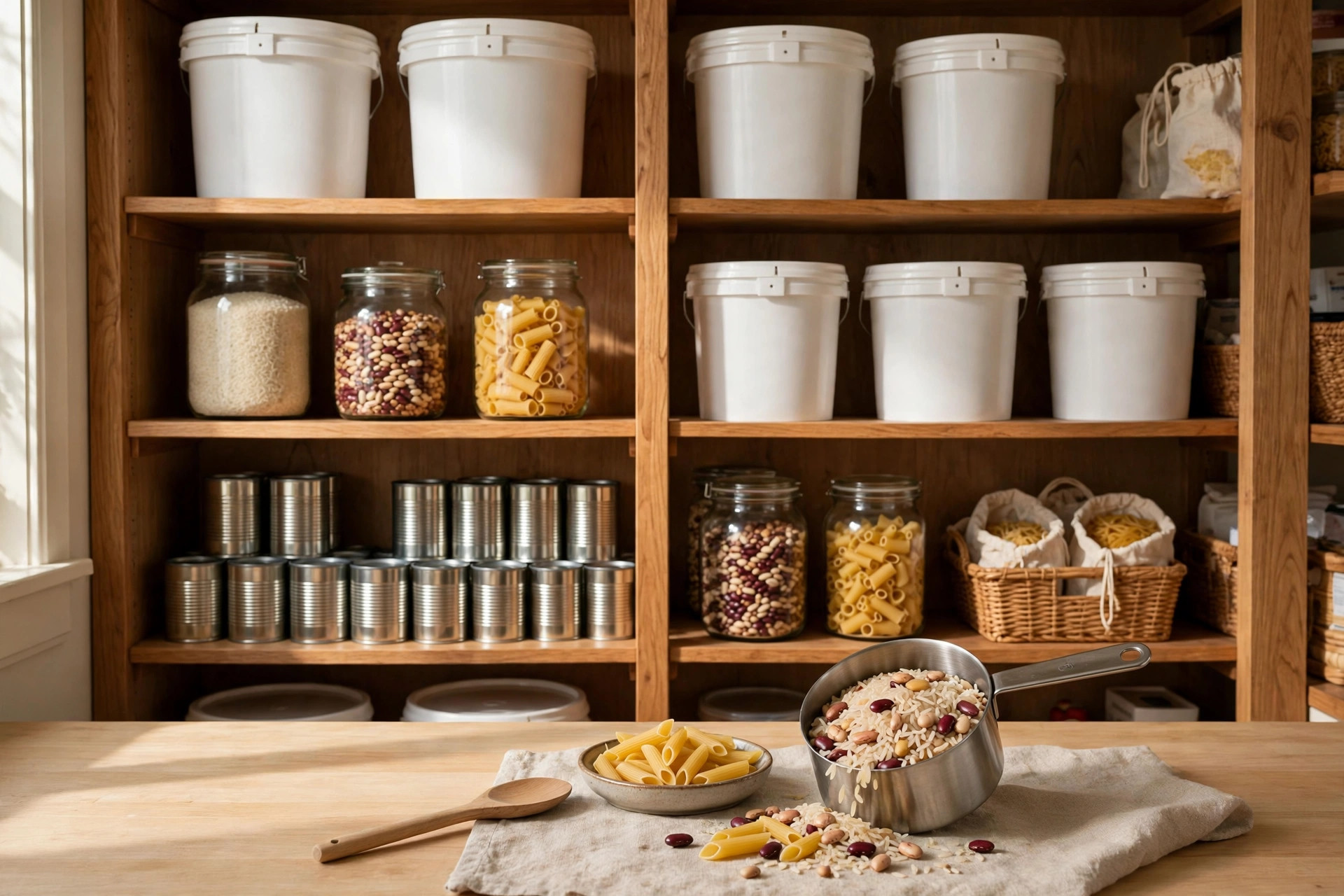
Store canned soup the same way you store all tinned food: in the coolest, darkest place in the flat, away from heat and light, and off the floor. Heat is the enemy — a cupboard above the stove or a shelf in a sun-baked room will cut the shelf life of your tins sharply. Damp is the second enemy: moisture rusts tins from the outside, and a rusted tin is a tin you should not trust. Keep tins dry, keep them upright, and do not stack them so high that the bottom ones dent under the weight — a deep dent, especially on a seam or a rim, can break the seal and let bacteria in. Rotate the stock: use the oldest tins first, label them with the purchase date, and check the pantry every few months, following the rotation rules in our pantry rotation system and our canned goods storage guide. Before you open a tin, inspect it. Throw it away — do not taste it, do not use it — if it is swollen or bulging, if it leaks, if it is badly dented on a seam, if it is heavily rusted, or if it spurts or hisses when opened. Once opened, if the soup smells off, looks wrong, or the tin is discoloured inside, throw it away. These are the rules the food safety agencies give, and they exist because the bacteria that grow in a failed tin can cause serious illness — the kind of illness you do not want when the hospitals are busy and the power is out. A few dozen tins of soup, stored properly and rotated regularly, are one of the cheapest and most useful things in an emergency pantry: a hot meal, no cooking, no fuss, and no alien technology required.
Shop canned soup storage basics
- Canned soup variety packs in bulk — a mix of flavours, so the household does not tire of one taste.
- Heavy-duty manual can openers — the one that works when the power is out.
- Stackable can organiser racks — keep tins upright, visible, and rotating oldest-first.
As an Amazon Associate, Alien Bunker earns from qualifying purchases. This page contains affiliate links, which support the site at no extra cost to you.