
Oats are one of the best emergency foods you can buy, and one of the least appreciated. They are cheap, they keep for years on a shelf, they are filling and nutritious, and they weigh almost nothing for the energy they provide. Most people think of oats as porridge, something that needs a stove, a pot, and ten minutes of cooking. But oats do not need cooking at all. With a little water and a little patience, raw oats become a proper meal — and in a power cut, that is the difference between a pantry full of food and a pantry full of ingredients you cannot use.
Overnight oats: the no-cook method that actually works
The simplest no-cook oat meal is overnight oats. Put equal parts oats and water in a jar or a bowl, stir, cover it, and leave it for a few hours — or overnight. The oats absorb the water and soften into a thick, spoonable porridge that needs no heat at all. Rolled oats work best for this: they soften evenly and keep a pleasant texture. Steel-cut oats take much longer and stay chewy, so they are a poor choice when you cannot cook. Instant oats soften fastest of all — in as little as fifteen minutes — but they go mushy if you leave them too long, so they are best for a quick meal rather than an overnight soak. Use clean, safe water, and keep the same hygiene rules as any food preparation: wash your hands, use a clean container, and do not leave a finished bowl sitting out for hours in a warm room. Add flavour from the pantry — a spoonful of sugar, a drizzle of honey, dried fruit, cinnamon, or a spoonful of powdered milk mixed in first. A jar of overnight oats with a handful of raisins and a spoonful of cinnamon is a real breakfast, not a survival ration, and it costs pennies. For more no-cook breakfast ideas, see our emergency breakfast guide and our no-fridge lunchbox ideas.
More ways to eat oats without a stove
Overnight oats are only the start. Here are the other no-cook uses that make oats worth their shelf space:
- Oat energy bars: mix oats with honey or syrup and peanut butter until they hold together, press the mixture into a tray, and leave it to set. Cut it into bars and wrap each one — they keep for days, they travel well, and they are the easiest portable meal in the pantry.
- Trail mix with oats: dry oats straight from the bag are edible, and mixed with nuts, seeds, and dried fruit they make a crunchy snack that needs no preparation at all. It is not glamorous, but it is calories and fibre in a handful.
- Oat smoothies: if you have a way to shake or stir, oats blended with powdered milk and water make a filling drink — useful when someone is ill or too tired to eat a solid meal, or for a child who will not eat plain porridge.
- Oats as a thickener: stir a spoonful of raw oats into soup, stew, or a tinned meal. The oats absorb liquid and thicken it, stretch a small meal into a bigger one, and add fibre and bulk that keep people full for longer.
- Emergency baking without an oven: oat dough pressed flat and cooked on a hot plate, a camp stove, or even a heated pan makes simple flatbreads — see our emergency baking guide for the full method.
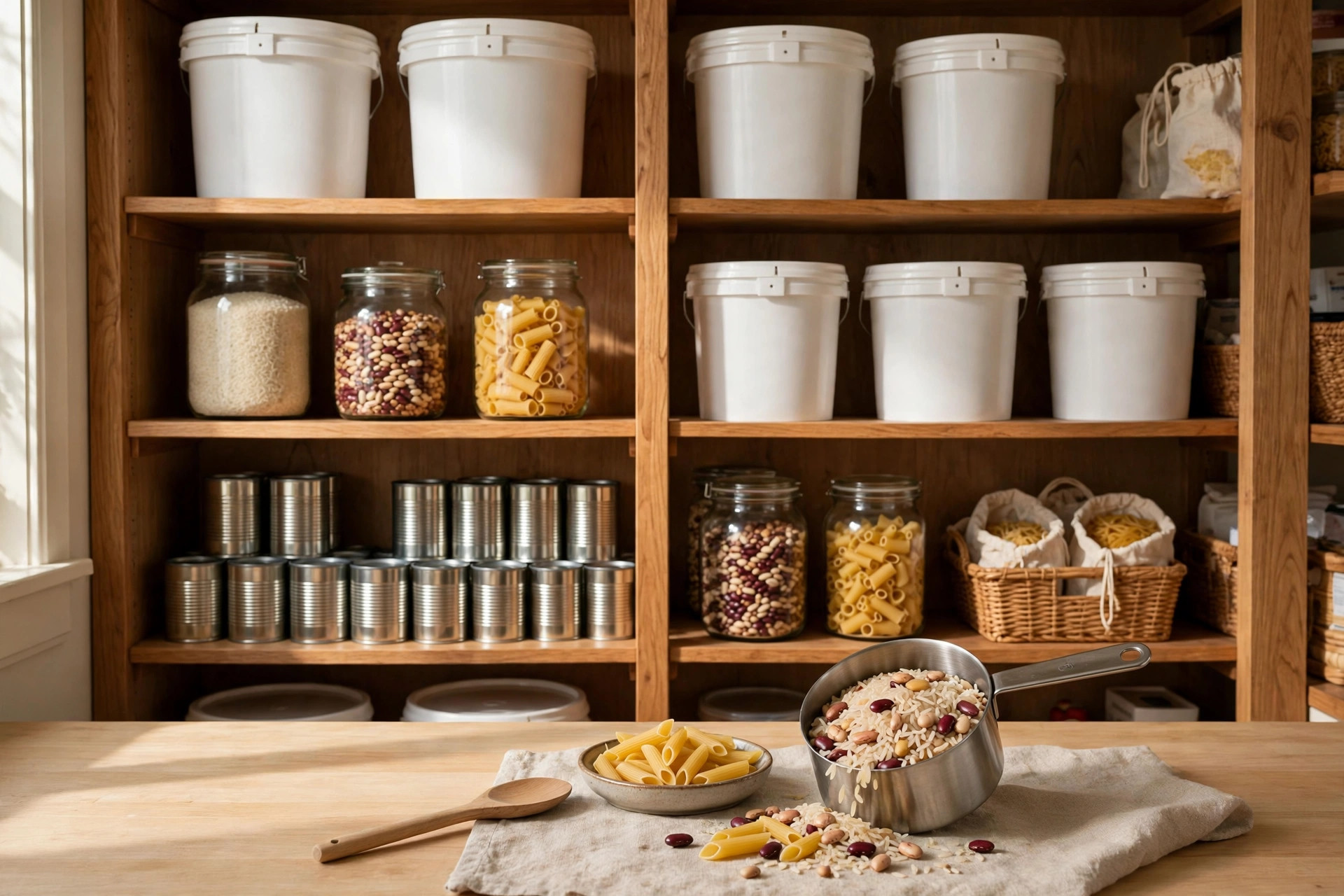
Store oats the same way as the rest of the pantry: in an airtight container, in a cool, dry cupboard, following the rotation rules in our pantry rotation system and the storage guidance in our rice and beans storage guide. A large bag of rolled oats costs very little and covers dozens of meals — stock more than you think you need, because oats are the food you will reach for on the first morning of a crisis, when the power is out and everyone still needs breakfast.
Shop oats and no-cook breakfast basics
- Rolled oats in bulk — the best no-cook oat, cheap and long-keeping.
- Airtight food storage containers — keep oats dry and pest-free.
- Dried fruit mixes — flavour and sweetness for no-cook oat meals.
As an Amazon Associate, Alien Bunker earns from qualifying purchases. This page contains affiliate links, which support the site at no extra cost to you.