
Fresh bread is the food people miss first when the power goes out. It is also one of the easiest foods to make without an oven, because humans baked flatbreads on hot stones and in covered pots for thousands of years before electric ovens existed. If you have flour, water, salt, and a heat source — a camping stove, a gas hob that works without electricity, or even a fire — you can make bread. It will not look like a bakery loaf, and it does not need to. Warm, fresh bread turns a tin of beans into a meal and lifts a household’s mood on a difficult day.
Flatbreads: the fastest emergency bake
Flatbreads are the beginner’s emergency bake because they need no yeast, no rising time, and no oven. Mix flour, water, and a pinch of salt into a soft dough, rest it for ten minutes, roll or press it thin, and cook it in a dry frying pan or on a griddle over medium heat for a couple of minutes per side, until it puffs and browns in spots. That is it — no special skill, no special equipment, and the result is ready in under half an hour from an empty bowl. Flatbreads wrap around canned meat, beans, cheese, or jam, they scoop up stews, and children usually love making them, which turns a chore into an activity during a long blackout. The key details are simple: keep the dough soft rather than stiff, because dry dough makes hard bread; cook on medium heat rather than high, because scorched outside and raw inside helps nobody; and keep the first batch small until you learn your pan and your heat source. If you have baking powder, add a teaspoon per cup of flour for a lighter, puffier bread. If you have oil, a thin brush of oil in the pan gives a softer, richer result. This pairs naturally with our no-fridge pantry meals, since the same flour, salt, and canned fillings appear in both.
Pot bread and damper: baking without an oven
For a loaf shape, the camp-oven method works with a heavy pot that has a lid — a Dutch oven, a cast-iron pot, or any thick pot with a tight lid. Mix a simple dough of flour, water, salt, and yeast if you have it (or baking powder if you do not), shape it into a round, and place it in the oiled pot. Cover with the lid and cook over low, steady heat, turning the pot occasionally so one side does not scorch, for roughly 30 to 45 minutes. The lid traps steam, which is what makes the crust form, and the heavy pot spreads the heat evenly. Damper, the traditional Australian camp bread, is even simpler: flour, water, salt, and baking powder, shaped into a flat round and baked in a covered pot or wrapped in foil near coals. Neither method needs precise temperature control — low and slow, checking often, beats high heat and a burnt loaf. Fuel is the real constraint, so bake in batches: make enough bread for a day or two while the stove is already lit, and plan your cooking around fuel, as explained in our cooking without power guide. Always bake in a ventilated space and never use a camping stove indoors without ventilation, because carbon monoxide is a genuine risk — our heater safety guide covers the same ventilation rules.
Stocking a baking corner
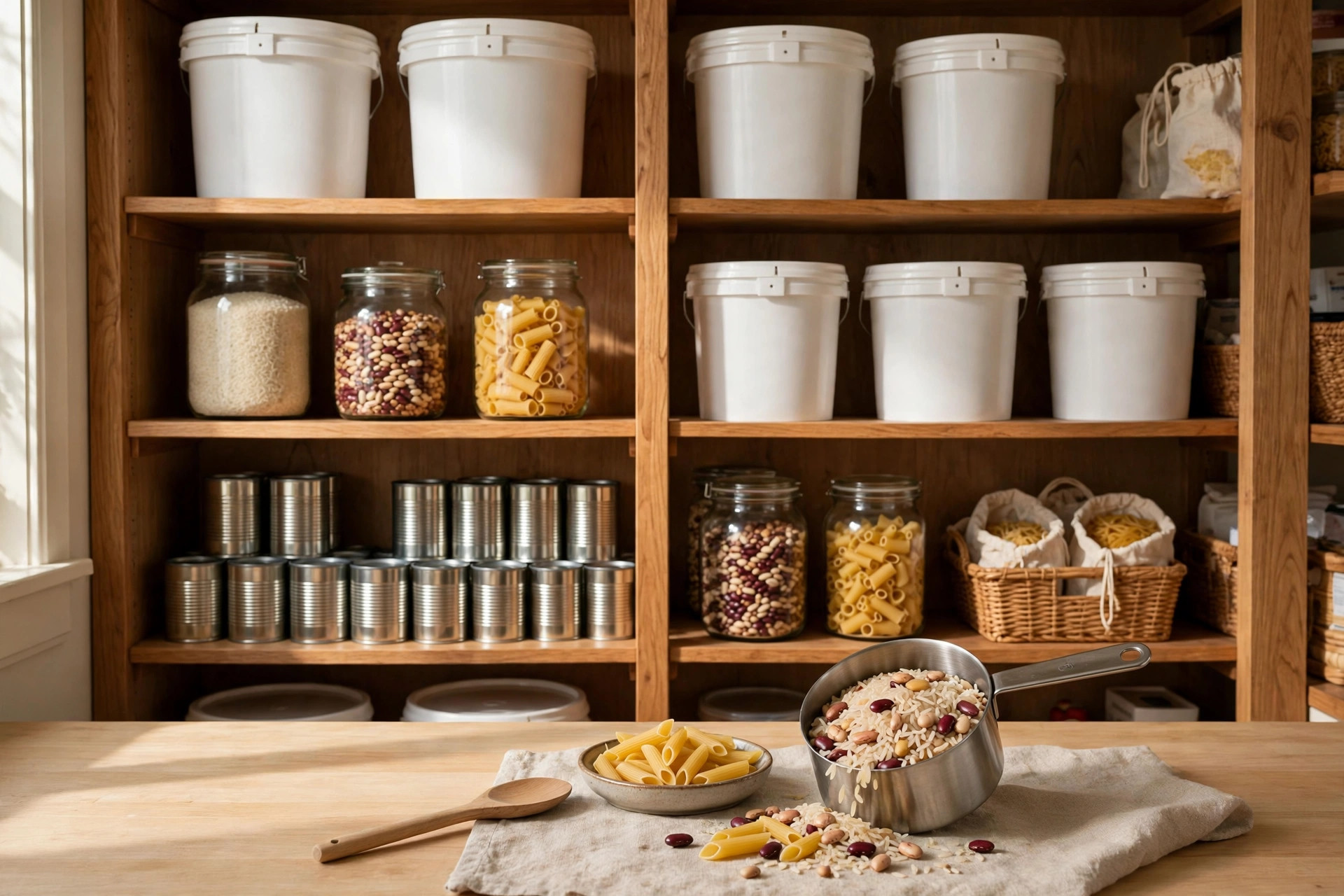
A baking corner costs very little: a bag of plain flour, a bag of self-raising flour or a tin of baking powder, salt, sugar, and a bottle of oil, stored dry and rotated through normal cooking, as in our pantry rotation guide. Flour keeps best in a sealed container away from heat and pests, and wholemeal flour goes stale faster than white flour, so rotate it more often. Add a rolling pin if you have space, but a wine bottle or a clean jar works fine for rolling flatbreads. Keep the recipe written down — not on a phone that may be dead — on a card in the kitchen: flatbread ratios and damper ratios are short, and a card means anyone in the household can bake, not just the person who remembers the recipe. Emergency baking is not about artisan skill. It is about turning stored flour into warm food with a pan, a pot, and a little patience, and that is a skill worth practising once on a normal weekend before you need it in a blackout.
Shop emergency baking basics
- Cast-iron Dutch ovens — pot bread without an oven.
- Heavy frying pans and skillets — flatbreads on any heat source.
- Airtight flour containers — keep flour dry and pest-free.
As an Amazon Associate, Alien Bunker earns from qualifying purchases. This page contains affiliate links, which support the site at no extra cost to you.