
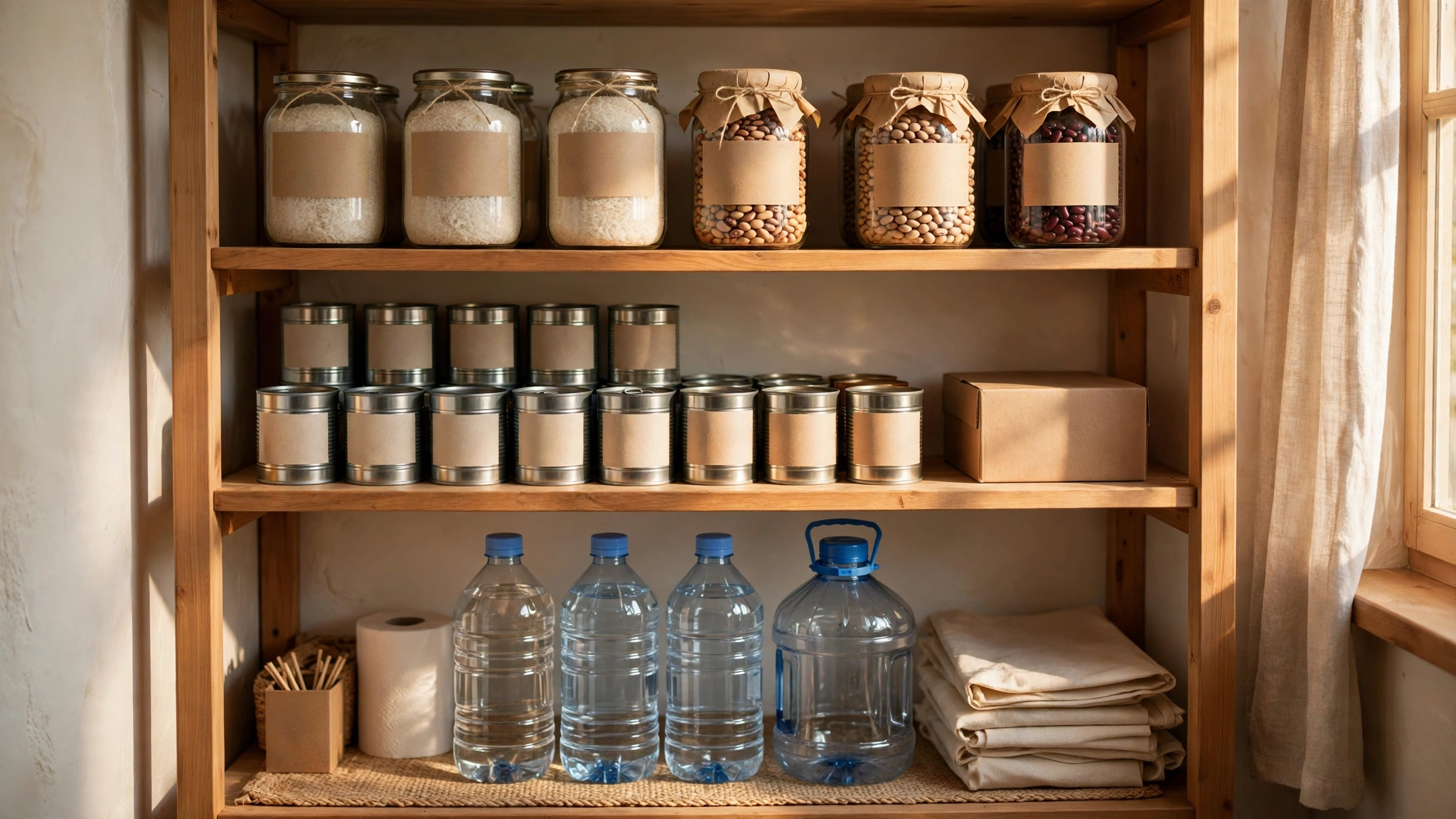
Canned fruit is one of the most underrated items in an emergency stockpile. It needs no cooking, no refrigeration, and no water to prepare, it keeps for years on a shelf, and it does something most emergency food does not: it tastes good. After days of rice, beans, and tinned meat, a tin of peaches or pineapple feels like a small luxury, and that matters when morale is low. Canned fruit is also more versatile than people think — it works for breakfast, for desserts, for snacks, and even in savoury cooking — so a few tins earn their shelf space several times over.
Breakfast from a tin
The simplest emergency breakfast is canned fruit with something starchy. Tinned peaches, pears, or fruit cocktail spooned over porridge, oats, or cold cereal turns a plain bowl into a meal people actually want to eat, and the juice from the tin doubles as a sweetener, so you need less sugar. If you have no way to cook at all, canned fruit over dry crackers or bread works too — it is not elegant, but it is filling, and it is far better than skipping breakfast. For children, canned fruit is one of the easiest emergency foods to get them to eat willingly: the sweetness is familiar, the texture is soft, and there is nothing strange about it. Keep a few tins of fruit in juice rather than heavy syrup if you can, because they are lighter and less sugary, but in an emergency either kind is fine — calories and willingness to eat matter more than perfect nutrition. This is the same no-cook thinking behind our breakfast without power guide, where canned fruit appears again as a breakfast staple, and our no-fridge pantry meals, which use tinned goods as the backbone of every meal.
Desserts, snacks, and savoury surprises
Canned fruit makes desserts without an oven, a fridge, or any skill. Tinned pineapple with a spoonful of condensed milk, peaches over a biscuit, or fruit cocktail straight from the tin are all desserts that take thirty seconds and need no cooking at all. If you can bake — see our baking without power guide for flatbreads and pot bread — canned fruit works as a filling for a simple fruit pie or crumble, and the juice can be used to sweeten the dough. As a snack, canned fruit is ready to eat the moment the tin is opened, which makes it ideal for children, elderly household members, and anyone too tired or stressed to cook. The savoury surprise is pineapple: tinned pineapple works in sweet-and-sour cooking with tinned meat or beans, in fried rice, and as a topping for flatbreads, adding sweetness and acidity that cut through rich, salty food. Peaches work in a similar way with ham or pork from a tin. The rule is simple: any dish that benefits from a little sweetness or acidity probably benefits from a tin of fruit.
Storage, safety, and stocking rules
Canned fruit follows the same storage rules as all canned goods: a cool, dry, dark place, tins kept upright, and a rotation system so the oldest tins get used first, as explained in our pantry rotation system. Check tins before use and throw away any that are bulging, badly dented, rusted through, or leaking — never taste food from a damaged tin to check whether it is safe. Once opened, canned fruit should be eaten the same day if you have no refrigeration, and never stored in the opened tin; transfer leftovers to a clean container and keep them cool. A practical stockpile is simple: four to six tins per person, in a mix of varieties — peaches, pears, pineapple, and fruit cocktail — in juice where possible, bought gradually and rotated through normal meals so nothing sits for years. Canned fruit will not replace your staples, but it will make those staples far more bearable, and in a long emergency, bearable food is food that gets eaten. That is the whole job of a stockpile, and canned fruit does it quietly and well.
Shop canned fruit and storage basics
- Canned fruit in bulk — peaches, pears, and pineapple for the stockpile.
- Manual can openers — a reliable opener for every tin in the pantry.
- Airtight storage containers — keep opened goods and dry staples safe.
As an Amazon Associate, Alien Bunker earns from qualifying purchases. This page contains affiliate links, which support the site at no extra cost to you.