
Teaching children about emergencies is a balance: you want them prepared, not frightened. The good news is that children learn emergency skills the same way they learn anything else — through simple routines, games, and repetition, not through lectures about disasters. A child who knows their full name and address, who knows what to do when an alarm sounds, and who knows a safe meeting point is dramatically safer than a child who has never practised any of it, and none of that teaching needs to be scary.
Start with the basics, at the child’s level
For young children, start with four facts: their full name, a parent’s full name and phone number, their home address, and what number to call in an emergency in your country. Practise these as a game — a song, a rhyme, or a quiz over dinner — until they are automatic, because a stressed child will forget anything they only half-remember. Next, teach the household basics: what the smoke alarm sounds like and what to do when it sounds (get out, stay out, go to the meeting point), where the family meeting point is outside the home, and who the trusted neighbours are that a child can go to for help. Walk the escape route together, in daylight, as a normal activity rather than a drill, and repeat it every few months so it stays familiar. For older children, add practical skills gradually: how to use a torch, how to find the first-aid kit, how to call for help clearly — name, location, what happened — and the three-blast whistle signal from our whistle versus air horn guide. Keep the tone matter-of-fact: emergencies are things families prepare for, like wearing a seatbelt, not things to lie awake worrying about. If a child asks scary questions, answer honestly but briefly, and end with what the family does about it — children cope far better with a plan than with a worry.
Make it a game, build a kit together, and practise
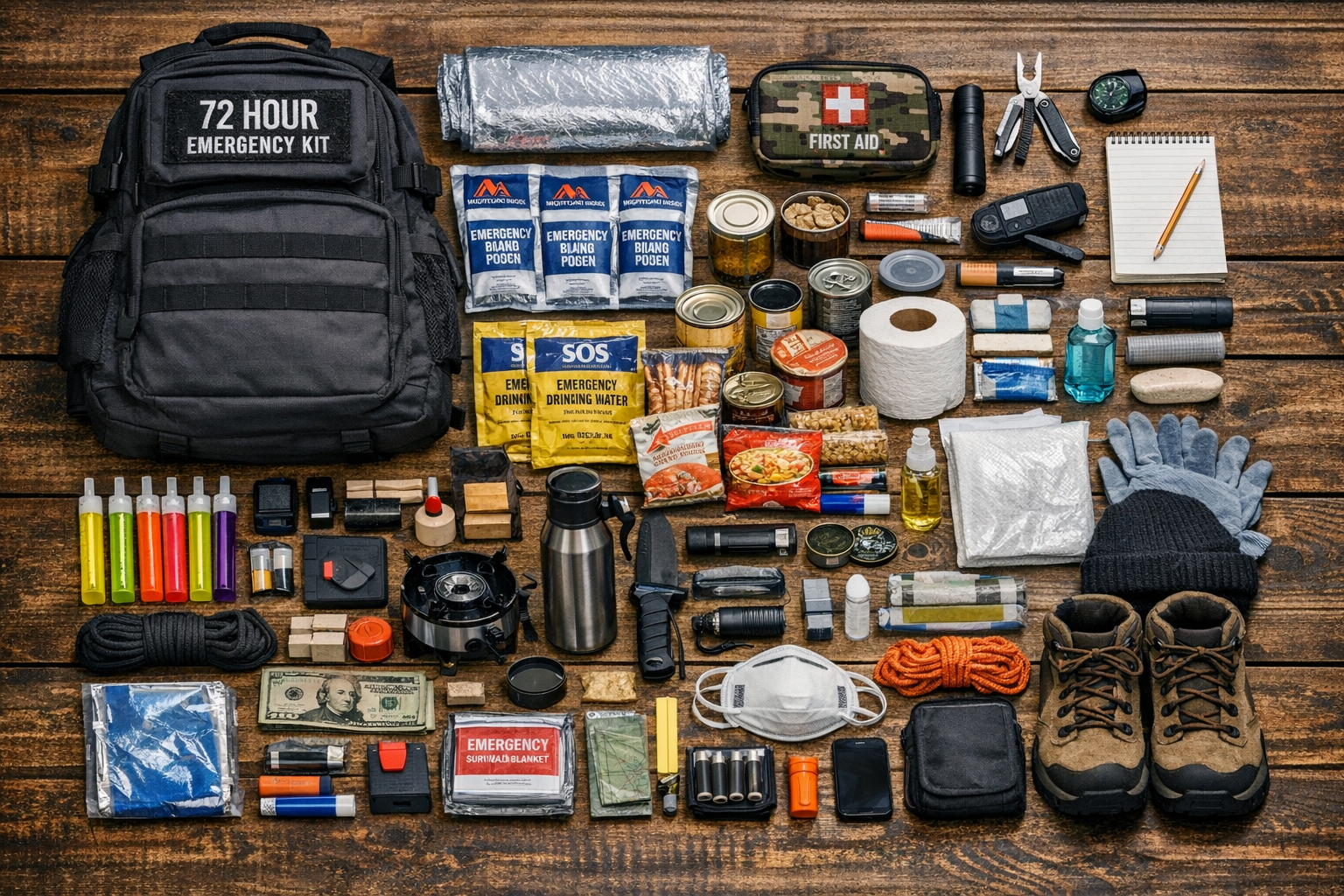
The most effective teaching tool is a child’s own emergency kit. Let them pack a small backpack with the essentials from our kids’ backpack guide — water, a snack, a torch, a whistle, a change of clothes, and a comfort item like a favourite toy — and let them choose the bag and decorate it. A kit a child helped pack is a kit they will carry without complaint and know how to use. Turn skills into games: a scavenger hunt for the torch, the first-aid kit, and the meeting point; a timed challenge to pack the bag; a role-play where the child practises calling for help on a toy phone. Practise blackout evenings as a family occasionally — lights off, lanterns on, a board game by lantern light — so darkness stops feeling strange and starts feeling normal, following the lighting ideas in our blackout entertainment guide. Review the plan after any real event, however small: a power cut, a fire alarm at school, or a storm warning are all natural moments to ask, calmly, what went well and what the family would do differently next time. Avoid overloading children with adult worries — they do not need to know about insurance, stockpile quantities, or worst-case scenarios. They need to know who to find, where to go, and what to do in the first five minutes, and they need to trust that the adults have the rest handled. Teach those five minutes well, practise them lightly and often, and a child who faces an emergency will act instead of freezing — which is the entire point.
Ages and stages: what to teach when
- Ages 3-5: full name, parent’s name, home address as a song or game, the smoke alarm sound, and the outside meeting point.
- Ages 6-8: emergency number and how to call clearly, the escape route, a trusted neighbour, and a whistle with the three-blast signal.
- Ages 9-12: basic first aid for cuts and blisters, how to use a torch and radio, how to find the family kit, and staying calm under our staying calm guide principles.
- Teenagers: full household plan, how to help younger siblings, basic cooking without power, and how to contact family if separated.
Teaching kids emergency basics is not a single conversation — it is a habit, built in small, calm moments over years. Start today with one fact, one route, or one game, and let it grow. A prepared child is a calmer child, and a calmer child makes the whole family safer.
Shop kids emergency basics
- Kids’ emergency backpacks — a kit a child will actually carry.
- Kids’ safety whistles with lanyards — the three-blast signal, always on them.
- Safe LED lanterns for kids — comforting light without flame.
As an Amazon Associate, Alien Bunker earns from qualifying purchases. This page contains affiliate links, which support the site at no extra cost to you.