
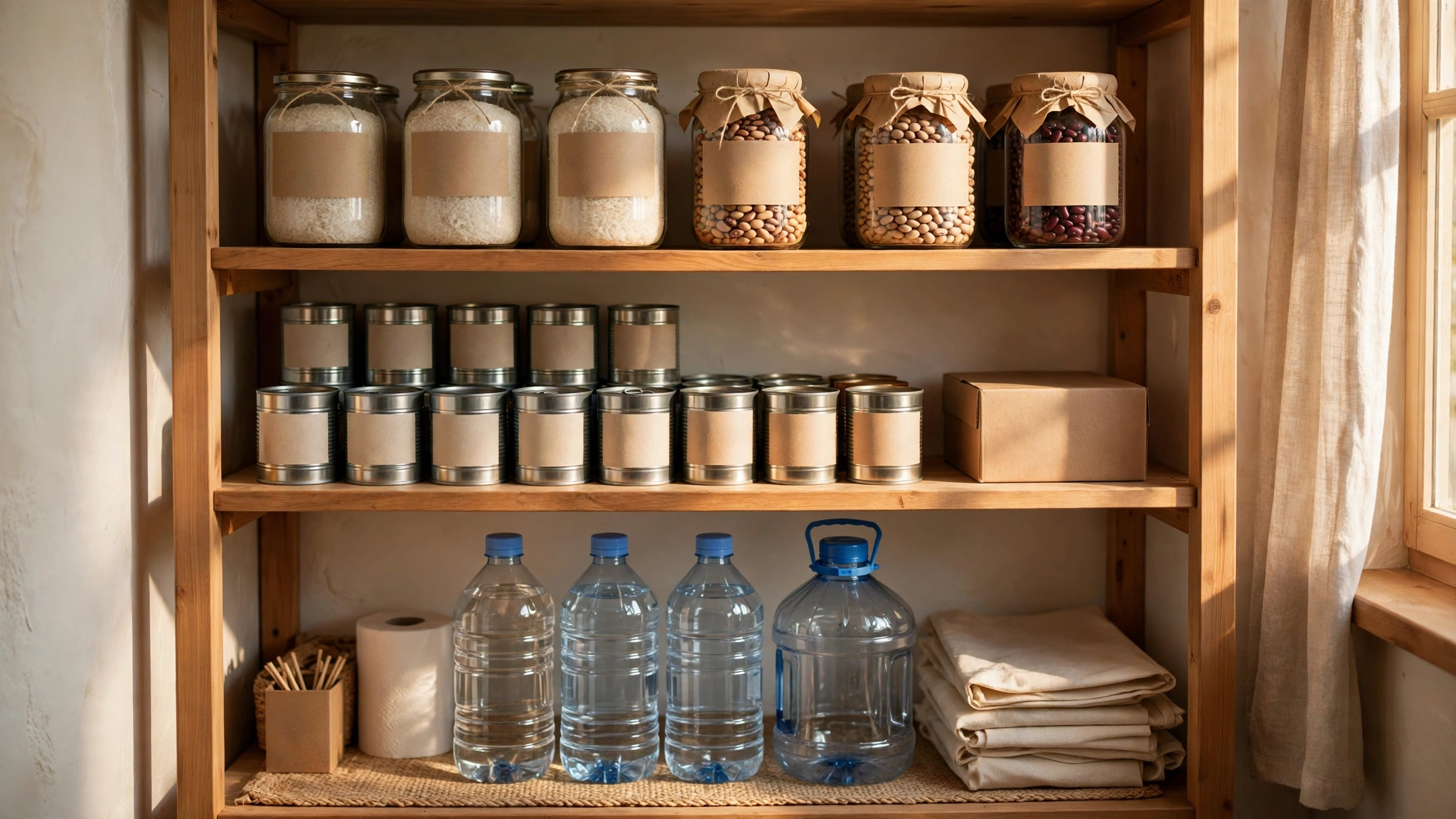
Emergency food shopping has a reputation for being expensive, and it can be — if you buy specialist freeze-dried meals, branded survival buckets, and a trolley full of gear in one go. But a genuinely useful two-week food stockpile is mostly ordinary supermarket food, bought gradually, and it costs far less than most people expect. The trick is to buy what you already eat, buy it on sale, and build the stockpile a few items at a time instead of treating it as one big purchase.
The budget shopping list
Build around cheap, filling, long-lasting staples. Rice, pasta, oats, and dried lentils cost very little per meal and keep for months or years. Canned beans, canned tomatoes, canned tuna, and canned vegetables turn those staples into complete meals. Peanut butter, crackers, dried fruit, powdered milk, stock cubes, cooking oil, salt, sugar, and a few spices cover flavour, fat, and variety. Tea and coffee matter more than people admit — morale in a stressful week is worth a few pounds of coffee. This list deliberately overlaps with our no-fridge pantry meals, because budget food and no-fridge food are mostly the same food: shelf-stable, simple, and flexible. A two-week supply for one person built this way can cost less than a single weekly supermarket shop, spread over a month of normal shopping trips.
How to buy it without blowing the budget
- Add two or three items per shop: put a bag of rice, a tin of beans, and a tin of tomatoes in the trolley each week. In two months you have a stockpile and never noticed the cost.
- Buy on sale, not on schedule: when canned goods or pasta are discounted, buy double and store the extra. The stockpile grows fastest during sales.
- Store brands over premium brands: for rice, beans, oats, and canned tomatoes, the cheap tin is nutritionally identical to the expensive one. Save the premium spending for food you genuinely prefer.
- Buy what you eat, eat what you buy: a stockpile of food nobody likes is wasted money. If your household hates lentils, stock extra rice and beans instead. Rotation only works if the food gets eaten, as explained in our pantry rotation guide.
- Skip the survival buckets at first: freeze-dried meals have a place, but they are the most expensive calories you can buy. Build the supermarket stockpile first, then add specialist food later if you want it.
What not to skimp on
Budget does not mean careless. Do not buy dented cans, bulging tins, or food past its date just because it is cheap — our canned food expiry guide explains where the real line is. Do not skip water: drinking water is the one item you cannot improvise, so budget for stored water or a filter alongside the food. And do not forget cooking: a stockpile of dry rice with no way to cook it is a decoration, so a small camping stove and a spare fuel canister belong in the same budget as the food itself — see our cooking without power guide for the cheapest workable options. Finally, keep a written list of what you have and where it is. A stockpile you cannot find, or cannot remember, is money sitting in a cupboard doing nothing. A list on the fridge, updated when you shop, turns a pile of tins into a plan you can actually use.
Shop budget stockpile basics
- Airtight bulk food containers — protect cheap staples from moisture and pests.
- Budget single-burner camping stoves — cook your stockpile without mains power.
- Can organiser racks — rotate a growing stockpile without forgetting the back row.
As an Amazon Associate, Alien Bunker earns from qualifying purchases. This page contains affiliate links, which support the site at no extra cost to you.