
When people plan emergency food, the dog or cat usually gets forgotten until the power is already out and the pet food bowl is empty. Pets are family, and they are also entirely dependent on you: they cannot open a cupboard, ration themselves, or tell you they are thirsty. A pet emergency food supply is small, cheap, and easy to build — but it has to be built before you need it, because pet food is one of the first things to sell out when a storm or earthquake is forecast.
How much pet food to store
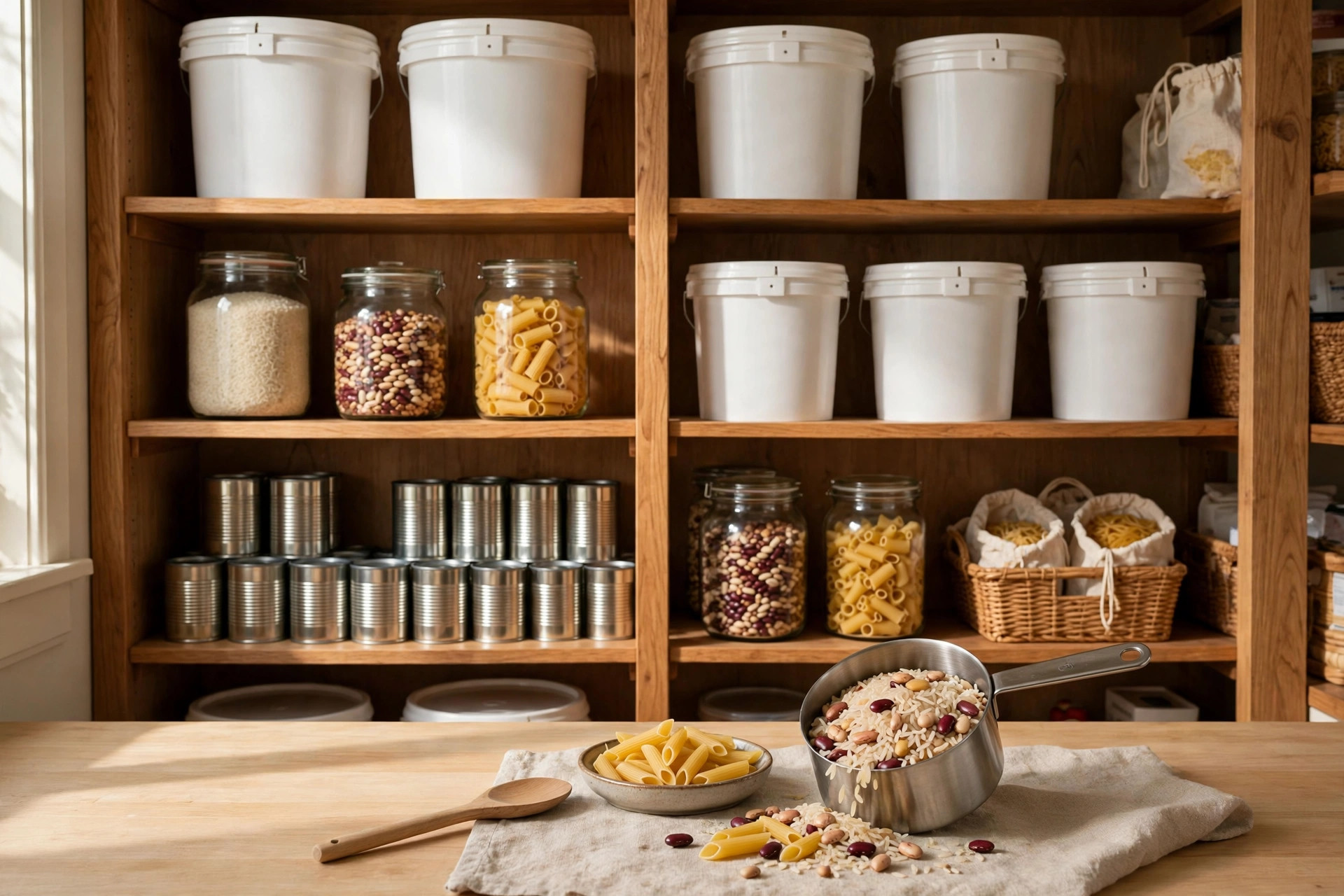
Start with a two-week supply, the same baseline as the human side of your household plan. Check how much your pet eats per day — the feeding guide on the bag is a starting point, but your pet’s actual daily portion is the number that matters. Multiply that by 14, then add a small buffer for spills and stress eating. For a medium dog eating 300 grams of dry food a day, that is about 4.5 kilograms, roughly one large bag. For a cat eating 60 grams a day, it is under a kilogram. Store it in the original bag inside a sealed, waterproof container to keep out moisture, insects, and curious teeth, and keep the container somewhere cool and dry — not in a hot garage or a damp balcony store. The same storage rules from our rice and beans storage guide apply to kibble: cool, dark, dry, and sealed beats fancy packaging every time.
Water, medicine, and the details people forget
Pets need water just as urgently as people do, and a pet that will not drink unfamiliar water can dehydrate fast. Store at least a litre per day for a medium dog and about 250 millilitres per day for a cat, on top of your household supply, and keep a spare bowl that cannot tip over easily. Medicine is the item most often forgotten: if your pet takes daily medication, keep a two-week spare supply in the emergency kit, rotated with the regular supply, and note the dosage on the container. Also pack a spare lead, a harness, a carrier if your pet uses one, waste bags, litter and a small litter tray for cats, and a copy of vaccination records — shelters and evacuation centres may ask for them, and you will not be able to fetch them from home mid-evacuation. If your pet is on a special diet for allergies or a medical condition, store that exact food: an emergency is the worst time to discover your pet cannot tolerate the substitute you grabbed. Our food allergies guide covers the human side of the same problem, and the principle is identical.
Rotation and stress feeding
Rotate pet food the same way you rotate your own stock: new bags go behind old ones, and the pet eats from the front. Mark each bag with the month you bought it, and check expiry dates every couple of months — dry food goes stale and can turn rancid in heat, so a bag bought two years ago is not a plan. Wet food keeps longer unopened but is heavy and bulky, so most households store mainly dry food with a few tins for variety or for pets that refuse kibble. During an emergency, stressed pets may eat less, refuse food, or have upset stomachs. Keep feeding times as normal as possible, offer familiar food rather than new treats, and do not ration pet food below their normal portion unless you genuinely have to — a hungry, stressed animal is harder to manage, and stress diarrhoea in a flat with no running water is a problem nobody wants. Build the pet kit alongside your own supplies, using the same rotation habit from our pantry rotation system, and your pet’s emergency is already handled before it starts.
Shop pet emergency basics
- Airtight pet food storage containers — keep kibble fresh, dry, and pest-free.
- Collapsible pet bowls — light, packable bowls for the go-bag.
- Pet emergency go-bags — a ready-made base to customise for your animal.
As an Amazon Associate, Alien Bunker earns from qualifying purchases. This page contains affiliate links, which support the site at no extra cost to you.