
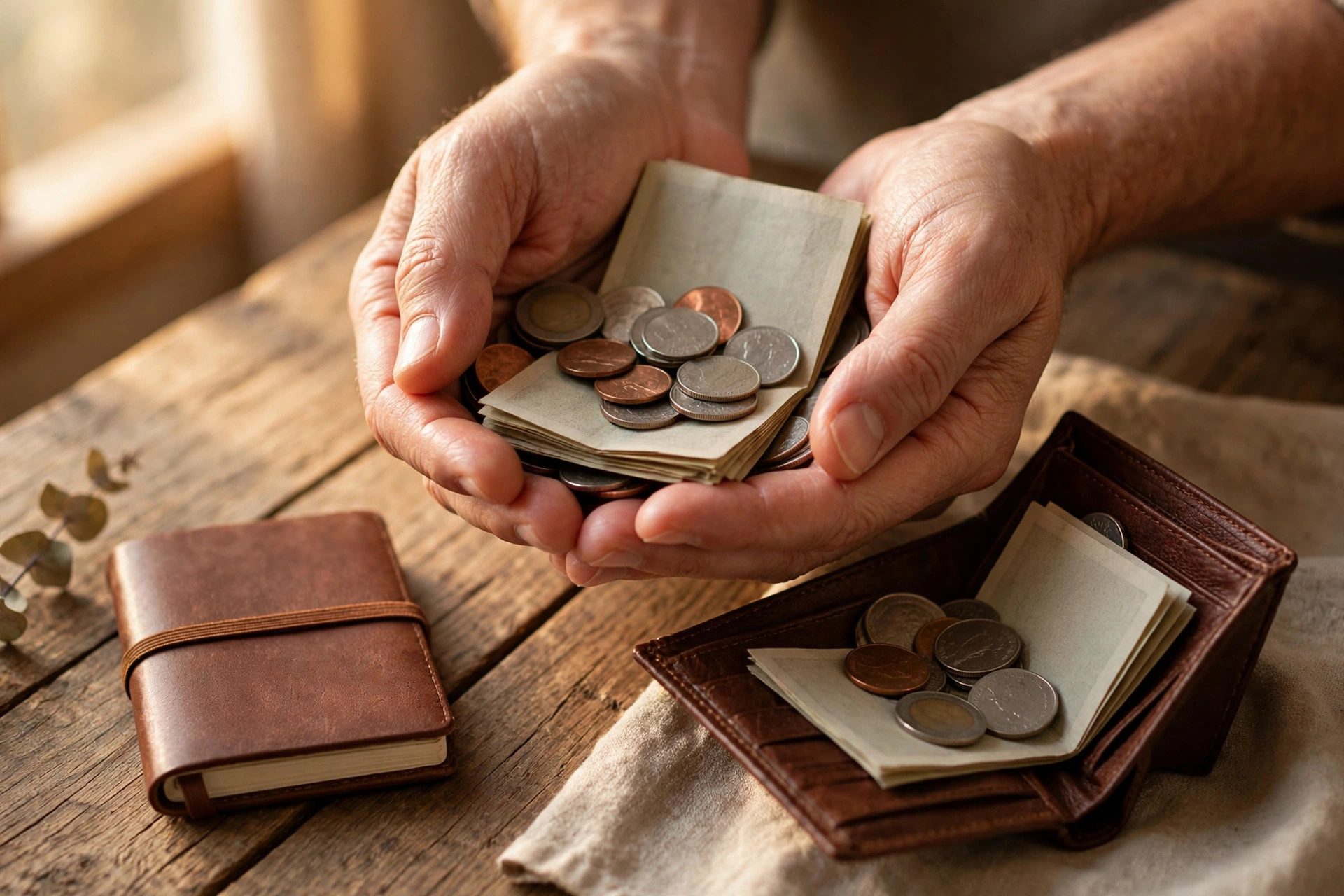
When the power goes out, the card machine goes with it. Shops that stay open switch to cash-only, ATMs stop working or run empty, and the phone app you pay with becomes a glass rectangle with a dying battery. Emergency cash is the least glamorous part of preparedness, and one of the most useful: a small amount of real money, in small bills, kept somewhere you can reach it in the dark, buys food, fuel, and a ride home when every digital payment method has failed at once.
Why cash, when everything is digital?
It is not about distrusting banks. It is about single points of failure. A payment card depends on power, networks, and a working terminal — three systems that all fail together in a storm or outage. Cash depends on none of them. It also works for the small, informal transactions emergencies create: paying a neighbour for fuel, buying supplies from a market stall, tipping a driver who takes a detour. None of those need a large amount, but all of them need actual notes and coins, not a promise of payment later.
How much is sensible?
There is no official number, and anyone giving you one is guessing about your life. A practical starting point is enough to cover a few days of essentials for your household: food, fuel, and transport, bought at local prices, without relying on a card. For many households that lands somewhere in the range of a week’s grocery and fuel budget — enough to be useful, small enough that losing it would hurt but not devastate. Build it gradually, a little at a time, rather than withdrawing a large sum at once. And keep the amount private: cash is useful precisely because it is quiet, and advertising a stash defeats the point. If you also keep supplies in your car emergency kit, a small separate cash amount there covers roadside needs without raiding the home stash.
Denominations matter more than the total
Small bills are the whole game. A single large note is nearly useless when a shop cannot make change during an outage — and during an outage, many shops cannot. Keep mostly small denominations, with a few coins for vending machines, payphones, and parking meters that still take them. A mix like mostly small bills, a few medium ones, and a handful of coins will cover far more real purchases than the same total in large notes. Check your stash twice a year, at the same time as your pantry rotation check, and replace any damaged or outdated notes.
Where to keep it, and what not to do
- Split it. Keep the main stash at home in a secure, non-obvious spot, and a smaller amount in your wallet and car. If one location is unreachable, the others still work.
- Keep it dry and safe. A sealed envelope or small waterproof pouch protects notes from damp and damage, and keeps the stash together.
- Do not keep your life savings in cash. Cash at home is uninsured in most cases, earns nothing, and is vulnerable to fire and theft. The emergency stash is a tool for a few days, not a bank account.
- Do not forget the rest of the plan. Cash pairs with a two-week household checklist and a 72-hour kit — money buys supplies, but only supplies you have already thought about buying.
Start this week: set aside a small amount in small bills, put it in an envelope, and write “emergency” on it. That envelope, boring as it looks, is the difference between stuck and moving on the day the card machines go dark.
Shop the setup
- A waterproof cash pouch — keeps notes dry and together.
- A small home safe — secure storage for cash and important documents.
- A car kit bag — keeps the roadside cash and supplies in one grab-and-go place.
As an Amazon Associate, Alien Bunker earns from qualifying purchases. This page contains affiliate links, which support the site at no extra cost to you.