
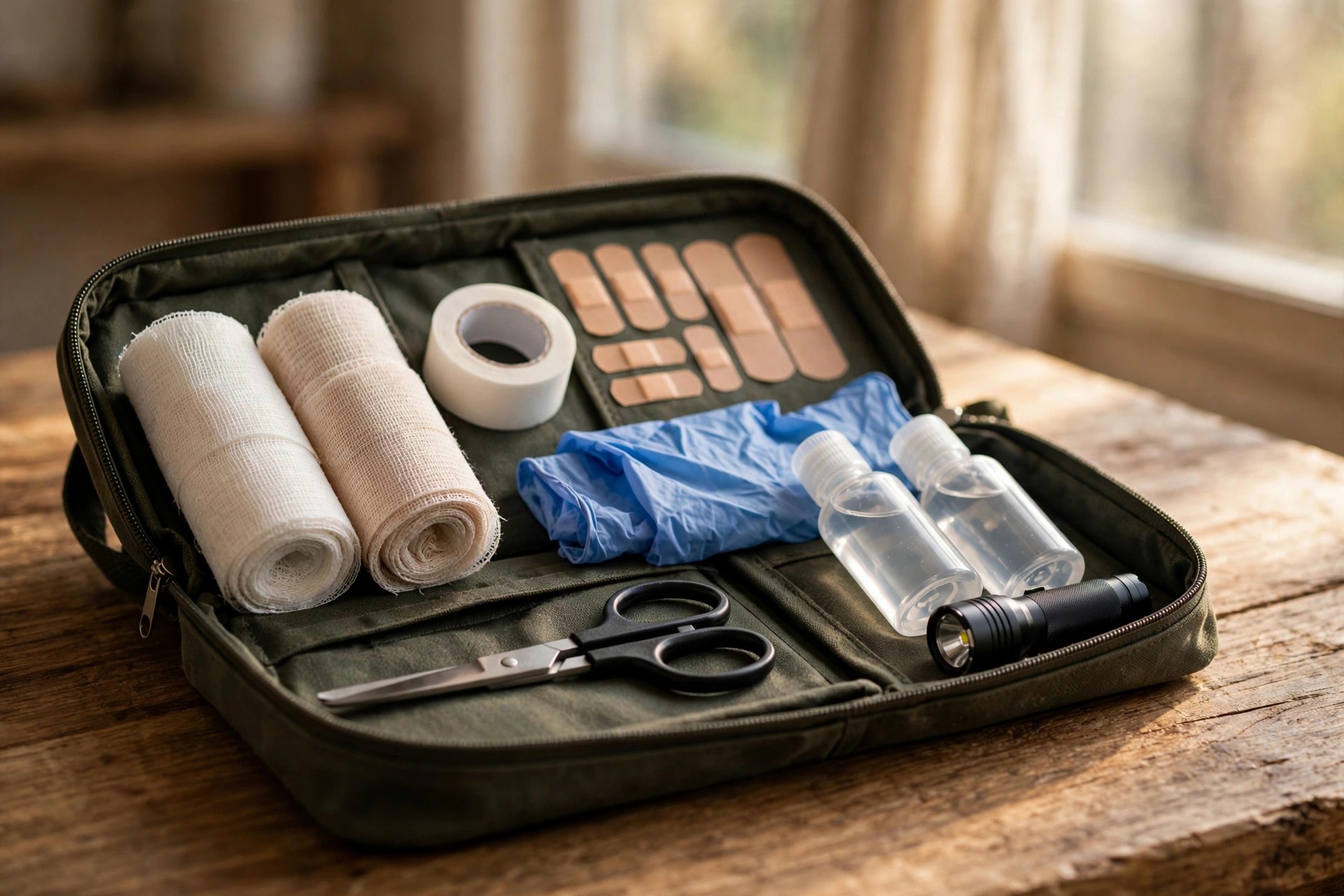
Most homes have a first aid kit somewhere. Far fewer have one that is actually useful in an emergency: stocked, organized, and somewhere you can find it in the dark with one hand bleeding. This checklist fixes that. It covers what every household needs, what to skip, and how to keep the kit ready year after year.
Start with the box, not the supplies
A good kit lives in a sturdy, clearly marked container with a latch you can open one-handed. A zippered pouch works for a car kit; a hard box with compartments works better at home, because supplies stay sorted instead of sinking into one jumbled pile. Keep the main kit in one consistent place every member of the household knows — a hall closet or kitchen shelf beats the top of a wardrobe nobody can reach.
If you have kids, pets, or anyone on regular medication, build the kit around them, not around a generic list. A kit that ignores your household’s actual needs is decoration.
The core checklist
- Wound care: adhesive bandages in several sizes, sterile gauze pads, adhesive tape, rolled gauze, and butterfly closures for small cuts.
- Cleaning: antiseptic wipes, saline wash for flushing grit from a wound, and disposable gloves — several pairs, in your size.
- Tools: sharp scissors, tweezers, a small flashlight, and a permanent marker for writing the time a bandage or tourniquet was applied.
- Support: elastic bandages for sprains, triangular bandages that double as slings, and instant cold packs.
- Medicines: pain relievers, antihistamines for allergic reactions, hydrocortisone cream, and any personal prescriptions you can safely keep as a backup supply.
- Burn care: sterile burn dressings or burn gel, plus cling film to loosely cover a burn on the way to care.
- Basics for bigger problems: a CPR face shield, an emergency blanket, and a printed card with emergency numbers, allergies, and medications for each family member.
What to leave out
Skip the gimmicks: tiny kits with one of everything, mystery ointments, and anything you do not know how to use. A tourniquet is a powerful tool, but only if you have been trained to use one — an untrained tourniquet can do real harm. The same goes for suture kits and advanced airway gear. Your kit should match your training, and your training should grow over time. Our guide to beginner survival skills you can practice at home includes first aid basics worth learning before you ever need them.
Customize it for your household
Add a week’s worth of any daily medication, rotated so it never expires. Add children’s doses of pain reliever if you have kids, an EpiPen-style auto-injector if anyone has severe allergies (prescribed, and checked for expiry), and pet supplies if animals are part of the family. If someone in the house has diabetes, asthma, or another condition, ask their clinician what belongs in the kit — that one conversation is worth more than any pre-packed box.
Store it right, check it twice a year
Keep the kit cool, dry, and out of the bathroom — humidity degrades bandage adhesive and medicines faster than most people expect. Put a check on your calendar every six months: toss expired items, replace anything you used, and check that gloves have not gone brittle and batteries still work. A kit that is checked twice a year is a kit you can trust.
Finally, make smaller copies for the car and your bug-out bag. The home kit handles everyday injuries; the portable kits cover you when trouble finds you away from home. Pair it with the supplies in our 72-hour emergency kit guide and you have a household that is genuinely ready, not just well-intentioned.
Shop the checklist
- A well-stocked home first aid kit — the fastest way to cover the basics in one purchase.
- Adhesive bandages in assorted sizes — the item every kit runs out of first.
- Emergency blankets — cheap, light, and worth having in every kit and vehicle.
Want the whole system in one place? The Alien Bunker Survival Guide (53 pages, illustrated, $14.99) covers this and seven more skills — get it on Amazon here.
As an Amazon Associate, Alien Bunker earns from qualifying purchases. This page contains affiliate links, which support the site at no extra cost to you.