
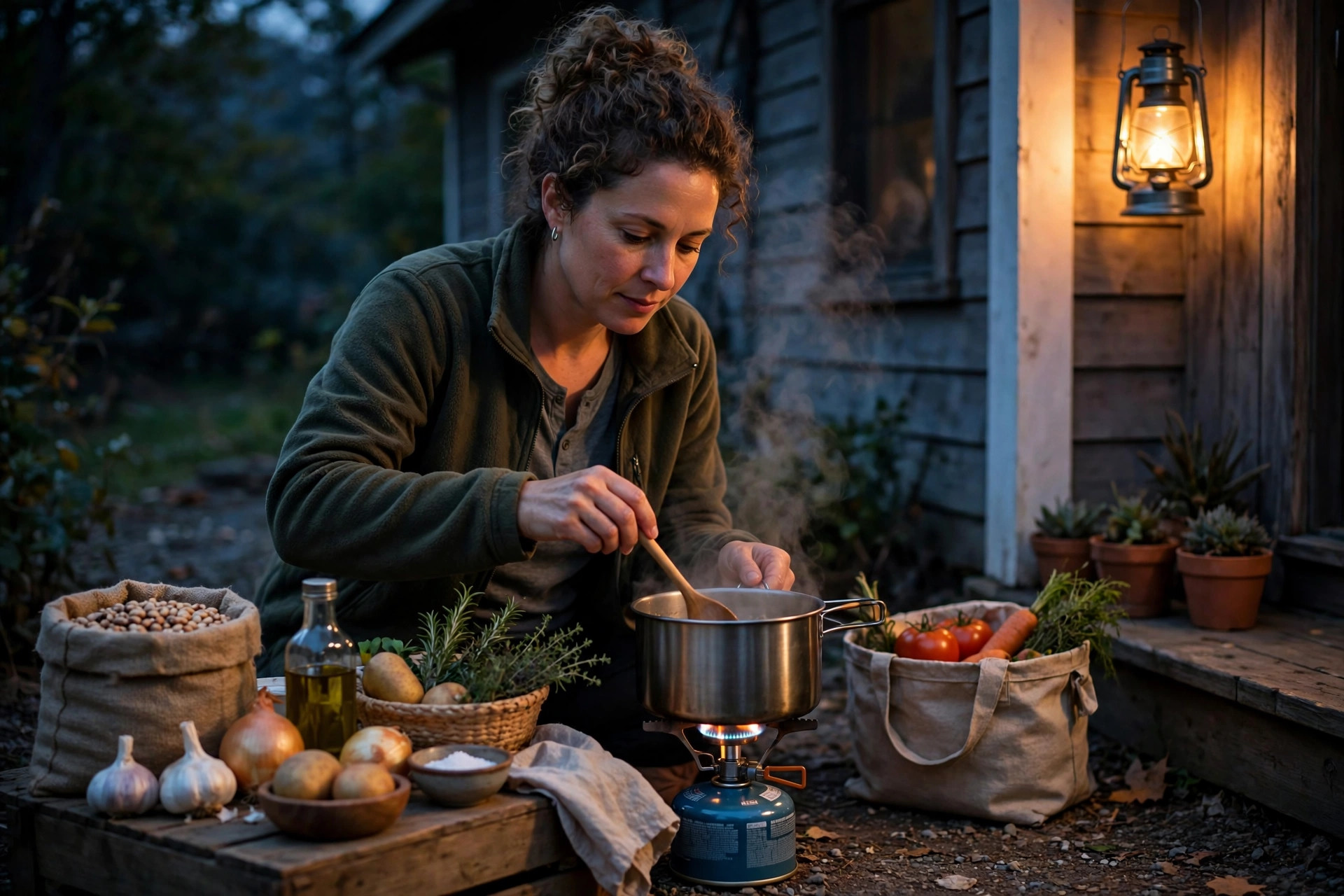
When the power and gas are out, the kitchen stops working — and the thing that brings it back is not a fancy stove, it is a pot. A camping stove is useless without something to cook in, and a normal kitchen saucepan is often the wrong tool for the job: too big, too heavy, no lid, and it wastes fuel. Emergency cookware is a small, simple set of pots, pans, and utensils that works on a portable stove, packs into a small space, and cooks a real meal with very little fuel. It does not need to be expensive, and it does not need to be a full camping set. This guide covers what to buy, what materials work best, and how to cook and clean when the water is limited too.
The essential set: what you actually need
The essential emergency cookware set is smaller than most people think. You need one pot with a lid, about one and a half to two litres, which is big enough to cook pasta, rice, or soup for a small household. You need one small frying pan or a second, smaller pot, for frying or for heating a tin of beans. You need a kettle or a way to boil water, because hot water is the most useful thing in an emergency: it makes tea, it sterilises, it cooks noodles, and it cleans. And you need a few utensils: a wooden spoon or a spatula, a ladle, a can opener, and a sharp knife. That is it. A lid is the most important part of the set, and the part people forget: a pot with a lid cooks twice as fast and uses half the fuel, because the heat stays in. Keep the set together in one box, with the stove and the fuel, so the cooking kit is one grab — see our camping stove safety guide and our stove fuel types guide. And practise with it once, before you need it: boil a litre of water, cook a pot of rice, and time how long it takes, so you know what to expect and how much fuel a meal really uses.
Materials compared: stainless steel, aluminium, and titanium
| Material | Weight | Heats up | Durability | Cost | Best for |
|---|---|---|---|---|---|
| Stainless steel | Heavy | Slowly, but evenly | Excellent — lasts for years | Low to medium | Home emergency kits: tough, cheap, easy to clean |
| Aluminium | Light | Fast, but can burn food | Good, but dents easily | Low | Light kits and one-pot meals, where speed matters |
| Titanium | Very light | Fast, but uneven — hot spots | Excellent | High | Go-bags and hiking, where every gram counts |
| Enamelled steel | Medium | Evenly | Good, but chips if dropped | Low | A spare pot for the flat, if you already own one |
For a flat, stainless steel is the best choice: it is heavy, but you are not carrying it anywhere, and it will still be working in ten years. Aluminium is a good second choice if you want something lighter for a go-bag. Whatever you buy, choose pots with folding or removable handles, so they nest inside each other and pack small, and choose a set where the lid fits more than one pot. Avoid non-stick coatings for emergency cookware: they scratch, they wear out, and they are ruined by a hot stove flame. And avoid cookware with plastic handles, which melt on a camping stove. A simple stainless steel pot, a lid, and a kettle will cook almost anything — see our one-pot meals guide and our cooking without power guide for the recipes that go with them.
Cooking and cleaning with limited water
In an emergency, water is precious, and cooking should not waste it. Cook with as little water as you need: pasta cooks in just enough water to cover it, rice cooks in a measured amount that is fully absorbed, and soup is water you eat, not water you throw away. Keep the lid on, and turn the heat down once the water boils — a rolling boil is not faster than a simmer, it just wastes fuel. For cleaning, the rule is the same: use as little water as possible. Wipe a pot out with a paper towel or a cloth first, then wash it with a little hot water and a drop of soap, and rinse with a splash, not a tap. A pot that held pasta or soup needs very little washing if you wipe it first. The common mistakes are all avoidable: buying a huge camping set with pieces you never use, so it takes up a whole cupboard; buying non-stick pans that die after one hot meal; and forgetting the can opener, the lighter, and the matches — the small things that make the whole kit work. A pot, a lid, a kettle, and a spoon are a kitchen. Keep them together, keep them clean, and they will be there when the kitchen is not.
Shop emergency cookware basics
- Nesting stainless steel camping cookware sets — a pot, a pan, and a lid that pack into one small stack.
- Stainless steel camping kettles — boil water fast, on very little fuel.
- Compact camping utensil sets — spoon, spatula, ladle, and tongs in one small roll.
As an Amazon Associate, Alien Bunker earns from qualifying purchases. This page contains affiliate links, which support the site at no extra cost to you.