
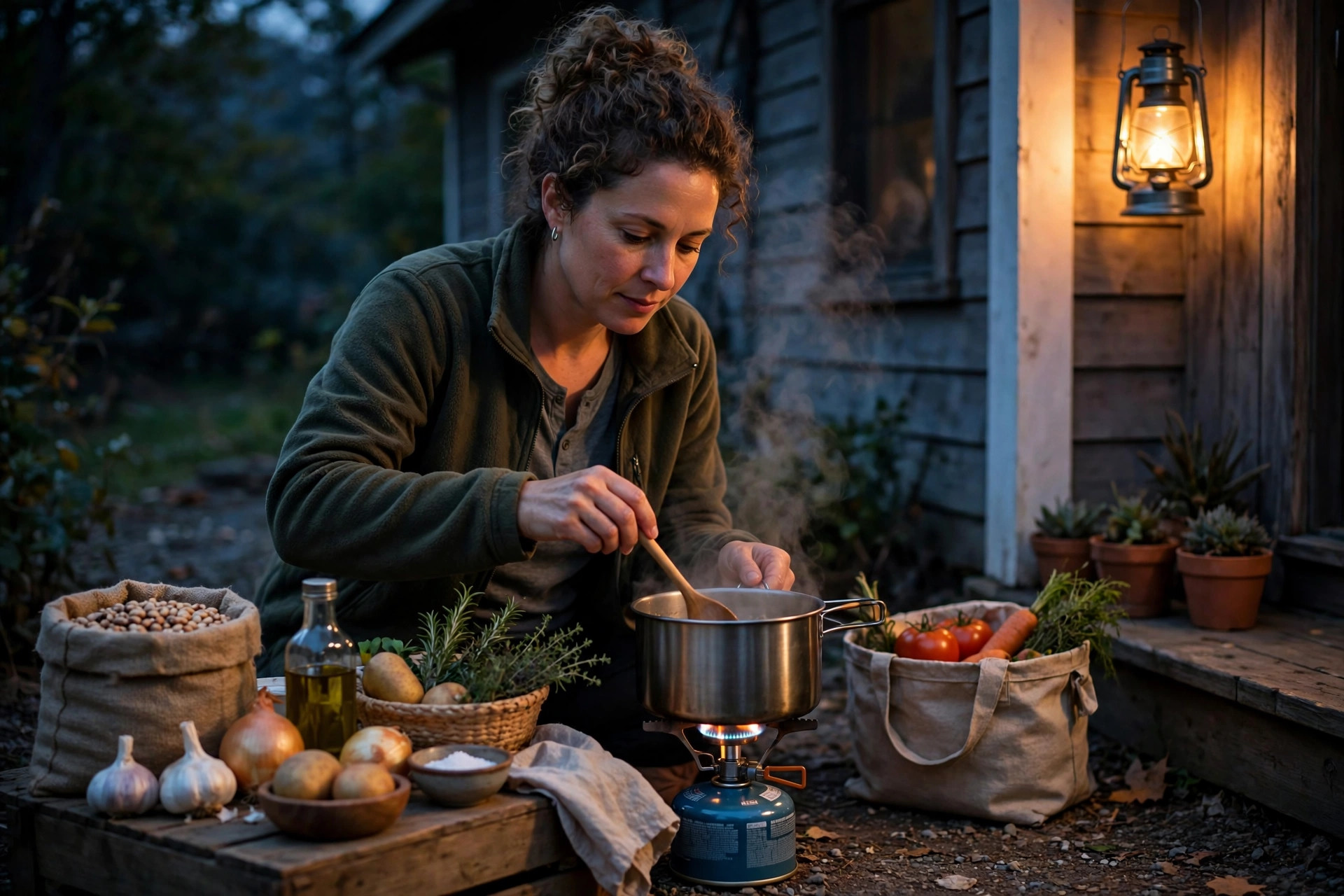
A portable stove is only as useful as its fuel, and choosing the wrong fuel is how people end up with a stove that works beautifully at home and fails on a cold morning, or a fuel canister they cannot buy locally. The main fuel types — gas canisters, liquid fuel, alcohol, and solid fuel — each suit different situations, and the right choice depends on where you will use the stove, how cold it gets, and how easily you can resupply. This guide compares them plainly, so you can match the fuel to your real life rather than to a camping catalogue.
Gas canisters: easy, clean, and temperature-sensitive
Screw-on or clip-on gas canisters, usually a butane and propane mix, are the easiest fuel to use: attach, light, cook, detach. No priming, no pumping, no smell, and the flame adjusts precisely, which makes them ideal for beginners and for apartment emergency kits where simplicity matters. Their weakness is cold weather — pure butane struggles below freezing, and even mixed gas loses pressure as the canister cools — and resupply: you need the right canister type for your stove, and in a widespread emergency, shops may sell out of the popular sizes. Store canisters upright, away from heat and direct sun, never in a hot car boot in summer, and never puncture or incinerate empties. A single 230-gram canister typically boils several litres of water, enough for a few days of simple cooking for one person, so a small stock of two or three canisters is a sensible emergency reserve. Gas stoves pair naturally with the cooking methods in our cooking without power guide, and with the baking methods in our baking without power guide, since both assume a controllable, portable heat source.
Liquid fuel, alcohol, and solid fuel
Liquid-fuel stoves burn white gas or unleaded petrol from a refillable bottle, using a pump to pressurise the fuel. They are more fiddly — they need priming, they smell, and they need practice — but they work in extreme cold, the fuel is widely available, and one bottle lasts a long time, which makes them the choice for serious cold-weather or long-trip use. Alcohol stoves burn methylated spirit from a simple burner with no moving parts: silent, light, and cheap, but slow, with a weaker flame that struggles in wind and takes longer to boil water. Solid-fuel stoves burn small fuel tablets: the lightest and simplest option of all, with no liquid to spill and no canister to match, but the tablets are slow, smelly, and leave residue, and they are best as a backup rather than a primary cooker. A comparison table makes the trade-offs clear:
| Fuel type | Ease of use | Cold weather | Fuel availability | Best for |
|---|---|---|---|---|
| Gas canister | Very easy | Poor below freezing (butane) | Good, but needs the right canister | Beginners, apartment kits, short trips |
| Liquid fuel | Needs practice | Excellent | Excellent (petrol stations) | Cold weather, long trips, experienced users |
| Alcohol | Easy | Fair | Good (hardware stores) | Ultralight backup, simple boiling |
| Solid fuel tablets | Very easy | Fair | Good (outdoor shops) | Ultralight backup, last-resort cooker |
Choosing and storing fuel safely
For most households, the practical answer is a gas stove plus a small reserve of canisters, with a packet of solid-fuel tablets as a backup that costs almost nothing and weighs almost nothing. If you live somewhere with genuinely cold winters, or you plan to cook outdoors in winter, consider a liquid-fuel stove as well and practise with it before you need it — a stove you have never lit is not an emergency tool. Store all fuels away from living areas and ignition sources, keep liquid fuel in its proper container with the cap tight, and never store fuel canisters near a heater or in direct sunlight. Never use any fuel stove indoors without ventilation: all of them produce carbon monoxide, and a sealed flat with a running stove is a poisoning risk, as covered in our heater safety guide. Cook near an open window or outside on a balcony where building rules allow it, keep a fire extinguisher nearby — see our fire extinguisher guide — and test your stove and fuel at least once before an emergency, so the first time you light it is not the time you most need it to work.
Shop portable stove fuel basics
- Gas canisters for camping stoves — the beginner-friendly fuel.
- Single-burner portable stoves — simple cookers for emergency kits.
- Solid-fuel tablets and stoves — the lightest backup cooker.
As an Amazon Associate, Alien Bunker earns from qualifying purchases. This page contains affiliate links, which support the site at no extra cost to you.