
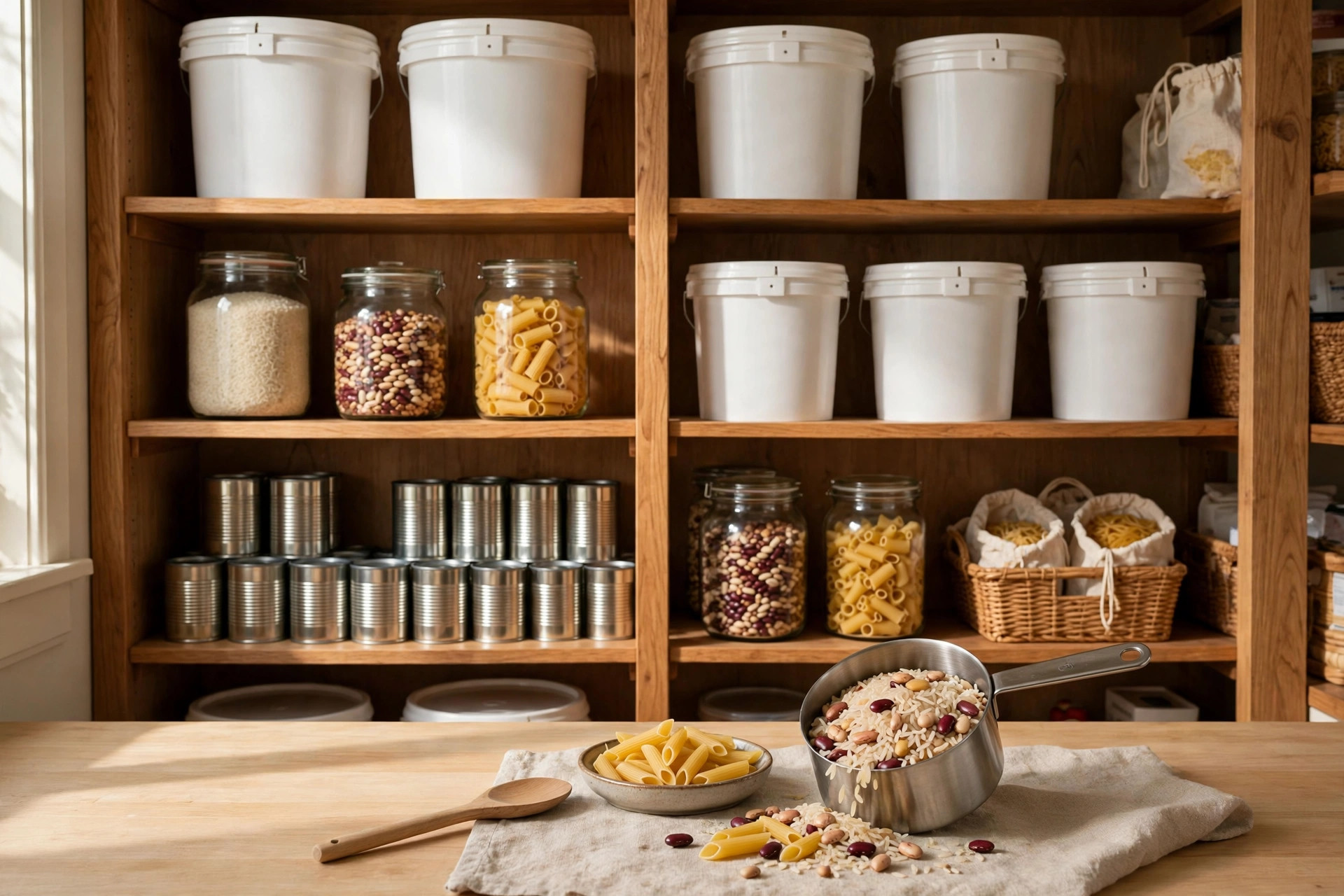
Apartment preppers face a specific canned-goods problem: the advice always assumes a basement, a garage, or a spare room, and you have a kitchen cupboard, a closet, and a landlord who would notice a wall of shelving. The good news is that a useful canned stockpile fits in a small flat without turning it into a warehouse. It takes a bit of measurement, a bit of creativity, and the discipline to store what you actually eat rather than what was on sale.
How much space do you really need?
A two-week supply of canned food for one person — roughly 25 to 30 cans of soups, beans, vegetables, tuna, and fruit — fits in a single deep cupboard shelf or two medium storage boxes. For a household of three, a two-week supply is about 75 to 90 cans, which sounds like a lot until you realise a standard kitchen cupboard holds 30 to 40 cans per shelf if they are stacked sensibly. Measure your cupboards before buying shelving: depth matters more than height, because cans pushed to the back of a deep shelf are cans you will forget. Shallow, front-facing storage beats deep piles every time, which is why can organisers that feed cans forward exist — they turn a cupboard into a tiny shop shelf where the oldest can is always at the front.
Where cans can live in a small flat
- Kitchen cupboards, reorganised: move rarely used appliances elsewhere and give cans the prime, easy-reach shelf. Group by meal, not by type, so dinner is one grab, not a hunt.
- Under-bed boxes: flat, lidded boxes under a bed hold dozens of cans, stay cool and dark, and are out of sight. Label the box with contents and the earliest date inside.
- Closet floors and hallway cupboards: a low shelf or a sturdy box on a closet floor is ideal — cool, dark, and away from the stove and radiators that shorten shelf life.
- On top of wardrobes: workable for light, infrequently used stock, but check the weight limit and keep heavy cans low. A falling box of cans is a hazard, not a prep.
Avoid the classic mistakes: on top of the fridge, where heat from the motor ages cans fast; in a damp bathroom cupboard, where rust attacks the cans; and in a hot balcony store, where summer heat ruins flavour and shortens life. Our canned food expiry guide explains why storage temperature matters more than the printed date.
Rotation in a small space
Small-space rotation is simple if you build it into shopping. When you buy new cans, put them behind the existing ones, and cook from the front. Mark each can with the month you bought it using a marker or a label — it takes seconds and removes all guessing. Once a month, do a five-minute check: pull out anything dented on a seam, swollen, rusted through, or leaking, and move anything close to its best-before date into the “eat this week” spot. Tie this to your wider pantry plan in our pantry rotation system and our rice and beans storage guide, and the stockpile maintains itself with almost no effort. Finally, remember weight: a box of 40 cans weighs around 16 kilograms, so use small boxes, lift with your knees, and never stack boxes of cans above head height. A tidy, labelled, rotated canned stock in a small flat is not a compromise — it is exactly how apartment prepping is supposed to work.
Shop small-space canned storage
- Stackable can organiser racks — first-in, first-out rotation in a cupboard.
- Sturdy under-bed storage boxes — cool, dark, out-of-sight canned storage.
- Waterproof pantry labels — date every can as it enters the flat.
As an Amazon Associate, Alien Bunker earns from qualifying purchases. This page contains affiliate links, which support the site at no extra cost to you.