
Open any prepper pantry and you will find the same guilty secret: cans with dates that passed months or years ago, kept out of thrift, doubt, or a vague belief that canned food lasts forever. The truth sits between the two extremes. Canned food is one of the safest, longest-lasting foods you can store, but it is not immortal, and the date printed on the can does not mean what most people think it means. Understanding that date — and what actually makes a can go bad — saves money, prevents waste, and keeps your stockpile genuinely safe to eat.
What the date on the can actually means
In most countries, the date on a can is a “best before” or “best quality” date, not a safety deadline. It is the manufacturer’s estimate of how long the food will taste its best — full flavour, good texture, bright colour. After that date, quality slowly declines, but the food does not suddenly become dangerous at midnight. High-acid foods such as tomatoes, pineapple, and pickled vegetables keep best for roughly 12 to 18 months past their packing date, because acid gradually reacts with the can lining and changes flavour. Low-acid foods such as beans, meat, soup, and most vegetables are far more stable and commonly stay good for two to five years when stored properly. That distinction matters: a three-year-old can of tomatoes may taste metallic and be worth discarding, while a three-year-old can of beans may be perfectly fine.
The real signs a can has gone bad
Forget the date for a moment and inspect the can itself. These are the signs that mean “do not eat this”, whatever the date says:
- Swelling or bulging: a can that bulges at the ends or sides may contain gas produced by bacteria. Discard it without tasting it.
- Deep dents on seams: a dent on the side is usually harmless, but a deep dent on a seam or rim can break the seal and let bacteria in.
- Rust that pits the metal: surface rust you can wipe off is cosmetic, but rust that has eaten into the metal, especially near a seam, is not.
- Leaking or spurting: any leak, or liquid that spurts when you open the can, means the seal has failed. Throw it away.
- A bad smell or strange appearance on opening: if the food smells off, looks foamy, or has an unnatural colour, do not taste it to check. Discard it.
How storage conditions change everything
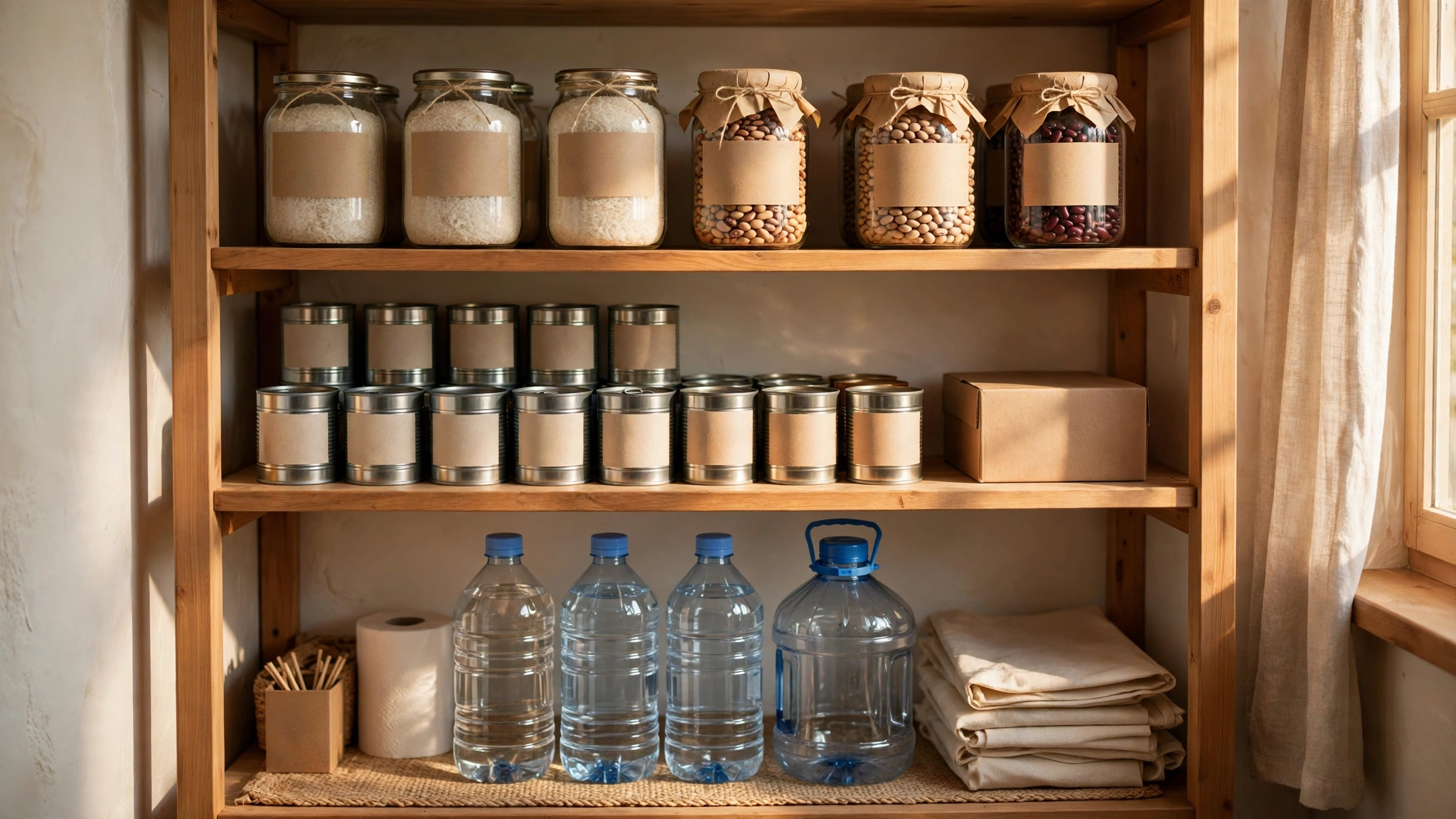
A can stored in a cool, dark cupboard at a steady temperature will outlast the same can stored in a hot garage or on a sunny balcony by years. Heat is the main enemy: every sustained rise in temperature speeds up the chemical changes inside the can. Freezing is the second enemy, because frozen contents expand and can break the seal, and repeated freeze-thaw cycles are worse still. Damp storage causes rust on the outside, which eventually compromises the can. The ideal is boring: a dry cupboard, away from heat sources, with cans stored upright and rotated so the oldest get used first. That rotation habit is the core of our pantry rotation system, and it matters more than any single date on any single can.
Three myths that cost preppers money
Myth 1: “Expired means poisonous.” A can a month past its best-before date is not poisonous. Judge it by condition and smell, not by panic. Myth 2: “Canned food lasts forever.” It does not. Decades-old cans found in bunkers and attics are curiosities, not meals, and old cans can carry real risks, including botulism from damaged seals. Myth 3: “Dented cans are always dangerous.” A small dent in the body of the can, with no seam damage, no swelling, and no leak, is normally fine. It is deep seam dents and swelling that matter. When in doubt, remember the rule every food-safety agency repeats: when in doubt, throw it out. One can of beans is never worth a night of food poisoning, let alone a hospital visit during an emergency.
A practical canned-food routine
Build your canned stock around foods your household actually eats — see our rice and beans storage guide and our family meal planning guide for the wider pantry plan — and mark each can with the month you bought it. Use the oldest first, inspect cans as you rotate them, and keep a small buffer of the foods you use weekly rather than a mountain of one sale item nobody likes. Canned food is a prepper’s best friend precisely because it is forgiving: a cool cupboard, a rotation habit, and a quick inspection before opening are all it asks. Treat the date as advice, the can’s condition as evidence, and your nose as the final judge, and your pantry will feed you safely for years.
Shop the canned pantry setup
- Can organizer racks — first-in, first-out rotation without digging.
- Waterproof pantry labels — date every can as it enters the cupboard.
- A heavy-duty manual can opener — because electric openers need power.
As an Amazon Associate, Alien Bunker earns from qualifying purchases. This page contains affiliate links, which support the site at no extra cost to you.