
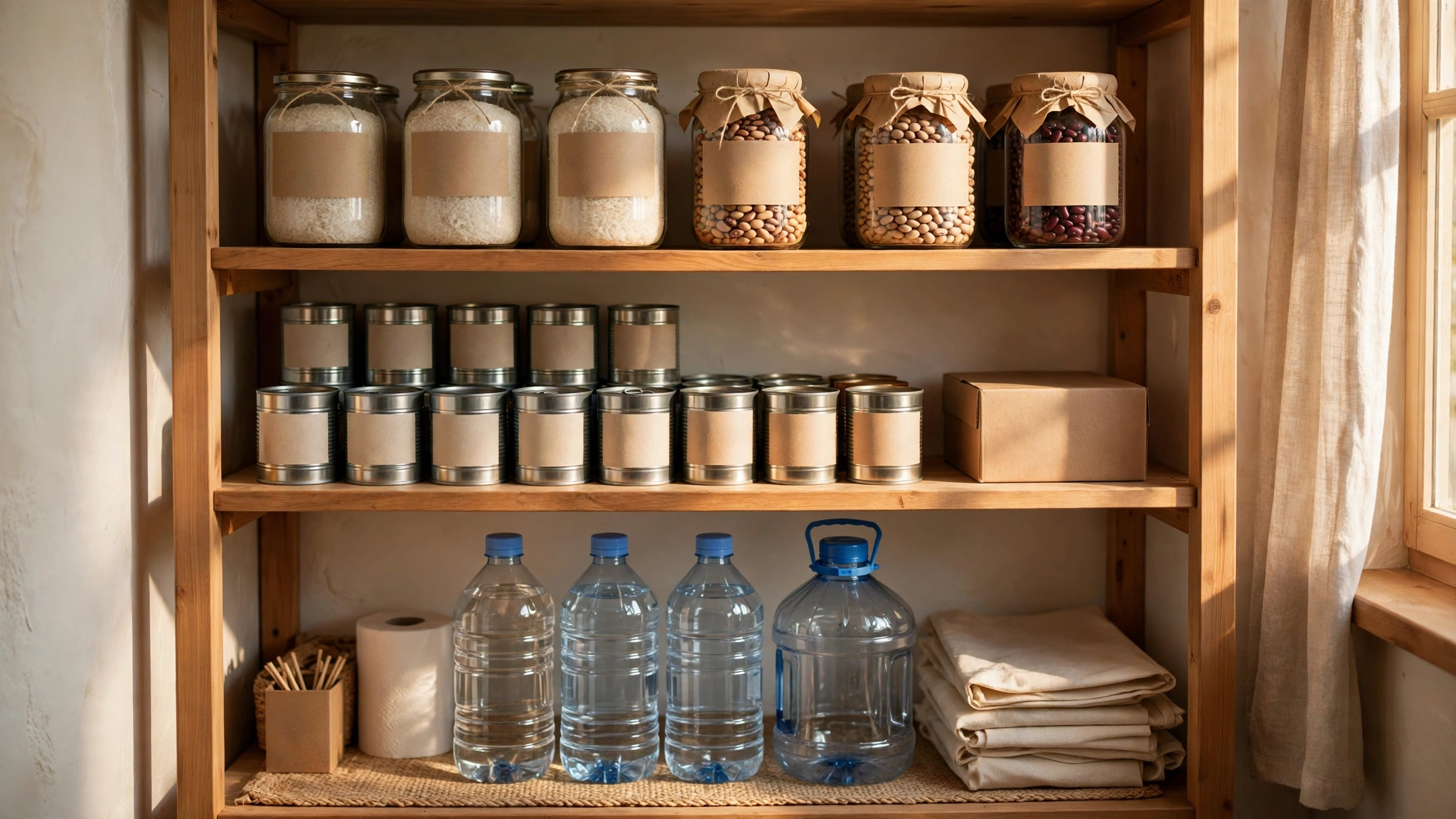
Storing water sounds simple until you actually try it: a few bottles under the sink, a jug in a cupboard, and suddenly you are out of space, unsure how old the water is, and wondering whether that plastic container is even meant for drinking water. The container matters as much as the water in it. The wrong container can leak, crack, grow algae, or leave your water tasting like a garden hose. The right one, used properly, keeps water safe and drinkable for months with almost no effort.
The main container types, compared
Single-use plastic bottles are the easiest start: buy them, stack them, replace them before they expire. They are cheap and portable, but they are not designed for long storage, they crack if frozen, and they take up a surprising amount of space for the water they hold. Reusable food-grade jugs and jerrycans are the next step up. Look for containers marked food-grade or HDPE, with a tight cap and a handle you can actually carry when full — water weighs about a kilogram per litre, so a 20-litre jerrycan weighs 20 kilograms. That matters in an apartment, where you will be lifting it, not rolling it across a garage floor.
Collapsible water containers solve the space problem: they fold flat when empty, which is a genuine advantage in a small flat. They are best as a backup or a refill container rather than your main long-term store, because thinner walls are easier to puncture and harder to clean. Large drums and barrels hold the most water for the money, but they belong in houses with storage space, not in a 40-square-metre apartment, and a full drum you cannot move is a liability if you need to leave. For most apartment preppers, the sweet spot is a mix: a few sturdy jerrycans for the main supply, plus bottled water for grab-and-go use.
What makes a container safe for drinking water
- Food-grade material: the container should be made for food or water, not a reused chemical or detergent bottle, which can leach residues no amount of rinsing removes.
- A tight, clean seal: a cap that closes properly keeps out dust, insects, and bacteria. If the seal is damaged, replace the container.
- Opaque or dark walls: light encourages algae growth. Clear containers stored in sunlight will go green faster than dark ones in a cupboard.
- Easy to clean and dry: wide mouths beat narrow necks. If you cannot reach inside to scrub it, you cannot be sure it is clean.
How to store, rotate, and use it
Fill containers with tap water, which is already treated, and store them in a cool, dark place away from chemicals, paint, and cleaning products — never next to fuel or solvents, since plastic can absorb odours. Label every container with the fill date, and rotate on a six-month cycle: use the oldest water for cooking or watering plants, refill, and relabel. That rotation habit pairs with our pantry rotation system and our water storage guide, which covers how much water a household actually needs. Before drinking stored water that has sat for months, check it: it should be clear, with no smell and no slime. If it looks or smells wrong, do not drink it — purify it or discard it, following our water purification guide.
Common mistakes to avoid
- Reusing milk jugs: milk proteins are almost impossible to clean out fully, and the plastic degrades. Use proper water containers instead.
- Storing water on a sunny balcony: heat and light spoil water and weaken plastic. A dark cupboard beats a bright balcony every time.
- One giant container: if it leaks, you lose everything, and you cannot carry it. Several medium containers are safer and more useful.
- Forgetting the fill date: undated water is a guessing game. A strip of tape and a marker solve it in ten seconds.
Good water storage is boring on purpose: clean food-grade containers, a cool dark cupboard, a date on every one, and a rotation date in your calendar. Do that, and your water will be there, clean and ready, on the day you actually need it.
Shop the setup
- Food-grade water jerrycans — sturdy, stackable, and made for drinking water.
- Collapsible water containers — flat storage for backup supply.
- Waterproof labels — for dating every container you fill.
As an Amazon Associate, Alien Bunker earns from qualifying purchases. This page contains affiliate links, which support the site at no extra cost to you.