
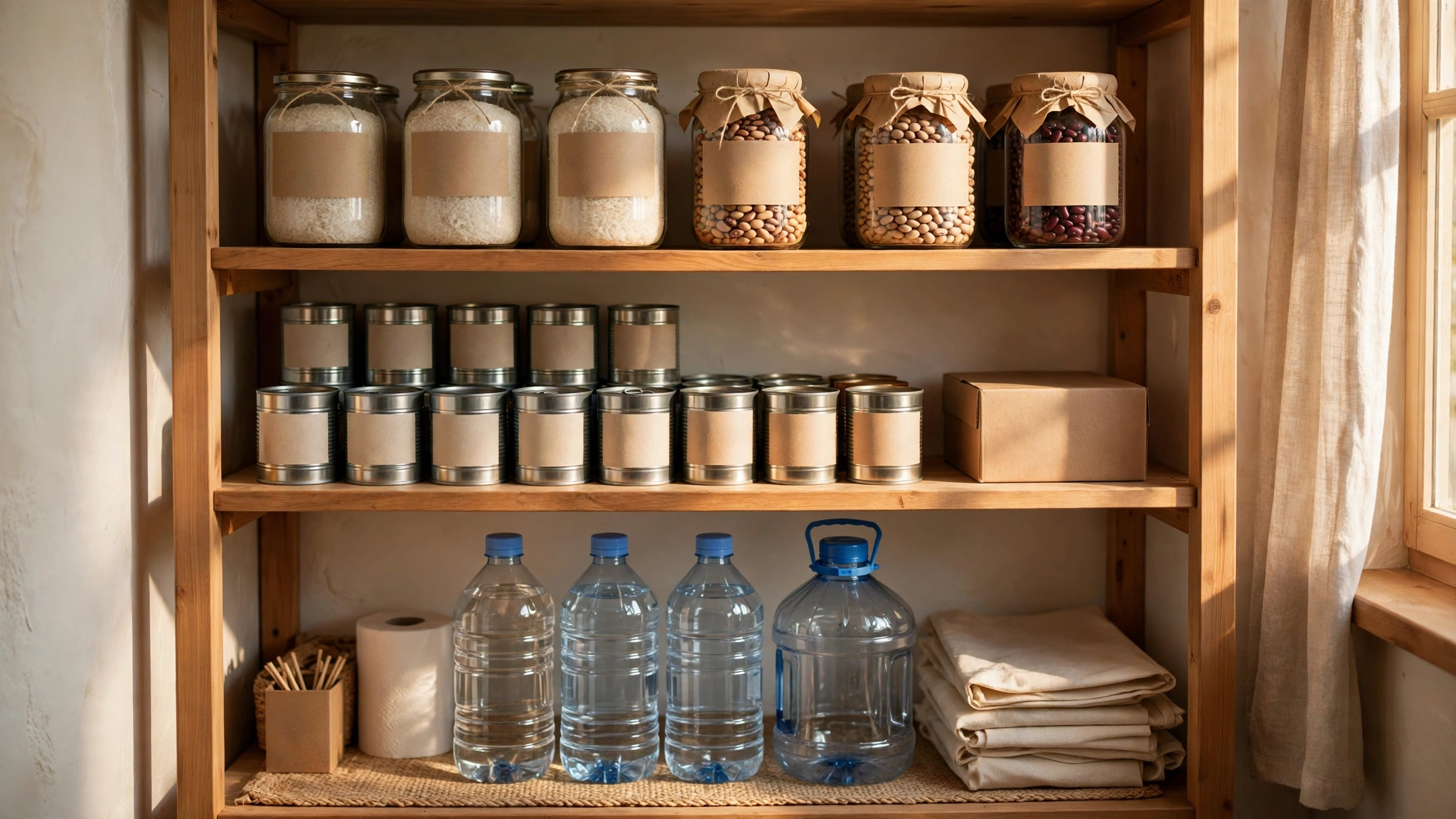
Walk down any emergency-food aisle and you will face the same fork in the road: freeze-dried meals in pouches, or plain canned food from the supermarket. Both keep for a long time, both feed you in an emergency, and both have fans who insist the other side is wasting money. The truth is less dramatic: they do different jobs, and most households are better off with a mix of both, chosen for how they actually cook.
What each one really is
Canned food is food sealed in a can and heat-processed so it stays safe at room temperature. You already know how to use it: open, heat, eat. It needs no special preparation, no extra water, and no new cooking skills. Freeze-dried food has had almost all its water removed by freezing and then drying under vacuum, so it is very light and lasts a long time, but most of it needs hot water added and several minutes of waiting before it becomes a meal. That one difference — ready to eat versus needs water and time — drives almost every other trade-off.
Weight, space, and shelf life
Freeze-dried wins on weight and, pouch for pouch, on shelf life. A pouch of freeze-dried stew weighs a fraction of the equivalent canned stew, which matters if the food has to travel in a bug-out bag or be carried up several flights of stairs. Canned food is heavy because it is mostly water, and that water is also its secret advantage: in an emergency where drinking water is limited, canned soup, beans, and fruit already contain water you do not have to find elsewhere. On a shelf, both last well, but cans are vulnerable to dents, rust, and swollen seals, while pouches are vulnerable to punctures and moisture getting in. Store both cool, dry, and off the floor, and check them during your twice-yearly pantry rotation check.
Taste, variety, and the family test
Here canned food usually wins for everyday households, and it is not close. Canned tomatoes, beans, tuna, soup, and fruit are ingredients you already cook with, so a canned-food emergency meal tastes like a normal dinner, just simpler. Freeze-dried meals are complete dishes, which is convenient, but the range is narrower, the texture is not for everyone, and some family members — especially children — may refuse a meal they have never tried. The fix is simple: taste-test any freeze-dried brand before you stock a box of it. Buy one pouch, cook it on a normal evening, and let the household vote. A stockpile nobody will eat is not a stockpile, it is storage.
Cost and the sensible mix
Per meal, canned food bought on sale is almost always cheaper than freeze-dried meals, and you can build it gradually, one extra can per shopping trip, without a big upfront order. Freeze-dried makes financial sense where weight matters or where you want a compact, long-lasting backup that you rarely rotate: a grab bag, a car kit, or a deep backup box you check once a year. For the main household pantry, build the base from canned and dry staples you already eat — rice, pasta, canned tomatoes, beans, oats — and add a modest freeze-dried layer for portability and variety. That combination covers a power cut at home, a week of disrupted shopping, and a sudden need to leave, without betting the whole plan on one format.
A quick decision guide
- Choose canned first if: you are stocking a home pantry, water is uncertain, or your household is picky about food.
- Choose freeze-dried first if: weight matters, space is tight, or the food must travel in a bag.
- Choose both if: you want a pantry for home and a light kit for leaving — which is most prepared households, honestly.
Whichever you choose, remember the two rules that matter more than the format: rotate what you store, and cook from it sometimes. A pantry you cook from stays fresh, familiar, and actually useful, and our guide to how much food you need per person will help you size either format to your household.
Shop the pantry
- Freeze-dried emergency food pouches — light, compact backup meals for bags and small spaces.
- A canned food organizer rack — keeps a canned pantry rotated and visible.
- Airtight food storage containers — protect dry staples and opened pouches from moisture.
As an Amazon Associate, Alien Bunker earns from qualifying purchases. This page contains affiliate links, which support the site at no extra cost to you.