
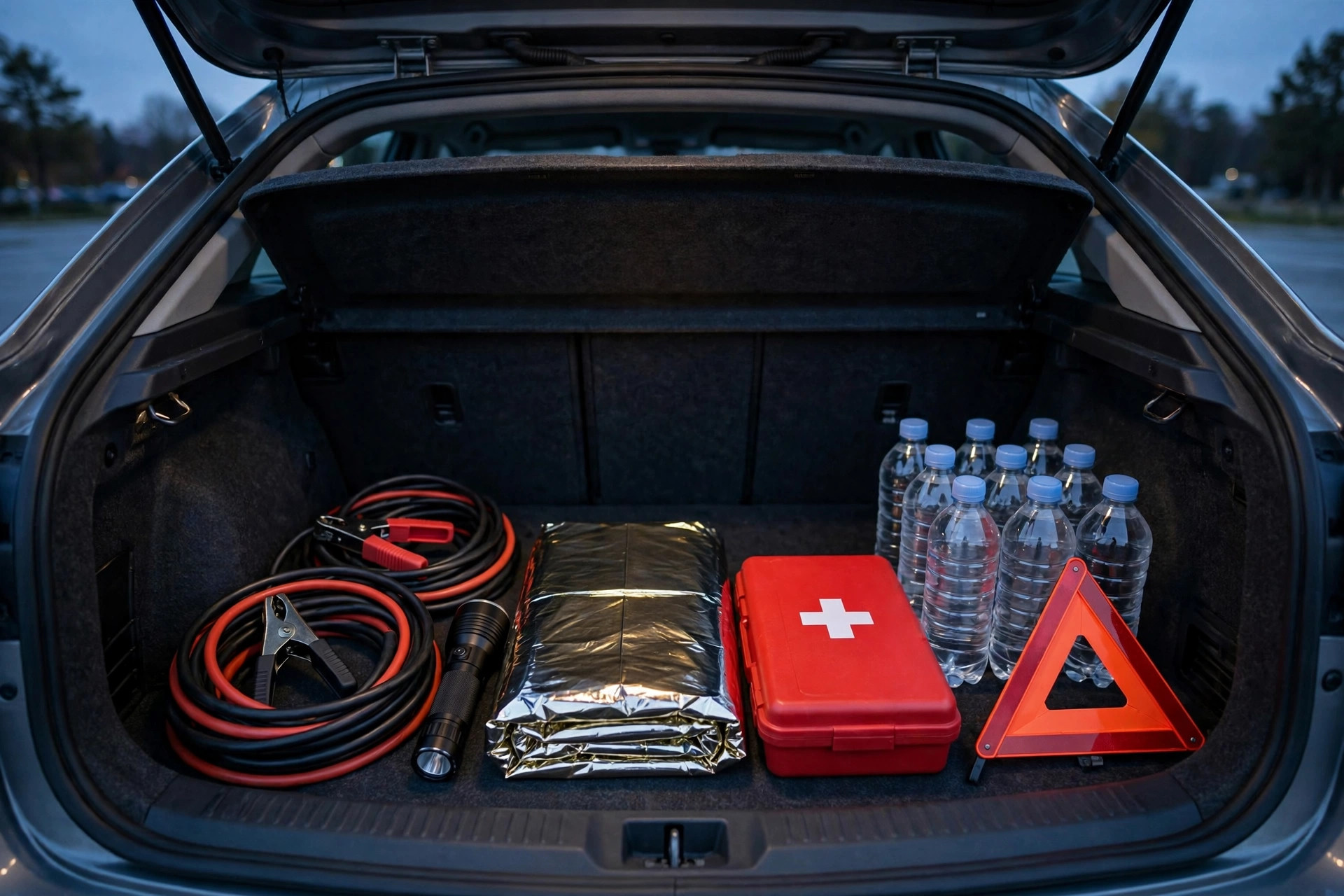
Most people will never use a bug-out bag, but almost everyone will, sooner or later, sit in a broken-down car on the side of the road in bad weather. A car emergency kit is the most-used emergency kit most households will ever own, and it is also the one most often neglected — a single flashlight with dead batteries, a first aid pouch from a decade ago, nothing for cold, nothing for water. This checklist fixes that, car by car and season by season.
The core kit, for every car
- Visibility and signalling: a reflective warning triangle, a high-visibility vest, and a flashlight with spare batteries. If you break down at night, being seen is your first safety problem.
- First aid: a small kit with bandages, gauze, tape, antiseptic wipes, gloves, and any personal medication you may need on the road. Our full home first aid checklist adapts well to a car-sized version.
- Tools: jumper cables or a portable jump starter, a tyre pressure gauge, a basic wrench set, and a tyre inflator or a spare tyre you actually know how to change. A tool you cannot use is dead weight, so practice a tyre change once in daylight.
- Warmth and shelter: a blanket or emergency blanket per seat, a warm hat and gloves in winter, and a rain poncho. A car that cannot run its heater becomes cold surprisingly fast.
- Water and food: at least a litre of water per person and a few high-energy snacks — granola bars, nuts, dried fruit — rotated every few months so summer heat does not ruin them.
- Phone and power: a car charger and a charged power bank, so a dead car battery does not also mean a dead phone.
Seasonal additions
In winter, add a small snow shovel, a bag of cat litter or sand for traction, an ice scraper, and extra blankets. Winter breakdowns are the ones that turn dangerous, because cold and wet combine with waiting time. In summer, add extra water, sunscreen, a hat, and a shade cloth or sunshade — heat exhaustion in a car with no air conditioning arrives faster than most people expect, especially for children and older passengers. In both seasons, keep the fuel tank above a quarter full as a habit: fuel is heat, light, phone charging, and the ability to drive to help, and running on empty removes all four at once.
Where to keep it, and how to maintain it
Keep the kit in the trunk in one bag or box, not scattered across the car, so you can grab it in the dark and so a passenger can find it without your help. Put the warning triangle, vest, and flashlight where they are reachable without opening the trunk into traffic if your car layout allows it. Then check the kit twice a year — spring and autumn work well, at the same time as your pantry rotation check. Replace expired food and medicine, test batteries, check water bottles for leaks or heat damage, and confirm the jump starter still holds a charge.
Finally, think about the trips you actually take. A daily commuter needs the core kit. A family that drives rural roads, mountains, or long distances should add a paper map, extra water, a tow rope, and a plan for who to call when there is no signal — a written list of numbers beats a phone with no service. And if you already carry a bug-out bag, keep it as a separate grab bag rather than burying it under the car kit: the car kit stays with the car, the bug-out bag goes with you.
Shop the kit
- A complete car emergency roadside kit — the fastest way to cover the basics in one bag.
- A portable car jump starter — starts your car without waiting for another driver.
- Emergency blankets — light, cheap warmth for every seat.
As an Amazon Associate, Alien Bunker earns from qualifying purchases. This page contains affiliate links, which support the site at no extra cost to you.