
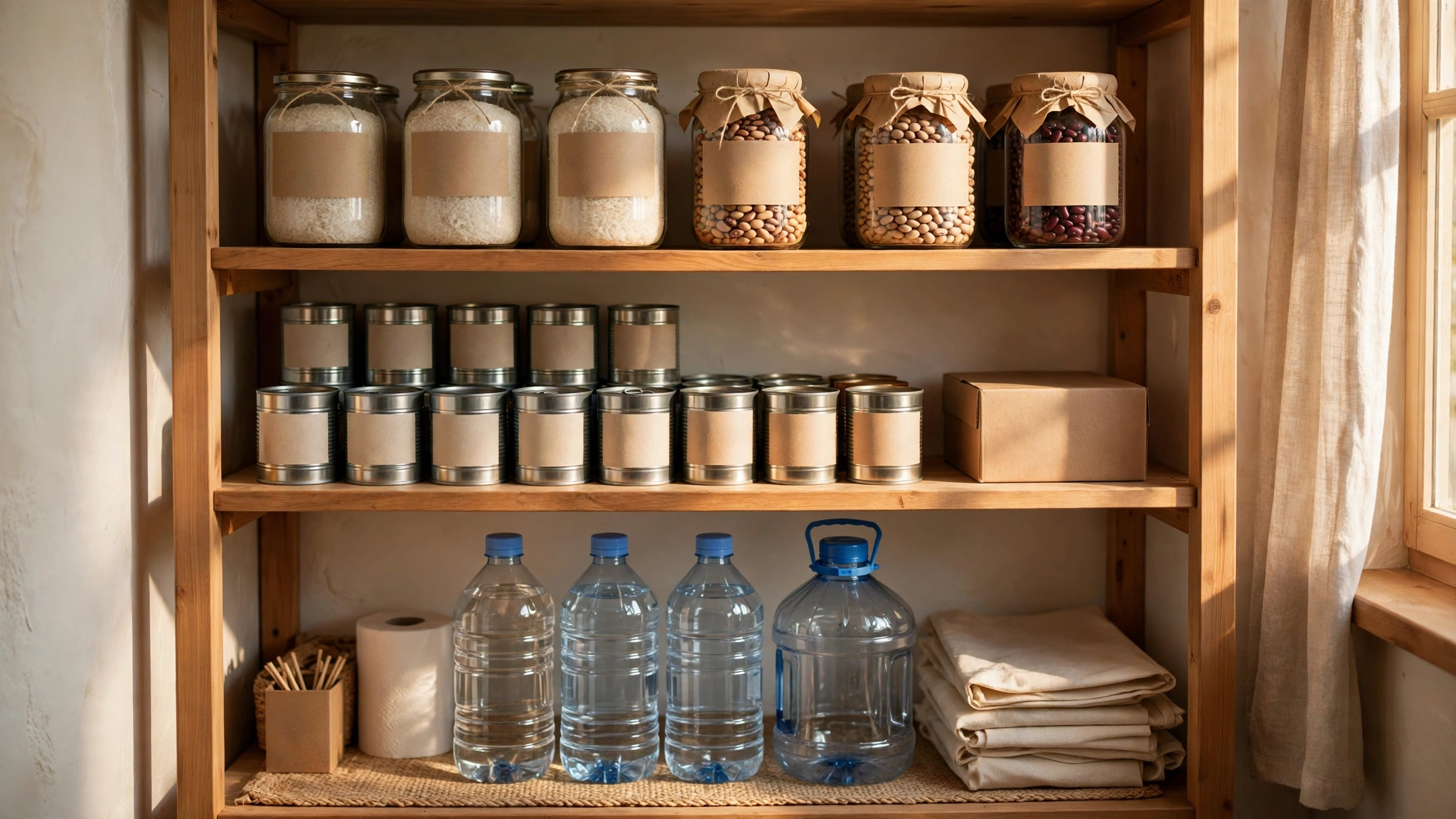
Water rationing sounds simple — use less — until you try it with a family, a limited supply, and no date for when the taps come back. Then it becomes a planning problem: how much do you actually need, what do you prioritise, and how do you stretch a fixed supply without making anyone ill? The answer is not to drink as little as possible. Dehydration impairs thinking, energy, and health faster than almost any other shortage. Rationing means using water wisely, in the right order, and without waste — not going thirsty to “save” water that nobody will need if everyone is ill.
How much water does a family actually need?
Planning figures from emergency agencies cluster around 3 to 4 litres per person per day for drinking and basic cooking, with more for hygiene if you can afford it. A family of four therefore needs roughly 12 to 16 litres a day just for drinking and cooking, and a three-day supply is 36 to 48 litres — heavier and bulkier than most people expect, which is why our water storage guide and our container comparison matter before rationing ever starts. Children need proportionally similar amounts for their size, older adults may drink less but dehydrate more easily, and anyone ill, pregnant, or doing physical work needs more. Work out your household’s daily figure now, write it on the storage containers, and ration against that number, not against a guess.
The priority order: drink, cook, clean, flush
- Drinking first, always: never cut drinking water to save water for cleaning. Sip regularly through the day rather than saving it all for one big drink, and watch for dehydration signs — dark urine, headache, dizziness, and unusual tiredness.
- Cooking second: choose meals that need little water. One-pot meals, canned foods, and the no-fridge meals in our pantry meals guide use far less water than pasta boiled in a huge pot. Reuse cooking water for washing up where safe.
- Hygiene third, but do not skip it: handwashing prevents illness that wastes far more water and health than it saves. Use a small basin, soap, and a measured pour rather than a running tap. Sponge baths use a fraction of a shower’s water.
- Flushing last: if the toilet still flushes, use stored non-drinking water or a bucket flush, and flush less often. If water is severely limited, use a bag-lined bucket as an emergency toilet and keep drinking water strictly separate.
Stretching the supply without risking health
Collect rainwater where legal and practical, and purify any uncertain source before drinking — see our purification guide. Capture the cold water that runs before a shower heats up, reuse clean rinse water for cleaning, and cover stored water to prevent evaporation and contamination. Teach children the plan simply: “this bottle is yours for the day, drink a little at a time, tell me if you feel dizzy.” Keep a daily log on paper — litres used, litres left, days remaining at the current rate — because under stress, nobody remembers how much was used yesterday. If the supply will not last until resupply, cut hygiene and flushing first, cooking variety second, and drinking last, and seek help early rather than waiting until the last bottle. Water rationing done well is calm, measured, and boring. That is exactly what you want it to be.
Shop water rationing basics
- Water containers with spigots — measured pours, no wasteful splashing.
- Collapsible water jugs — extra capacity that stores flat.
- Water purification tablets — make uncertain water drinkable.
As an Amazon Associate, Alien Bunker earns from qualifying purchases. This page contains affiliate links, which support the site at no extra cost to you.