
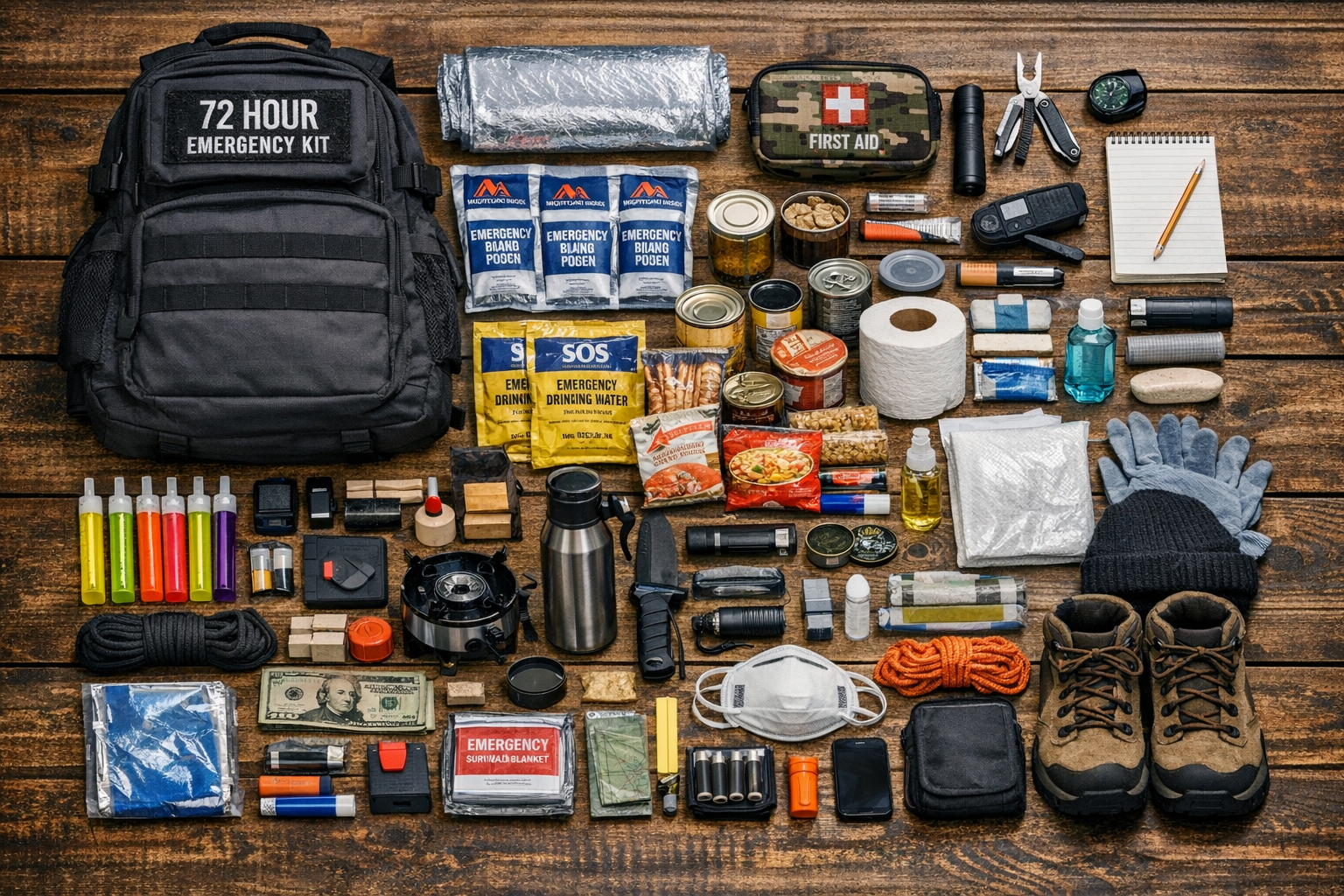
Cold hands are more than uncomfortable. When your hands are cold, you cannot do the things an emergency demands: you cannot tie a knot, open a tin, hold a torch steady, or work a zip. Your fingers go stiff, your grip weakens, and simple jobs take twice as long and hurt twice as much. In cold weather, gloves are not an accessory — they are a tool, as important as a torch or a first-aid kit. And like most emergency gear, the right gloves are cheap, light, and easy to store, while the wrong gloves are worse than none at all: a pair that soaks through, that lets the wind in, or that is so bulky you cannot use your fingers will sit in the bottom of a bag while your hands freeze.
What makes a good emergency glove
A good emergency glove has to do three things at once: keep the cold out, keep the wet out, and let you use your hands. Warmth comes from insulation — fleece, wool, or synthetic insulation that traps air around the hand. Wool is the classic choice, because it stays warm even when it gets damp, which is why it has been the cold-weather material for centuries. Waterproofing matters just as much: a glove that soaks through in rain or snow will chill your hands faster than bare skin, so look for a waterproof or water-resistant outer layer, especially if the gloves are for outdoor work. The third quality is dexterity. A thick ski glove will keep your hands warm, but you cannot open a tin, strike a match, or use a phone in it. For emergency use, the best compromise is a medium-weight glove with a grippy palm and a snug fit — warm enough for real cold, thin enough to work in. Fingerless gloves are a tempting option because they leave your fingers free, but they leave your fingertips exposed, which is exactly where the cold bites first; if you need finger freedom, choose a glove with fold-back fingertips, which gives you both warmth and dexterity. Buy gloves a size larger than your normal fit, so you can wear a thin liner glove underneath on the coldest days — two layers are warmer than one thick glove, and the liner can be worn alone for lighter work. For more on cold-weather preparation, see our winter blackout guide and our pipe freeze guide.
Which gloves to buy, and how many pairs
Do not buy one pair of gloves and call it done. Hands get wet, gloves get lost, and in an emergency you may need to lend a pair to someone else. The practical plan is three pairs per person, for three different jobs. The first pair is a warm, waterproof work glove — the main pair, for outdoor work, clearing debris, and anything in the cold and wet. The second pair is a lighter, thinner glove for indoor work and for jobs that need dexterity, like first aid or cooking — see our first-aid kit checklist for the jobs where you need your fingers free. The third pair is a cheap, disposable pair — thin nitrile or latex gloves — for dirty jobs like handling floodwater, cleaning, or first aid, where you want a barrier between your hands and whatever you are touching. Keep a pair in the go-bag, a pair in the car, and a pair at home, following the same spread-out storage as the rest of the kit in our go-bag guide and our car emergency kit checklist. Check the gloves once a year: look for worn palms, split seams, and stiff waterproofing, and replace any pair that no longer fits or no longer keeps the water out. And do not forget the children: small hands get cold faster than adult hands, and a child who cannot feel their fingers is a child who cannot hold a torch, eat a meal, or stay calm. Buy children’s gloves a size up so they fit over a liner, and choose bright colours so they are easy to find in a dark bag. Gloves are the cheapest piece of cold-weather gear you will ever buy — and on a freezing night, they are the piece you will be most glad you packed.
Shop cold-weather glove basics
- Insulated waterproof work gloves — warm, dry, and grippy for outdoor emergency work.
- Thin wool glove liners — a warm base layer that works alone or under a heavier glove.
- Heavy-duty disposable nitrile gloves — a clean barrier for dirty or wet jobs.
As an Amazon Associate, Alien Bunker earns from qualifying purchases. This page contains affiliate links, which support the site at no extra cost to you.