
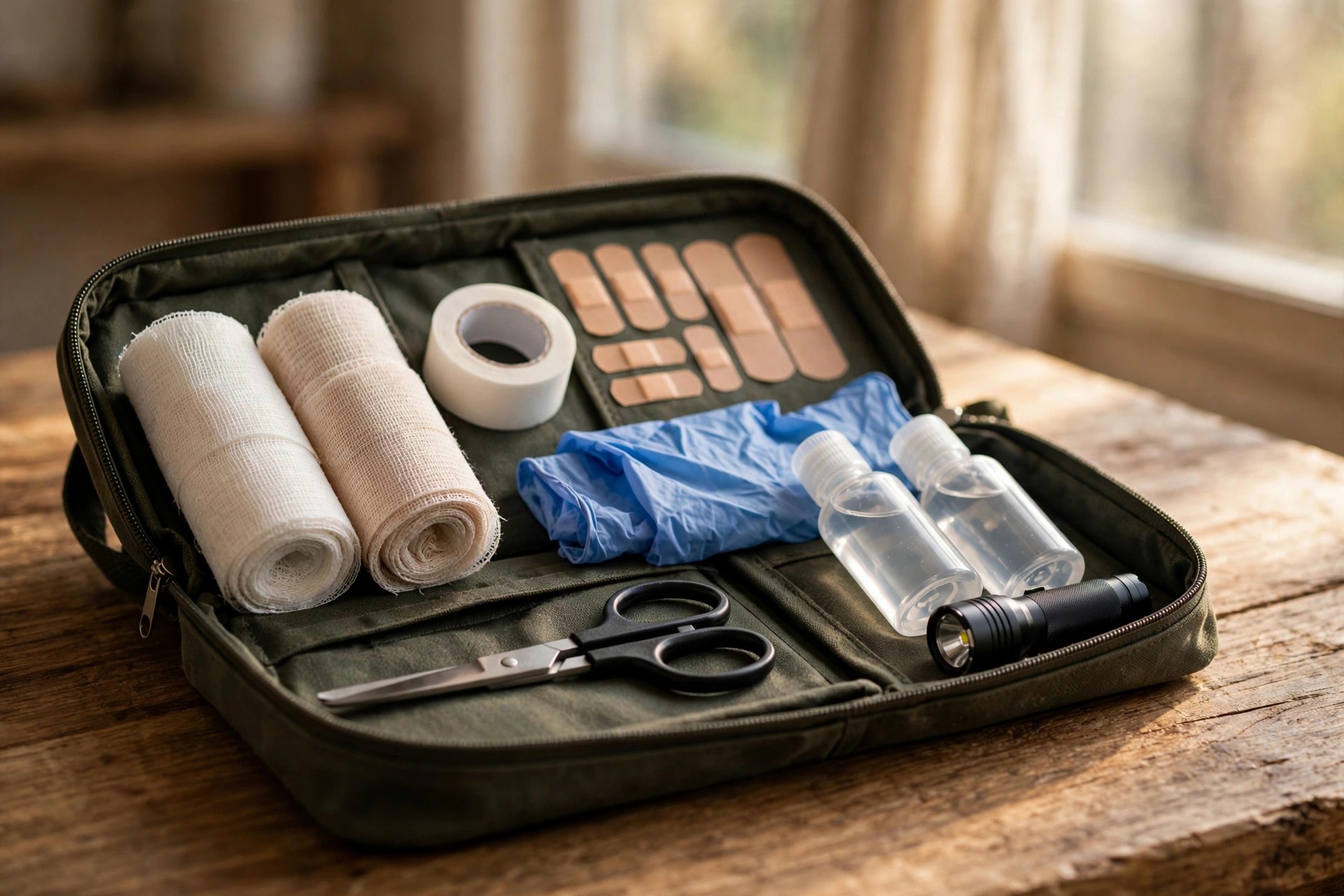
A first-aid kit for children is not just a smaller version of the adult kit. Children need different sizes, different doses, and — just as importantly — a different approach: a frightened child who will not sit still for a bandage is a problem no amount of gauze solves. A good kids’ kit is built around three things: supplies sized for small bodies, medicines dosed for small people with clear instructions, and comfort items that turn first aid from something scary into something manageable. It belongs in the household kit and in the go-bag, and it should be checked as often as the adult one.
What goes in the kids’ kit
- Bandages and dressings in child sizes: small adhesive bandages in fun colours or patterns — children accept a bright bandage far more willingly than a plain one — plus gauze pads, a small roll of bandage, and medical tape. Include butterfly closures for small cuts.
- Cleaning and care: antiseptic wipes, saline solution for rinsing eyes and wounds, and a pair of tweezers for splinters. A small pair of blunt-tipped scissors is safer around a wriggling child than a sharp pair.
- Medicines, with doses written down: children’s pain and fever medicine, dosed by weight and age, with the dose written on a card in the kit — never guess a child’s dose in an emergency. Check the expiry dates, store the medicines at room temperature unless the packet says otherwise, and ask a pharmacist if you are unsure which product or dose is right for your child’s age and weight. Include any regular medicine the child takes, with a spare prescription copy if the doctor provides one.
- Allergy and medical information: a card listing the child’s allergies, regular medicines, blood type if known, and the doctor’s and parents’ phone numbers. In an emergency, this card speaks for a child who cannot speak for themselves.
- Comfort items: a small toy, a favourite snack, or a sticker — something that distracts and calms a child while you clean a cut or apply a bandage. Comfort is not a luxury in first aid; it is what lets you do the job.
- A thermometer: a digital thermometer, so you can check a fever rather than guessing. A fever in a small child is common and usually manageable, but knowing the actual temperature is the difference between reassurance and a call to the doctor.
Pack the kids’ supplies in a clearly marked pouch inside the main kit, following the structure of our household first-aid kit guide, so anyone can find them quickly. Keep the pouch in the go-bag as well as in the home kit — children get hurt away from home too — and check it twice a year, because children outgrow doses, medicines expire, and a kit packed for a three-year-old is wrong for a six-year-old. The same teaching approach applies as in our teaching kids emergency basics guide and our kids’ emergency backpack guide: the kit works best when the child knows it exists and is not afraid of it.
Teaching children to use the kit — and to ask for help
The kit is only half the job; the other half is teaching the child what to do. Show children where the kit lives, what the bandages are for, and how to put a simple bandage on a small cut themselves — children who can treat a small scrape are calmer about bigger injuries, and they are less likely to panic. Teach them the three rules: tell an adult straight away, do not touch someone else’s blood, and never take medicine without an adult. Practise together on a normal day: clean a pretend cut, apply a bandage, and talk through what to do if they fall, get stung, or feel unwell. Keep the tone calm and matter-of-fact, not scary — a child who has practised first aid once will remember it far better than a child who has only been warned about it. And keep the kit out of reach of very small children but visible and findable for older ones: the toddler who eats the contents is a problem, but so is the ten-year-old who cannot find the bandages because they are hidden on a high shelf.
Shop kids’ first-aid basics
- Child first-aid kits — a ready-made base to customise.
- Digital thermometers for children — fast, accurate temperature checks.
- Kids’ adhesive bandages — bright bandages children actually want to wear.
As an Amazon Associate, Alien Bunker earns from qualifying purchases. This page contains affiliate links, which support the site at no extra cost to you.