
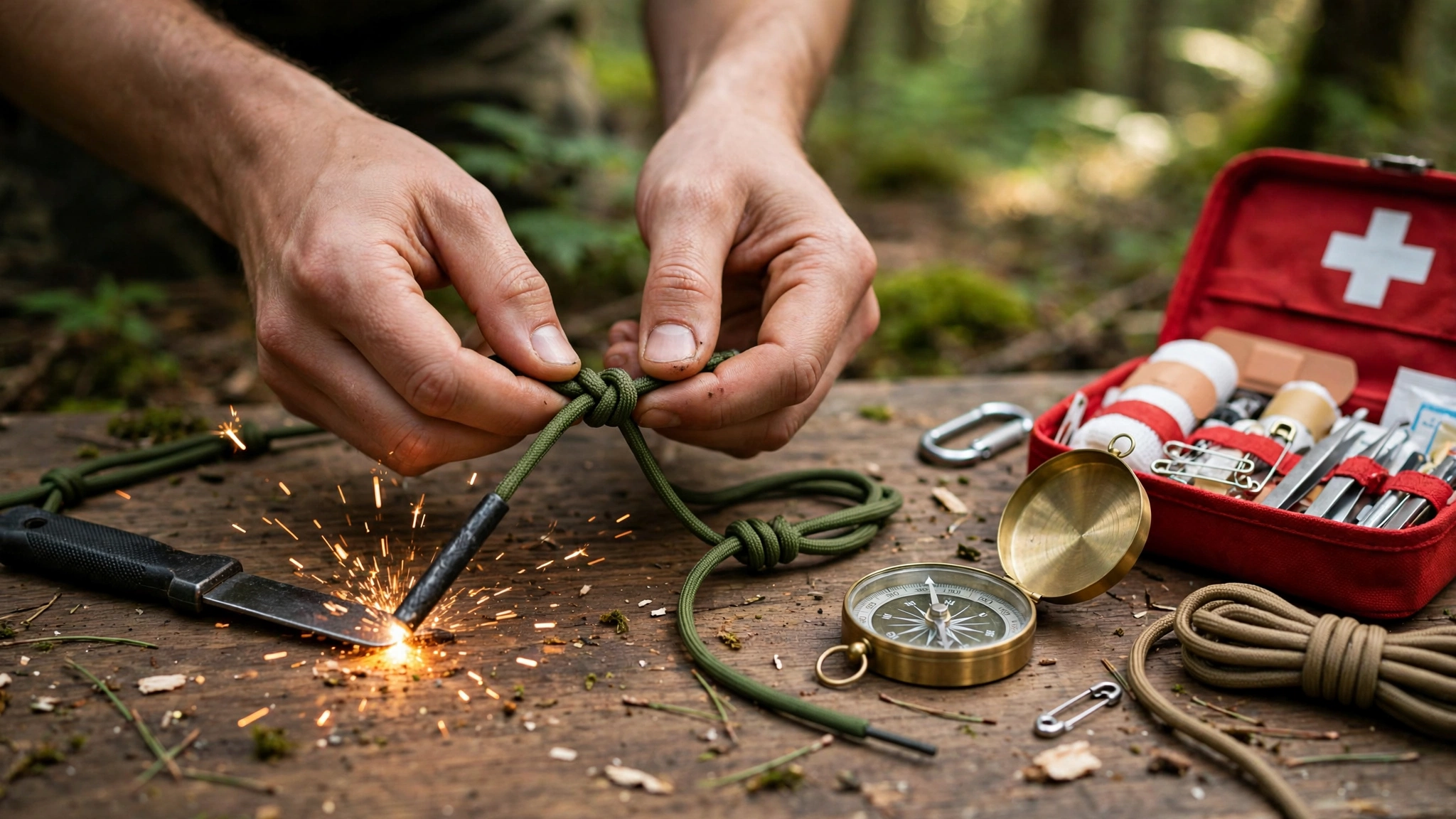
Fire is the oldest survival tool there is, and in an emergency it does four jobs at once: it cooks food, it boils water, it warms a cold household, and it lifts morale in a way that nothing else can. But fire is only useful if you can start it — and starting a fire in the rain, in the dark, with cold hands, is much harder than it looks on a video. A fire starter kit is the small, cheap, pocket-sized box that makes fire possible when matches are wet and lighters are empty. This guide covers what goes in the kit, how each piece works, and how to practise so the skill is there when you need it.
What goes in the kit: three ways to make a spark
A good fire starter kit has three ways to make fire, because any one of them can fail. First, waterproof matches in a sealed container: they are the simplest, fastest way to make a flame, and they work even with cold hands. Keep them in a waterproof box, not loose in a pocket, and keep a striker with them. Second, a lighter — a simple, cheap, windproof lighter that you have tested and know works. Lighters are fast and reliable, but they run out of fuel, and they do not work well in the cold, so they are the backup, not the plan. Third, a ferro rod and striker: a small rod of ferrocerium that throws a shower of hot sparks when you scrape it. A ferro rod works wet, works cold, and lasts for thousands of strikes — it is the tool that works when everything else has failed. Pack all three in a small, waterproof pouch or tin, and add a few firelighters: cotton wool balls soaked in petroleum jelly, sealed in a small bag, are the best — they catch a spark easily, burn for several minutes, and weigh almost nothing. Add a small knife for making kindling, and a short length of cord for tying a bundle — see our fire starting basics guide and our knot tying guide for the skills that go with the kit.
Using the kit: the rules that make fire work
Starting a fire is a skill, and the kit only helps if you know the rules. First, prepare before you strike: gather your tinder, kindling, and fuel before you light anything, and build the fire in the right order — tinder first, then kindling, then fuel, each layer bigger than the last. A fire built backwards, with big wood on top of a tiny spark, will never catch. Second, keep it dry: a wet fire will not start, so keep the kit in a waterproof pouch, keep your tinder in a sealed bag, and if the ground is wet, build the fire on a flat stone or a piece of bark. Third, give it air: a fire needs oxygen, so do not smother it — leave gaps between the sticks, and blow gently on the embers rather than fanning hard. Fourth, practise: light a fire with your kit once, before you need it, in your garden or on a camping trip, so you know how the ferro rod feels, how long the cotton wool burns, and how much kindling you actually need. And fifth, know the safety rules: never light a fire indoors, never light a fire near a fuel store, and never leave a fire unattended — see our candle safety guide and our portable stove fuel guide. The common mistakes are easy to avoid: packing only one way to make fire, so the kit fails when that one thing fails; keeping the matches loose and wet; and never practising, so the first time you use the kit is the time you need it most.
Storing the kit, and keeping it ready
Storage is simple: keep the kit in a small, waterproof pouch or tin, with the emergency kit, where you can find it in the dark. Check it every few months: are the matches dry, is the lighter full, is the ferro rod still there, and are the cotton wool balls still sealed? Replace anything that is damp, empty, or missing, and keep a spare set of firelighters in the kit — they are the part you will use first and run out of fastest. Keep the kit away from children, and teach older children that it is a tool, not a toy. And keep a second, smaller kit in the car or the go-bag, so you are never without a way to make fire — see our car emergency kit checklist and our shelter building guide. A fire starter kit costs very little, weighs almost nothing, and fits in a pocket. It is the smallest item in the emergency kit, and on a cold, dark night, it can be the most important one.
Shop fire starter kit basics
- Ferro rod fire starter kits — works wet, works cold, and lasts for thousands of strikes.
- Waterproof matches in sealed containers — the simplest, fastest way to make a flame.
- Windproof refillable lighters — fast, reliable, and built for outdoor use.
As an Amazon Associate, Alien Bunker earns from qualifying purchases. This page contains affiliate links, which support the site at no extra cost to you.