
A blackout is stressful for adults. For a small child, it is frightening in a way that is hard to overstate: the lights go out, the television dies, the familiar sounds of the house stop, and the adults suddenly look worried. Children do not understand what is happening, but they understand perfectly that something is wrong. How the adults around them behave in the first ten minutes will shape how the child remembers the whole night. This guide is about the practical side of looking after children during a blackout — the light, the food, the warmth, the safety — and the emotional side, which matters just as much.
The first ten minutes: light, calm, and a job to do
When the power goes out, the first job is light — and the first rule is that a child should never be left in the dark. Keep a lantern or a torch in every room the children use, and make sure the children know where they are. A lantern on the table, a headlamp for an older child, and a small night-light in the bedroom turn a frightening darkness into an adventure instead of a panic. Avoid candles with small children: an open flame in a dark room with a curious child is an accident waiting to happen, and a knocked-over candle in a blackout is a fire in a house with no power for the smoke alarms to rely on — see our candle safety guide for the full reasoning. The second job is calm. Children take their cues from the adults, so speak in a steady voice, explain what happened in simple words — “the power is off, it will come back, we have lights and food” — and give the child something to do: hold the torch, count the lanterns, help set up the blankets. A child with a job is a child who is not panicking. Check that the child is warm, especially at night, with blankets and layers, as in our emergency blanket guide, and keep a snack and a drink within reach, because a hungry, thirsty child is a frightened child. See our kids’ emergency backpack guide for what belongs in a child’s own kit.
Food, safety, and getting through the night
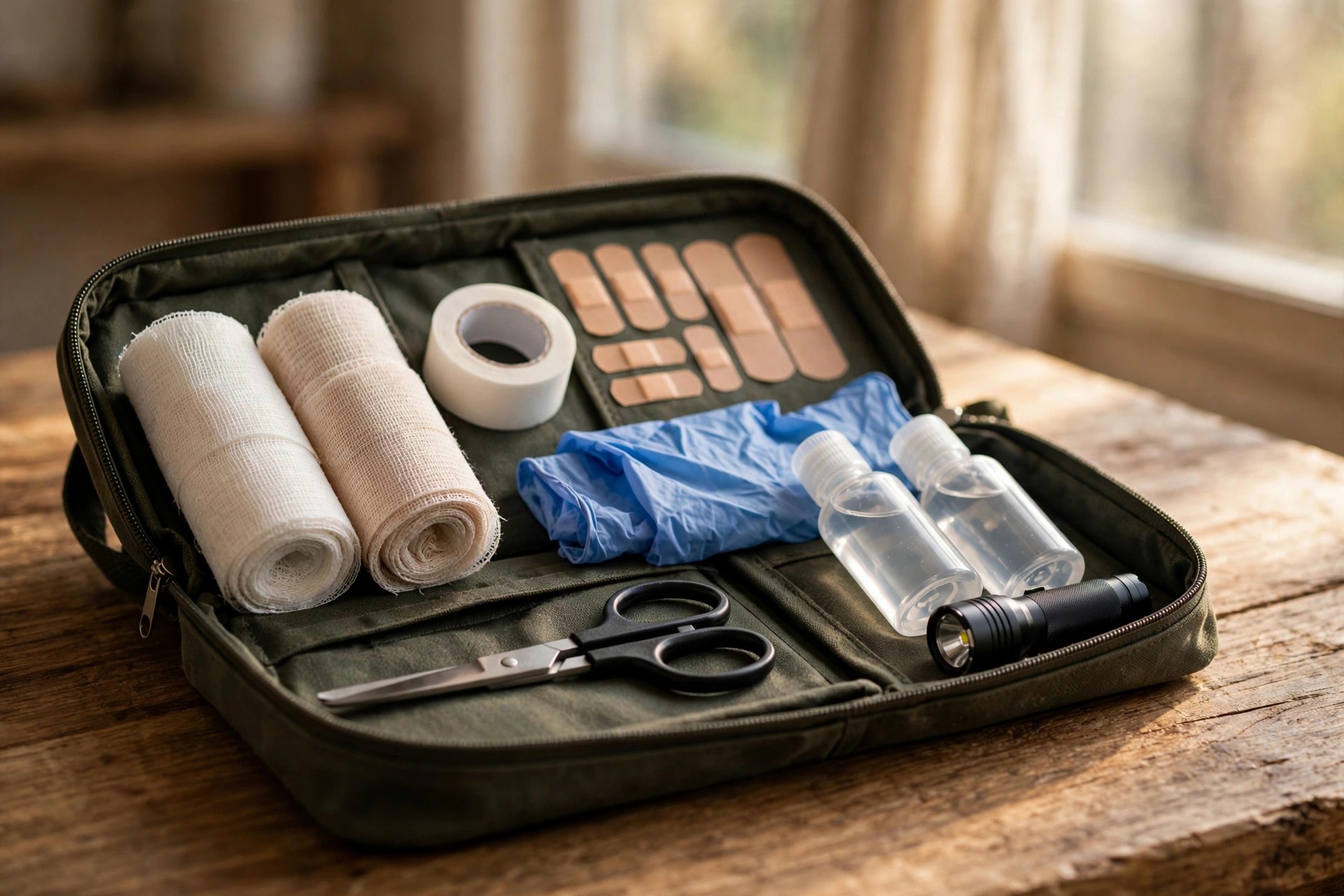
Keep the food simple and familiar. A blackout is not the night to introduce a new emergency meal — give the child food they already like, from the snacks and meals in our kids’ snacks guide and our no-power breakfast guide. If the child takes medicine, check the storage rules in our medicine safety guide — some medicines need refrigeration, and a blackout puts a clock on them. Make the home safe: block off the stairs if the child is small, keep the bathroom door closed so a child cannot wander into a dark bathroom, and keep the first-aid kit where you can find it in the dark, following our kids’ first-aid kit guide. For the night itself, keep the routine as normal as possible: the same bedtime, the same story, the same goodnight. A story told by torchlight, a song, or a simple card game can turn the strangest night of the year into a memory the child talks about fondly. And look after yourself too — a parent who is exhausted, hungry, and panicking cannot calm a child, so eat, drink, and take turns with the other adult if there is one. The blackout will end. The way the child remembers it depends on what happened in the dark, and the adults who were there with them.
Shop blackout childcare basics
- Kids’ headlamps — hands-free light a child can wear and control.
- Safe LED lanterns and night-lights — gentle light with no flame and no heat.
- Kids’ snack packs in bulk — familiar food, ready when the lights go out.
As an Amazon Associate, Alien Bunker earns from qualifying purchases. This page contains affiliate links, which support the site at no extra cost to you.