
Cuts and scrapes are the most common injury in any emergency, and they are also the one most households are least prepared for. A broken window, a fallen shelf, a piece of debris in the dark — a small cut can turn into a big problem if it is not cleaned and covered properly, and in a blackout, when the hospital is far away and the phone is not working, the first aid you do at home is the first aid that counts. The good news is that basic wound care is simple, and it uses items that cost almost nothing. This guide covers how to stop bleeding, clean a wound, cover it, and know when to get professional help. This is first-aid awareness, not medical training: it is meant to help you act calmly until professionals take over.
First: stop the bleeding
The first step with any cut is to stop the bleeding. Press a clean cloth, a gauze pad, or even a clean t-shirt firmly against the wound, and keep pressing — do not keep lifting the cloth to check, because that breaks the clot that is forming. Hold the pressure for at least five minutes, and raise the injured limb above the level of the heart if you can, because that slows the bleeding. Most small cuts stop bleeding within a few minutes. If the blood is spurting, or if it soaks through the cloth and keeps coming, add another layer on top and keep pressing — do not remove the first layer. A pressure bandage, wrapped firmly but not so tight that the fingers or toes go numb or blue, will hold the pressure for you. Call for help — in Japan, 119 for an ambulance — if the bleeding does not stop after ten minutes of firm pressure, if the wound is deep enough to see fat or muscle, if the cut is on the face, the neck, or a joint, or if the injured person feels faint or dizzy. For the kit that makes this possible, see our first-aid kit checklist and our first-aid kit for kids.
Clean it, cover it, and watch it
Once the bleeding has stopped, clean the wound. Rinse it gently under clean running water for a few minutes, and pick out any visible dirt or debris with clean tweezers — do not dig into the wound. Clean water is the best thing for a wound: do not pour alcohol, hydrogen peroxide, or iodine into an open cut, because they damage the tissue and slow healing, even though they sting and feel like they are working. Pat the skin around the wound dry, then cover it with a sterile dressing and tape, or a large adhesive bandage — see our bandaging techniques guide for how to do this properly. Change the dressing every day, or sooner if it gets wet or dirty, and wash your hands before and after you touch the wound. Watch for signs of infection over the next few days: redness that spreads outwards from the wound, increasing swelling, warmth, pain, pus, or a fever. If any of those appear, get medical help — an infected wound needs treatment, not just a new bandage. And check the tetanus question: if the wound is deep or dirty, or if the injured person has not had a tetanus vaccination in the last ten years, they should see a doctor. For related injuries, see our burns and cuts guide and our sprains guide.
The wound care kit, and the mistakes to avoid
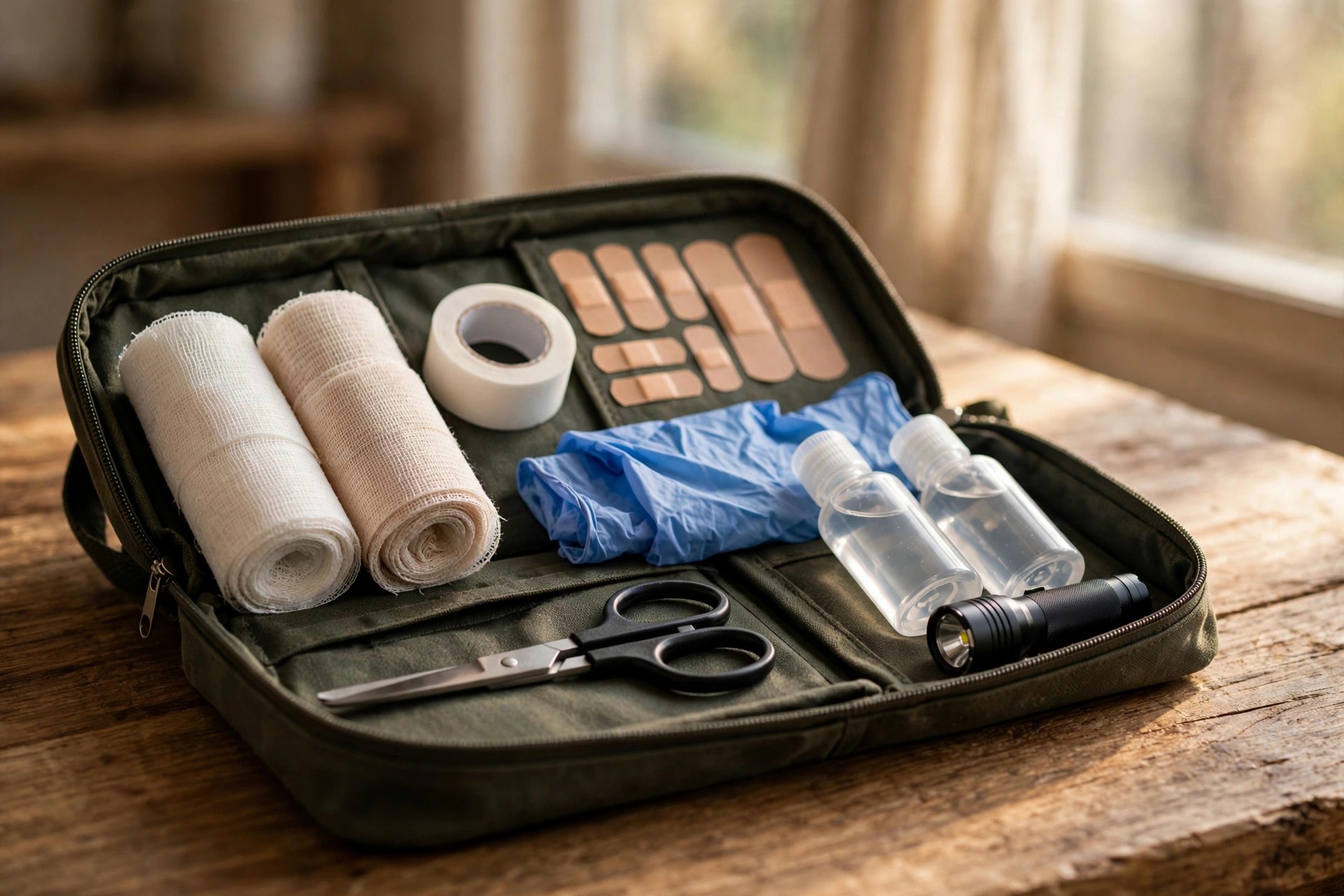
A basic wound care kit is small and cheap, and it belongs in every home. Pack sterile gauze pads in several sizes, adhesive bandages in several sizes, a roll of medical tape, a bandage roll, antiseptic wipes for cleaning the skin around the wound, disposable gloves, tweezers, and small scissors. Keep the kit in one place, where everyone in the household knows to find it, and check it every few months — bandages go out of date, gloves tear, and supplies get used and not replaced. Teach the household the basics, including older children: where the kit is, how to press on a cut, and when to call for help — see our CPR awareness guide for the next skill in the chain. The common mistakes are easy to avoid: using a dirty cloth on a wound, which adds infection; pouring alcohol into a cut, which slows healing; covering a wound with a bandage that is too tight; and ignoring a wound that is getting worse, because it seemed small at first. A small cut, treated properly, heals in a few days. A small cut, ignored, can become a serious problem. The kit costs almost nothing. The knowledge costs nothing at all.
Shop wound care basics
- Sterile gauze pads and adhesive bandages in bulk — the core of any wound care kit.
- Comprehensive home first-aid kits — gauze, bandages, tape, and the basics for any emergency.
- Individually wrapped antiseptic wipes — for cleaning the skin around a wound, one at a time.
As an Amazon Associate, Alien Bunker earns from qualifying purchases. This page contains affiliate links, which support the site at no extra cost to you.