
Soup is the most underrated emergency food there is. It is warm, filling, and hydrating all at once, it needs almost no preparation, and a bowl of soup feels like a real meal in a way that a handful of crackers never does. In a blackout or a week of bad weather, soup is the food that keeps a household going: it is easy to eat when you are tired, easy to share, and easy to stretch by adding rice or pasta. It also solves one of the biggest problems in an emergency — water. This guide covers which soups to stock, how much you need, how to store them, and how to cook soup when the power is out.
Which soups to stock, and how much you need
Start with tinned soup, which is the backbone of an emergency soup stock. Tinned soup keeps for two to five years, needs no fridge, and is ready in minutes. Buy the flavours your household actually likes — tomato, vegetable, chicken noodle, miso, and pumpkin are good starters — and buy a mix, because eating the same soup for five days straight is how a household stops eating. A tin per person per day is a good planning number for a soup-based meal, so a household of three needs about twenty tins for a week of one soup meal a day. Add dried soup mixes and cup soups alongside: they are lighter, cheaper, and take up less space, and they only need hot water. Instant noodles count too — see our instant noodle meals guide for how to turn them into a real meal. And think about who is eating: keep a few mild, plain soups for children and for anyone with a sensitive stomach, and check the labels for allergens, as in our food allergies guide. Soup is a meal, not a snack — stock it like one.
Storing soup: rotation, dents, and the damp cupboard problem
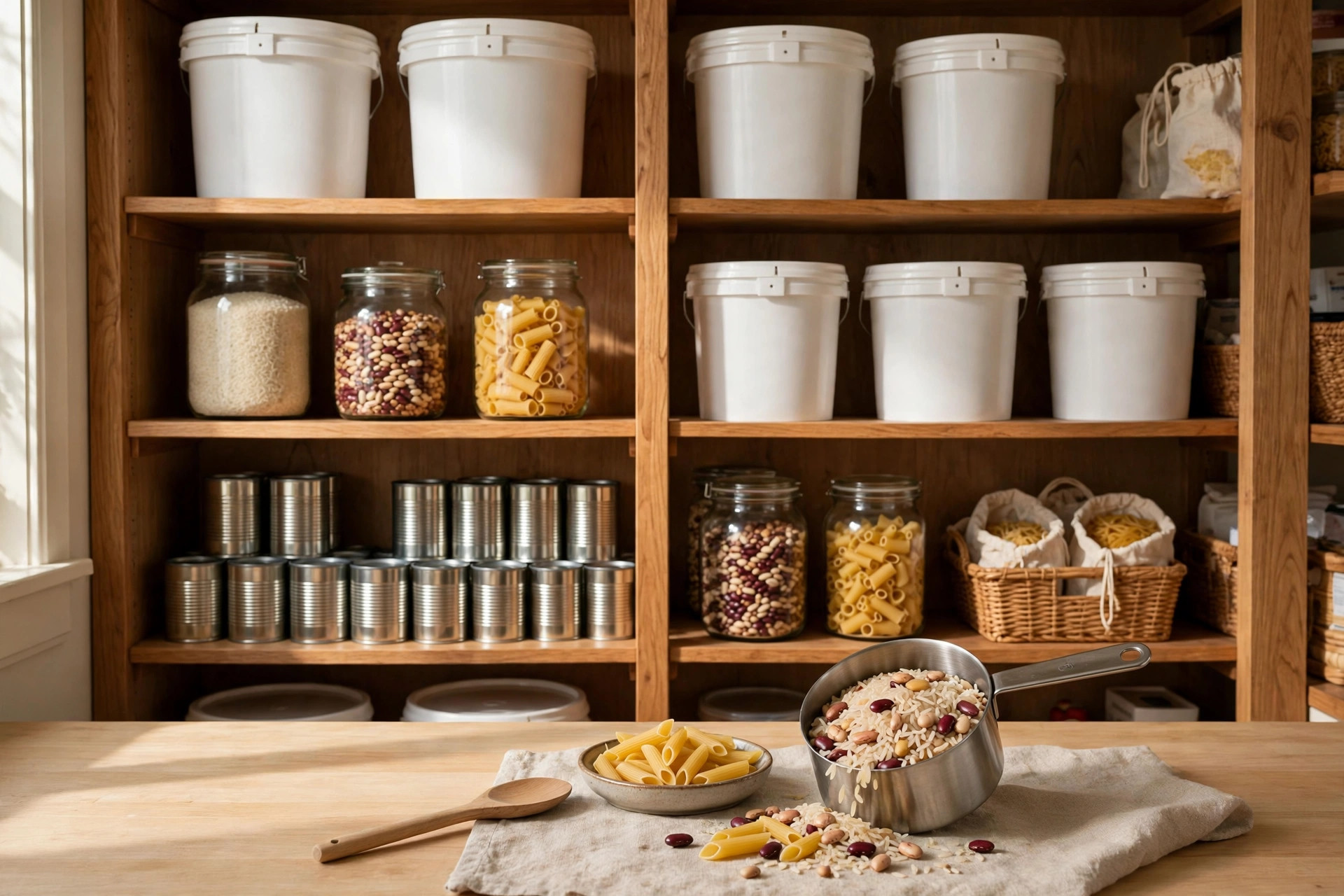
Soup storage follows the same rules as the rest of the pantry, with a few soup-specific points. Store tins in a cool, dry place, off the floor, and away from damp — a damp cupboard is the worst place for tins, because the labels fall off and the tins rust. Check your tins every few months: throw away any tin that is badly dented, swollen, leaking, or rusty, and use any tin with a dented rim first, because the seal may be weakened. Rotate by date, oldest first, and label the shelf with the month you bought them, following the system in our pantry rotation system and our canned soup storage guide. Dried soup mixes and cup soups should go in an airtight container or a sealed bag, because they absorb moisture and go stale fast in a humid kitchen — the same rule as for our dried pasta storage. Keep a manual can opener with the soup, not in a different drawer: a tin of soup with no way to open it is useless, and electric openers do not work in a blackout. And keep the soup with the rest of the food, not scattered around the flat — one shelf, one stock, one glance to see what you have. A soup stock that you cannot see is a soup stock you will forget.
Cooking soup with no power, and stretching it further
Cooking soup in an emergency is simple, but there are a few tricks that make it better. A tin of soup needs only heating, not cooking, so it works on the smallest portable stove, over a single burner, in a few minutes. Keep the lid on the pot while it heats — it halves the fuel used, which matters when fuel is limited. If you have no stove at all, tinned soup is still edible cold, though nobody enjoys it; a better option is to warm it in a flask of hot water, or to eat a dried soup mix made with hot water from a thermos. Stretch soup further by adding what you have: a handful of rice, a few noodles, a tin of beans, or a chopped potato will turn one tin into a meal for two, as in our one-pot meals guide and our no-refrigeration meals guide. And remember that soup is also a way to use up food that is about to go off — a tin of vegetables, a handful of rice, and a stock cube is a soup, and it is a better use of those ingredients than throwing them away. The common mistakes are simple: stocking only one flavour, forgetting the can opener, and keeping the soup in a damp cupboard where the tins rust. A shelf of soup is a week of warm dinners, for very little money and no effort at all.
Shop soup stocking basics
- Canned soup variety packs in bulk — several flavours, so nobody tires of the same one.
- Dried soup mixes in bulk — light, cheap, and only need hot water.
- Wide-mouth insulated food flasks — keep soup hot for hours, with no stove needed.
As an Amazon Associate, Alien Bunker earns from qualifying purchases. This page contains affiliate links, which support the site at no extra cost to you.