
Water purification tablets are the lightest water treatment you can carry: a small blister pack weighs almost nothing, fits in a pocket, and turns a litre of questionable water into water you can drink. They are a standard item in go-bags and emergency kits for good reason. But they are also the most misunderstood water treatment, because they do not do everything people assume they do. This guide explains how tablets work, how to use them correctly, and where their limits are — so you use them as one tool in a water plan, not as a magic fix.
How tablets work, and the two main types
Purification tablets kill bacteria, viruses, and some parasites by releasing a disinfectant into the water. The two common types are chlorine dioxide tablets and iodine tablets, and they are not interchangeable. Chlorine dioxide tablets are the usual choice today: they work against a wide range of organisms, including the parasite Cryptosporidium, they leave little taste, and they are generally the safer option for most people. Iodine tablets are older, cheaper, and still effective against bacteria and viruses, but they are less effective against Cryptosporidium, they leave a strong taste, and they are not recommended for pregnant people, people with thyroid conditions, or anyone who needs to use them for a long period — always check the packet and, if in doubt, ask a pharmacist. Whichever type you use, the method is the same: fill a clean container with the clearest water you can find, add one tablet per litre (or the dose printed on the packet), and wait. The waiting time matters: most tablets need at least 30 minutes, and some need up to four hours in cold or cloudy water, so read the packet and follow it exactly. Do not drink the water early because you are thirsty — an under-treated litre is barely better than an untreated one. Shake the container once the tablet has dissolved, and leave the cap slightly loose so the disinfectant can treat the threads of the bottle neck too.
What tablets cannot do
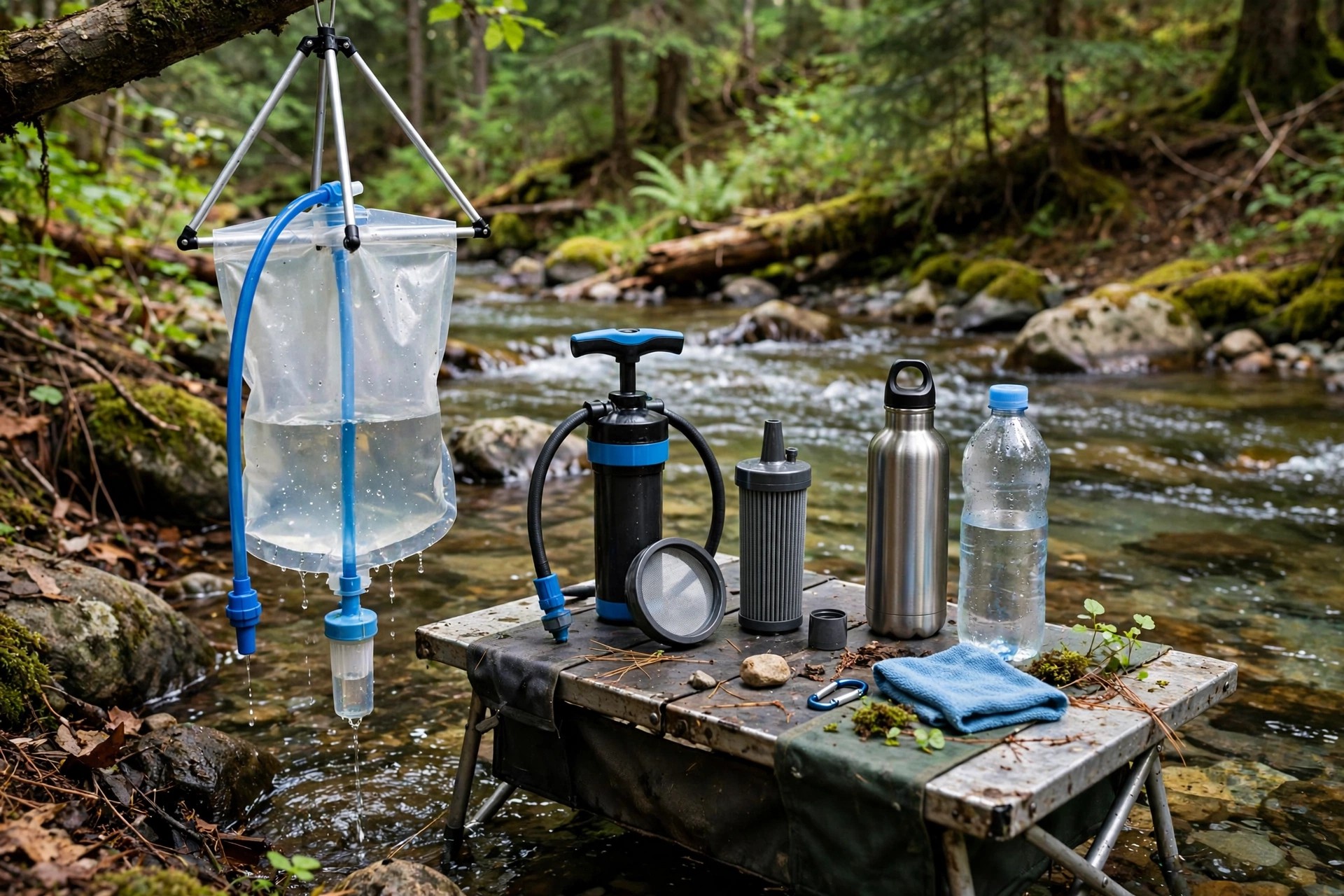
Tablets disinfect water; they do not clean it. They will not remove mud, sand, or sediment, so if the water is cloudy, filter it first through a cloth, a coffee filter, or a bandana, and let it settle before adding the tablet — cloudy water shields organisms from the disinfectant and makes the treatment far less effective. Tablets will not remove chemicals, heavy metals, or pesticides, so water from an industrial area, a fuel spill, or a chemical container should not be treated with tablets and drunk anyway. Tablets will not fix salty water, and they will not make water from a stagnant, foul-smelling source safe just because it has been treated. The taste is a minor issue, but a real one: treated water can taste of chlorine or iodine, and a pinch of vitamin C powder or a squeeze of lemon after the waiting time can improve it. Tablets also expire: check the date on the packet and replace them when they pass it, because old tablets lose strength. Keep them dry, sealed, and out of sunlight, and keep them in the go-bag rather than loose in a pocket where they can be crushed. For a fuller water plan, pair tablets with the other methods in our purifying water without a filter guide and our water filter comparison, and keep your stored water in proper containers, as in our water storage containers guide. Tablets are the backup, not the whole plan — but as a backup, they are one of the best grams-for-grams items in the kit.
Shop water purification tablets and bottles
- Chlorine dioxide purification tablets — the standard choice for emergency kits.
- Portable water filter bottles — filter first, then treat, for cloudy water.
- Collapsible water containers — carry and store treated water.
As an Amazon Associate, Alien Bunker earns from qualifying purchases. This page contains affiliate links, which support the site at no extra cost to you.