
Most emergency food advice assumes everyone in the household can eat anything. For a family dealing with food allergies, that assumption is dangerous. A stockpile full of wheat, peanut butter, and canned soup is not a safety net if the person it is meant to feed cannot safely eat any of it — and in an emergency, with shops closed and medical help delayed, an allergic reaction is a crisis on top of a crisis. Planning for allergies is not an extra. It is the plan.
Start with a written allergy list
Write down every allergy in the household, including severity and what happens on exposure, and keep that list where the food is stored, not just in someone’s head. Include hidden sources: wheat in soy sauce, milk in chocolate, egg in pasta, nuts in granola bars and trail mix. If a child has an allergy, the list should travel with them — in their bag, following our kids’ backpack guide — and at least two adults should know it by heart. This list is the filter for every purchase that follows. If a food is not safe for the most restricted person in the household, it either gets its own clearly labelled section, or it does not enter the emergency store at all.
Build a safe core, then add variety
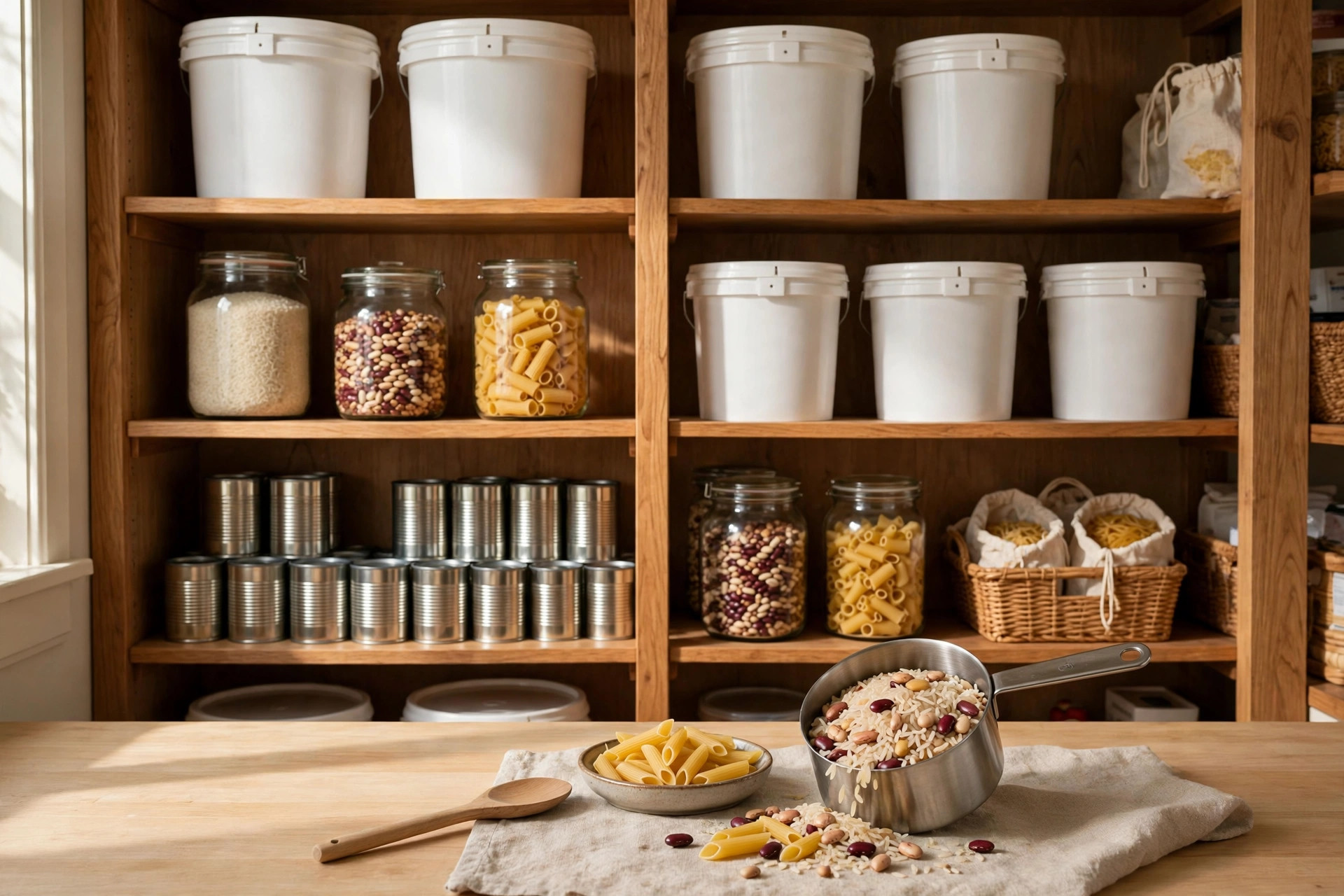
The safest emergency pantry is built around foods the allergic person already eats every day. Rice, oats (certified gluten-free if wheat is the issue), canned vegetables, canned fruit, dried beans, and shelf-stable milks that are safe for that person form a core that needs no label detective work. From there, add variety carefully, checking every label for allergen warnings and cross-contact statements such as “may contain” notices. Manufacturer recipes change, so a product that was safe last year may not be safe this year — check the label on the pack you actually buy, not the one you remember. Keep safe foods in sealed, labelled containers of their own, so a visiting helper cannot accidentally mix them with unsafe foods in the dark during a blackout.
Medicine, labels, and eating away from home
Food is only half the allergy plan. Any prescribed allergy medicine, including auto-injectors where prescribed, belongs in the emergency kit with clear instructions, and everyone in the household should know where it is and how it is used. Check expiry dates on medicine at the same time as your food rotation, following our rotation guide. For evacuations, pack a grab bag of safe food and snacks — see our kids’ snack guide for the packing method — because shelters and shared food supplies cannot be relied on to be allergy-safe. A card listing allergies, safe foods, and emergency contacts, kept in a wallet and in each bag, helps strangers help you correctly when you cannot explain yourself.
Mistakes that catch families out
- Buying bulk “emergency food” buckets without checking ingredients: many contain wheat, milk, and soy in nearly every meal. Read the full ingredient list first.
- Storing safe and unsafe foods together: crumbs and spills cross-contaminate. Separate containers, separate shelves, clear labels.
- Assuming a familiar brand is still safe: recipes and factories change. Check the label every time.
- Forgetting medicine in the rotation: expired allergy medicine is a nasty surprise. Date it, check it, replace it on time.
An allergy-safe emergency kit takes more label reading up front, but it buys something no generic stockpile can: food the whole household can actually eat, on the worst day, without a second emergency. Pair it with a family meal plan from our family meal planning guide, and the plan is complete.
Shop the allergy-safe setup
- Labelled airtight food containers — keep safe foods separate and clearly marked.
- Allergy-aware emergency food options — check every ingredient list before buying.
- Wallet medical alert cards — allergy details that travel with the person.
As an Amazon Associate, Alien Bunker earns from qualifying purchases. This page contains affiliate links, which support the site at no extra cost to you.