
Burns and cuts are the most common household injuries, and they are also the injuries most people treat wrong — with butter on a burn, a tourniquet on a cut, or a bandage so tight it cuts off circulation. Good first aid for both is simpler than most people think, and it mostly comes down to doing the right simple thing quickly, and knowing when the injury is beyond home treatment. This guide covers the basics every household should know. It is general information, not medical advice, and serious injuries always need professional care.
Burns: cool it, cover it, leave it alone
For a minor burn — red, painful, but with skin intact and smaller than the injured person’s palm — the first step is cooling: hold the burn under cool running water for at least ten minutes, or until the pain eases. Cool water, not ice, and not ice water, which can damage the skin further. Do not apply butter, toothpaste, oil, or any home remedy; they trap heat and invite infection. After cooling, cover the burn loosely with a clean, non-stick dressing or cling film, and do not pop any blisters that form — blisters protect the skin underneath. Take a pain reliever if needed, following the packet instructions, and watch the burn over the next day for increasing pain, spreading redness, or swelling, which are signs to seek medical advice.
Seek professional care promptly for burns that are large, deep, or blistered over a wide area, burns on the face, hands, feet, joints, or genitals, burns caused by chemicals or electricity, burns that go all the way around a limb, or any burn on a baby or young child. For a severe burn, call emergency services, cool with water only if it can be done without delaying help, cover loosely, and keep the person warm — severe burns lose body heat fast. Our first aid kit guide covers what dressings and supplies to keep at home for exactly this.
Cuts: pressure, cleaning, and closing
For an ordinary cut, the first step is pressure: press a clean cloth or dressing firmly onto the wound and hold it there. Most minor cuts stop bleeding within a few minutes of steady pressure. Once bleeding slows, rinse the cut gently with clean running water to remove dirt, pat it dry, and apply a plaster or sterile dressing. Do not use antiseptic inside a deep wound, and do not close a dirty cut tightly — a wound that needs cleaning should be seen by a professional. Change the dressing daily, and watch for signs of infection: increasing pain, redness spreading from the wound, warmth, swelling, or pus. A cut that keeps bleeding after ten minutes of firm pressure, a cut that is deep, gaping, or down to muscle or bone, a cut from a rusty or dirty object where tetanus vaccination may be out of date, or any cut on the face or over a joint, needs medical attention.
What to keep, and what to practise
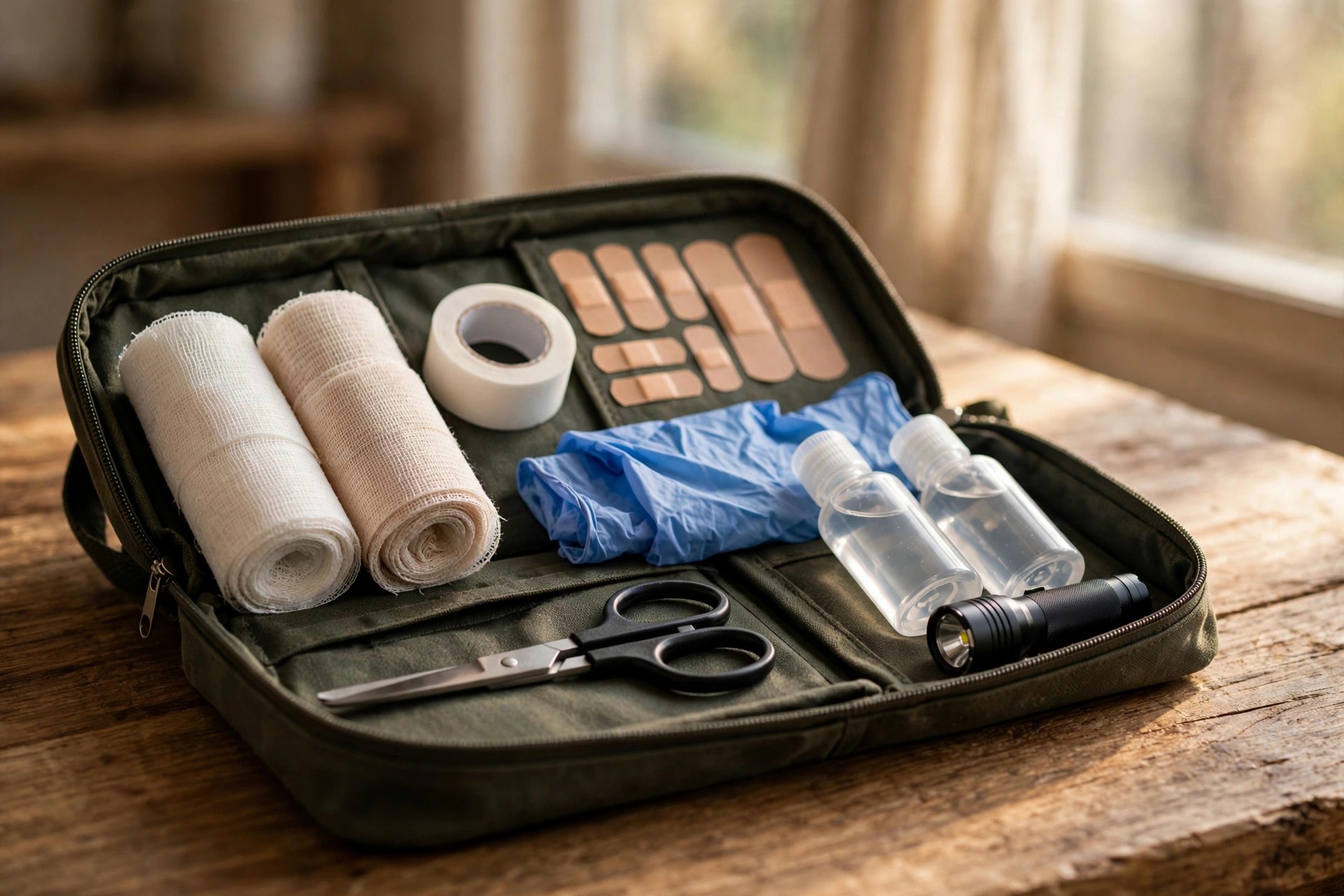
A useful home first aid kit for burns and cuts is short: sterile non-stick dressings in several sizes, adhesive plasters, a roll of gauze, medical tape, scissors, disposable gloves, and a clean cloth for pressure. Keep it in one place, known to everyone in the household, and check it twice a year alongside your wider household rotation check. Practise the basics before you need them: where the kit is, how to apply pressure, how to wrap a dressing without cutting off circulation — a dressing should be snug, not tight, and fingers or toes beyond it should stay warm and normally coloured. If you have children, teach them the simplest version: get an adult, press a clean cloth on the cut, and do not touch a burn except to cool it with water. Those three steps, learned young, prevent most first aid mistakes.
The mistakes that make things worse
- Butter, toothpaste, or oil on a burn: traps heat and increases infection risk. Cool water only.
- Ice directly on a burn or a cut: damages tissue. Cool water for burns, pressure for cuts.
- Removing a dressing to check the wound constantly: disturbs clotting. Leave it, and check around it instead.
- A tourniquet for an ordinary cut: almost never needed at home, and dangerous if misapplied. Pressure is enough for most cuts.
- Ignoring tetanus: dirty wounds and out-of-date vaccinations are a real risk — ask a doctor if unsure.
Burns and cuts will happen in any household. The difference between a minor incident and a medical problem is usually ten minutes of correct first aid, a stocked kit, and knowing when to call for help. Learn the basics, keep the kit ready, and practise with your family — including the beginner survival skills that make a household genuinely self-reliant.
Shop the first aid basics
- Sterile non-stick dressings — for burns and cuts alike.
- A family home first aid kit — a stocked starting point for the household.
- Disposable first aid gloves — protection for the person giving help.
As an Amazon Associate, Alien Bunker earns from qualifying purchases. This page contains affiliate links, which support the site at no extra cost to you.