
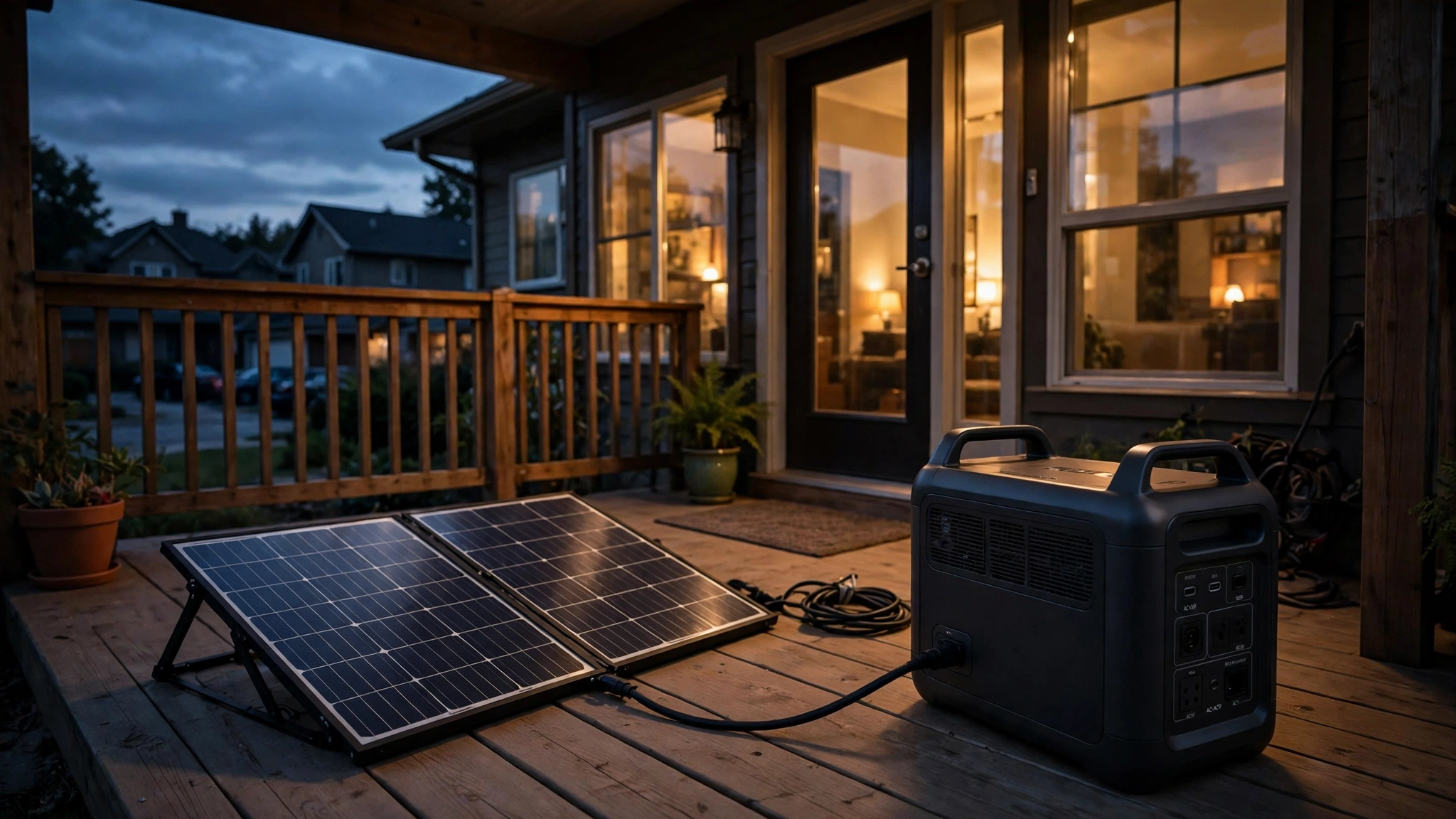
When the power goes out at night, the first thing you reach for is light. A lantern is the single most useful light in a blackout: it lights a whole room, it stands on a table and leaves your hands free, and it is far safer than candles. But there are two kinds of lantern, and they work very differently. A battery lantern runs on disposable or rechargeable batteries and gives you light on demand, for as long as the batteries last. A solar lantern charges from the sun and never needs a battery — but it needs sunlight, and it needs time. Choosing the wrong one, or only owning one kind, is how a household ends up in the dark on the second night of a blackout. This guide compares the two, so you can choose the right mix.
Solar lanterns: free light, with conditions
A solar lantern has a small solar panel, a rechargeable battery inside, and an LED light. Leave it in the sun for a day, and it will give you several hours of light at night — no batteries to buy, no fuel to store, and no running costs at all. That makes it the best lantern for a long blackout, because it keeps working as long as the sun comes up. Solar lanterns are also light, compact, and often collapsible, so they pack flat into a go-bag or a drawer. The drawbacks are real, though. A solar lantern needs direct sunlight to charge properly — a cloudy day, a north-facing window, or a lantern left in a cupboard will not charge it. Charging takes hours, not minutes, so a solar lantern cannot be topped up quickly in an emergency. And most solar lanterns are not very bright: they are fine for lighting a room, reading, or cooking, but they will not light a large space the way a powerful battery lantern can. For a household, the practical approach is to treat solar lanterns as the backup layer: charge them during the day, use them in the evening, and let them cover the second and third nights of a blackout, when the batteries start to run low. Keep them on a windowsill during the day, and check them every few months to make sure the battery still holds a charge. See our solar charger guide for the same sun-charging logic applied to phones and small devices.
Battery lanterns: bright light, until the batteries run out
A battery lantern is the workhorse. It is brighter than a solar lantern, it works instantly at the push of a button, and it works in any weather, at any time, with no sunlight needed. Most battery lanterns run on AA or D batteries, or on a built-in rechargeable battery that charges from a USB cable. That instant, reliable light is why a battery lantern should be the first lantern in every household — it is the light you grab in the first minute of a blackout, when you need to see what is happening. The weakness is obvious: when the batteries run out, the lantern is dead. A lantern running on high can drain a set of batteries in a single evening, so a household that relies on battery lanterns alone will run out of light by the second night unless it has a large stock of spare batteries. The answer is to stock batteries generously — keep at least two full sets of spares for every lantern, rotate them, and store them separately from the lantern so they do not leak inside it. A lantern with a built-in rechargeable battery and a USB charging port is a good compromise, because it can be topped up from a power bank or a solar charger, as in our solar power bank guide. The best setup is both: a battery lantern for the first night and for bright light, and a solar lantern for the nights after. Add a headlamp for hands-free work, as in our headlamp vs flashlight guide, and a household will never be left in the dark. See also our emergency lantern buying guide for the full range of options.
Shop lantern basics
- Collapsible solar lanterns — free light from the sun, packs flat for the go-bag.
- Bright battery-powered LED lanterns — instant, reliable light for the first night.
- AA batteries in bulk — keep the spares stocked so the light never dies.
As an Amazon Associate, Alien Bunker earns from qualifying purchases. This page contains affiliate links, which support the site at no extra cost to you.