
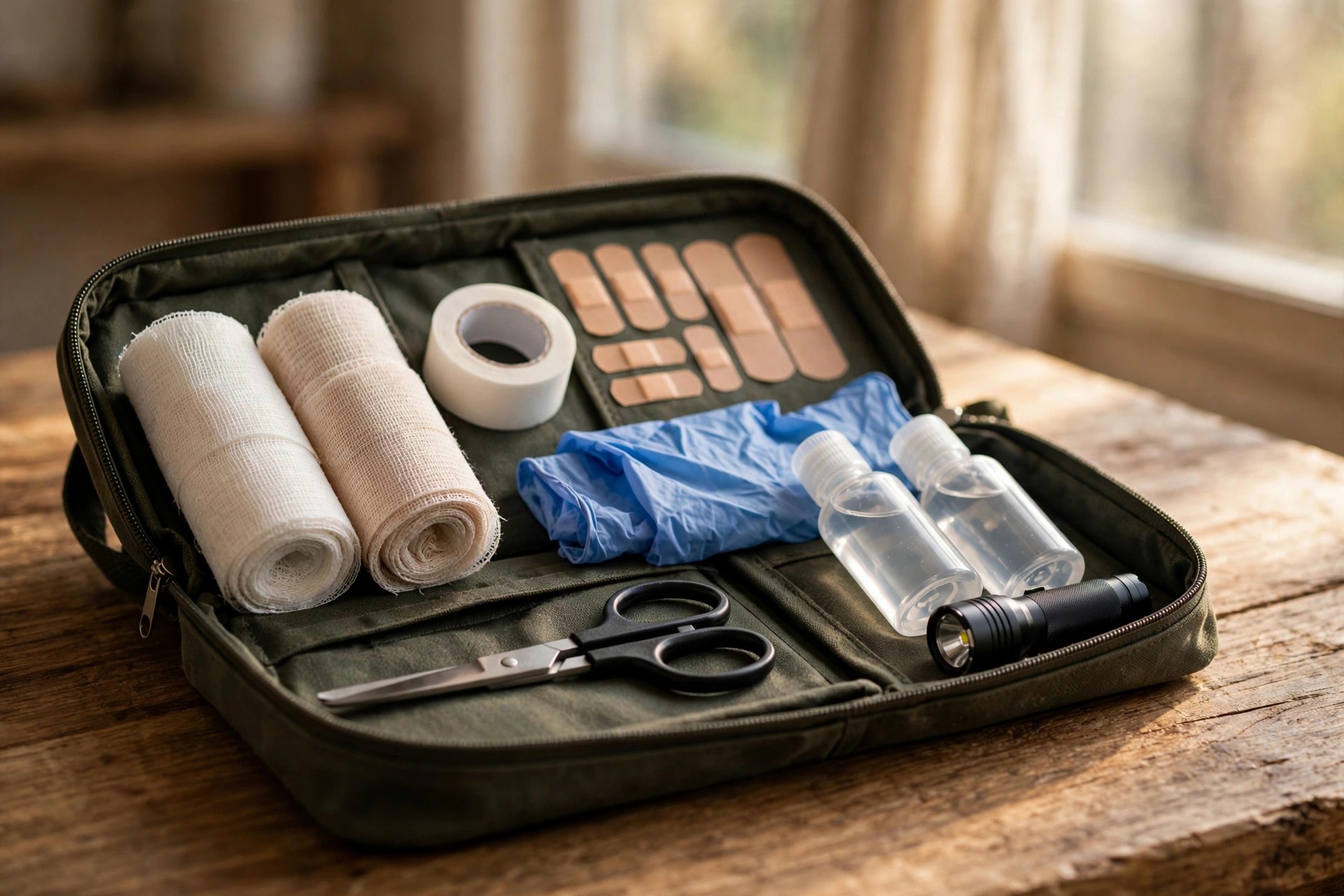
Bandaging is one of those first-aid skills that looks simple until you have to do it on a real person, with real blood, and a real injury that will not sit still. A bandage done well protects a wound, controls bleeding, supports a sprain, and stays in place. A bandage done badly falls off, cuts off circulation, or hides a wound that needs attention. The difference is not talent — it is a few basic techniques, practised once, that anyone can learn. This guide covers the three bandages every household should know, and the mistakes that undo them.
Before you bandage: clean hands, clean wound
Before you touch a wound, wash your hands if you can, or use hand sanitiser or antiseptic wipes from the kit. Put on disposable gloves if you have them, especially if the wound is bleeding — protecting yourself from someone else’s blood is part of first aid. Rinse the wound gently with clean water to remove dirt, and pat it dry with clean gauze; do not scrub it, and do not pour alcohol or hydrogen peroxide into an open wound, because they damage the tissue and slow healing. If there is an object stuck in the wound, do not pull it out — bandage around it and get medical help. Place a sterile gauze pad over the wound, large enough to cover it completely with a margin around the edges, and hold it in place while you prepare the bandage. If blood soaks through the pad, do not remove it — add another pad on top, because removing a soaked pad can disturb the clot that is forming. Keep the rest of the kit organised so you can find what you need quickly, following the structure of our first-aid kit guide, where every item has a place.
Three bandages to know
- The simple wound dressing: a sterile gauze pad held in place with medical tape or a rolled bandage. Lay the pad over the wound, wrap the bandage around the limb with even, overlapping turns, and tape the end down. The bandage should be snug but not tight — you should be able to slip a finger under it, and the skin beyond it should stay warm and normal-coloured. Check the fingers or toes beyond the bandage after a few minutes: if they are cold, pale, blue, or numb, the bandage is too tight and must be loosened.
- The pressure bandage for bleeding: for a wound that keeps bleeding, press a thick pad of gauze firmly onto the wound and wrap it tightly enough to slow the bleeding, then keep pressure on it and get medical help. If blood soaks through, add more pads on top — never remove the first pad. Keep the injured limb raised above the level of the heart if you can, which slows the bleeding, and keep the person still and warm while you wait for help.
- The joint wrap for sprains: an elastic bandage wrapped around a sprained ankle or wrist in a figure-of-eight pattern, starting below the joint and working upward, with each turn overlapping the last by about half. It should feel supportive, not painful, and it should not be worn overnight — take it off to sleep and re-wrap it in the morning. For the full treatment of a sprain, including rest, ice, and elevation, see our sprains guide, and for burns and cuts, see our burns and cuts guide.
The common mistakes are easy to avoid once you know them: wrapping too tightly, covering a wound and then forgetting to check it, using a dirty cloth instead of a sterile pad, and leaving a bandage on for days without changing it. Change dressings daily, or sooner if they get wet or dirty, and look at the wound each time you change it — redness spreading from the wound, swelling, warmth, or a bad smell are signs of infection that need medical attention. Practise the three bandages once, on a healthy arm or leg, so the first time you do them for real is not the first time you have done them at all. Bandaging is a small skill, but in an emergency it is the skill that turns a kit full of supplies into actual first aid.
Shop bandaging basics
- Sterile gauze pads — clean, covered, and ready for any wound.
- Elastic bandage wraps — support for sprains and pressure for bleeding.
- Medical adhesive tape — holds dressings in place without slipping.
As an Amazon Associate, Alien Bunker earns from qualifying purchases. This page contains affiliate links, which support the site at no extra cost to you.